Is Chongqing Worth Visiting For Tourists?
An honest verdict on Chongqing for tourists: what the terrain, the night skyline and the food deliver, where the city is genuinely harder than Chengdu, and who should skip it.
Is Chongqing Worth Visiting For Tourists?
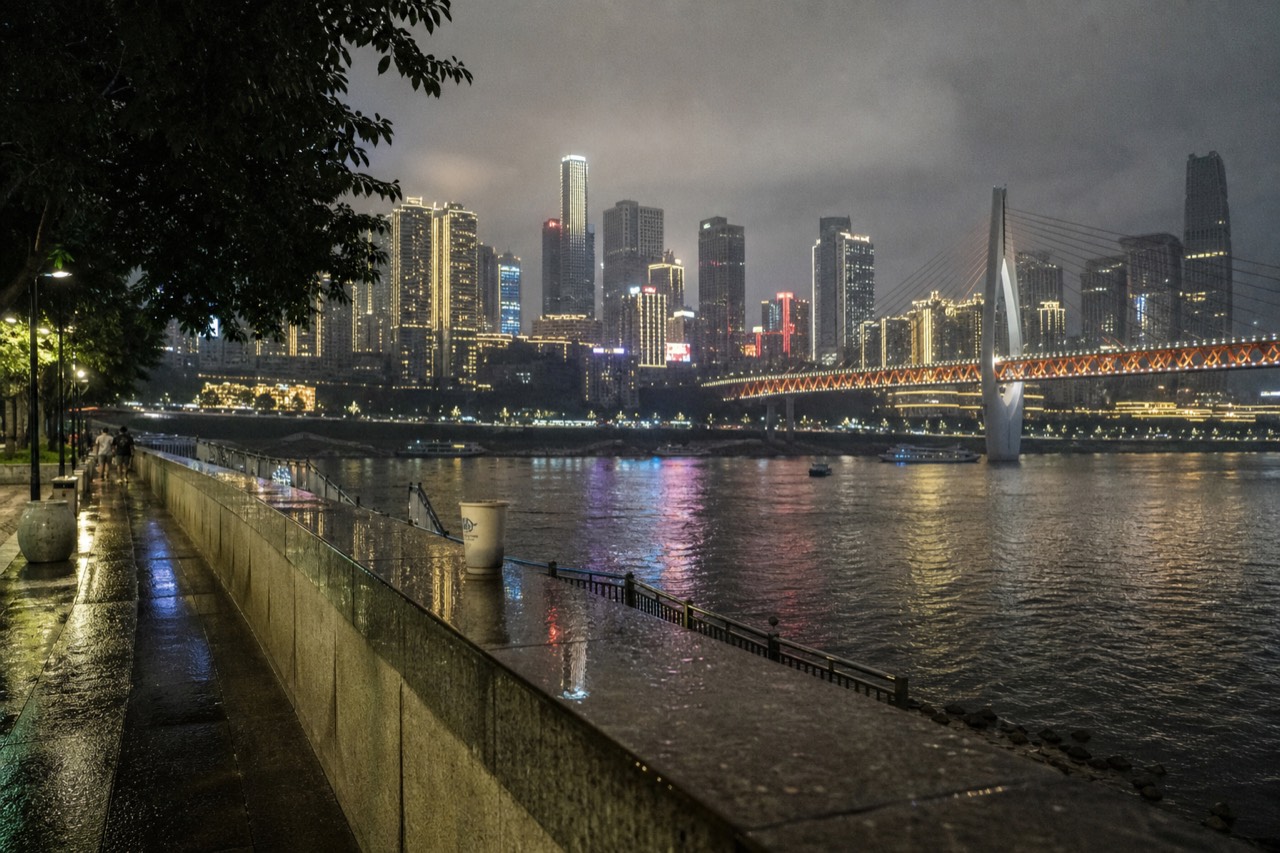
Yes, for most travellers who want a city that looks and feels unlike anywhere else in China, Chongqing is worth the trip: a municipality of 31,872,600 residents built across two rivers, 105 large bridges and a vertical street grid, a night skyline switched on by municipal schedule, and a food culture famous nationwide. That vertical, neon-lit terrain is why evening motorcycle photo sessions on Nanbin Road exist here. The caveats are real: hotter, foggier, hillier and less English-friendly than Chengdu, and it rewards planning.
Arrival data shows growing visitor interest; it does not measure whether every traveller will enjoy the city. Chongqing recorded 2,147,800 inbound overseas visitors in 2025, who spent US$2.398 billion, according to the municipal statistical communique. The trend is accelerating: the airport's immigration checkpoint handled more than 1.48 million inbound and outbound passengers in the first half of 2026, up 39.5 percent, the fastest growth among China's ten largest airports, and nearly 70,000 foreign travellers entered the city in July 2026 alone, up 84.7 percent, figures attributed to the municipal government by the Global Times.
There is also something genuinely new pulling people in. The viral motorcycle photoshoot trend known as the "Chongqing Landing Visa", where a rider and a following photographer film you against the night skyline, has drawn more than 1.52 billion views across related videos. If you want to understand the trend before deciding, our piece on the motorcycle trend covers it in depth, and the guide explains the bookable photo and video formats.
This site, Chongqing Motorcycle Photoshoot, exists because that one evening experience distils everything the city does well, but a visit should not stop there. For a fuller sense of what the city offers, the sight inventory lives in our guide to things to do in Chongqing, and the question of why the city is suddenly everywhere is answered in what Chongqing is famous for. This page owns a different job: the verdict, and the comparison with Chengdu that most travellers are silently making.
The Case For And The Case Against
The case for Chongqing is terrain, night light and food: a mountain city of 105 large bridges over two rivers, a skyline that switches on by published municipal schedule, and a hotpot culture that is a destination in itself. The case against is comfort: 43.7 C record heat, 37.2 foggy days a year, relentless stairs, and limited English outside hotels and the airport.
Both cases are true at once, and pretending otherwise is how disappointment happens. Here they are, item by item.
| The case for | The case against |
|---|---|
| Vertical terrain you cannot photograph in a flat Chinese city, the "8D" layered street grid | The same terrain means stairs, slopes and metro exits that surface in unexpected places |
| A night skyline switched on by municipal schedule, 20:00 summer and 19:30 winter | Light does not help in the day, and the city averages only 983.2 hours of annual sunshine |
| Food culture, Chongqing hotpot and xiaomian, famous across China | The local palate runs very spicy and very numbing; mild options require asking |
| The viral motorcycle night shoot, a genuinely unique experience | Bookings fall within the 18:30 to 22:00 operating window only, at night, with no daytime slot |
| 329 national A-rated scenic areas in the municipality | Many require long trips out of the urban core |
| 240-hour visa-free transit for 57 countries, CKG eligible | Service language is largely Chinese, including on the motorcycle shoot |
| Rapidly growing inbound tourism, up 84.7 percent in July 2026 | Infrastructure for English speakers lags the growth |
One line in that table deserves expansion. The 240-hour, ten-day visa-free transit policy covers nationals of 57 countries arriving through 65 designated ports, and Chongqing Jiangbei International Airport is among them, per the National Immigration Administration. For eligible travellers connecting onward to a third country, that means Chongqing can be added to a trip with no visa application at all.
The heat line deserves honesty too. The Shapingba station's record high is 43.7 C, set in August, and July averages a daily high of 33.7 C with overnight lows near 25 C. The fog is real as well: an average of 37.2 foggy days a year over the 1973 to 2010 reference period, concentrated in autumn and winter. Neither is a reason to skip the city, but both are reasons to plan around, which our best time to visit guide does in detail.
Chongqing Or Chengdu: Which Should You Choose?
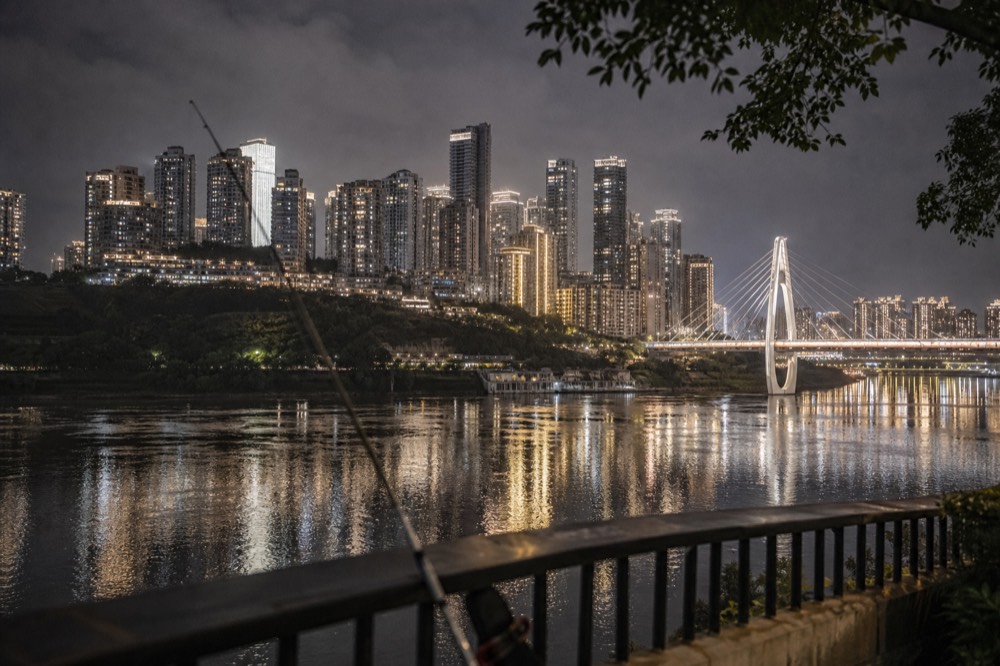
Choose Chongqing for terrain, night photography and dramatic geography; choose Chengdu for pandas, teahouse culture, flatter walking and easier English. On the axes travellers actually decide on, Chongqing wins on landscape and night light, and Chengdu is generally the gentler, more internationally familiar city. The two are roughly an hour apart by high-speed rail, so many travellers take both.
The comparison below is qualitative: decide whether you prefer Chongqing’s dramatic terrain or Chengdu’s flatter city setting.
| Axis | Chongqing | Chengdu |
|---|---|---|
| Terrain | Vertical, mountainous, rivers and 105 large bridges, streets on multiple levels | Relatively flat plain, easier walking |
| Night skyline | Municipal lighting schedule for the core riverfront, on at 20:00 summer, 19:30 winter | Pleasant but conventionally flat-city in character |
| Signature food | Chongqing hotpot, xiaomian noodles, maximum spice | Sichuan cuisine, milder spectrum, famous teahouse snacks |
| English | Limited outside hotels, the airport and major attractions; the motorcycle shoot runs in Chinese | Generally more English signage and hostel infrastructure |
| Walkability | Stairs, slopes, river crossings; metro essential | Flat, cyclable, easier on feet |
| Signature sights | Hongyadong stilt houses, Liziba monorail through a building, the river corridor | The panda base, historical streets, museum quarter |
| Character | Cyberpunk, cinematic, overwhelming | Relaxed, comfortable, curated |
The honest summary is that Chengdu is the easier city and Chongqing is the more memorable one. If your trip has room for only one and you travel for photographs, geography and atmosphere, Chongqing is the stronger pick. If you travel for comfort, wildlife and a slower rhythm, Chengdu is the safer bet. Travellers with four or more days commonly do both, since the cities sit on the same high-speed corridor.
What The Terrain Actually Gives You
Chongqing's geography is the single best argument for visiting: a city of 31,872,600 residents built across the Yangtze and Jialing rivers, where the Yuzhong peninsula climbs from roughly 160 m at the riverside to nearly 390 m at Eling, producing a street network with roads stacked on roads. The consequence is sights that cannot exist in a flat city.
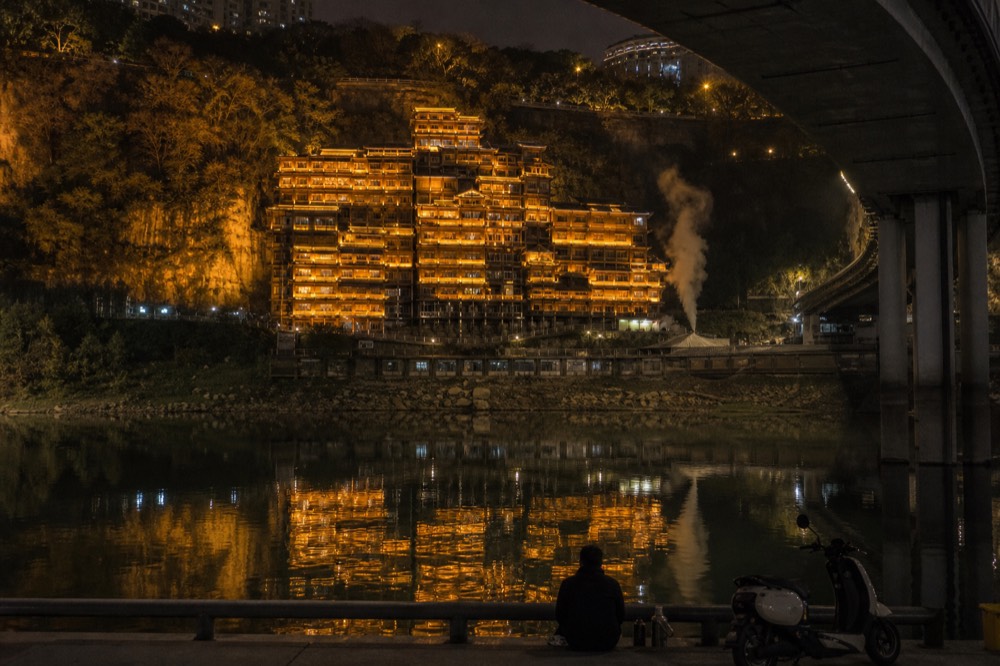
The most famous is Liziba, where the Line 2 straddle-beam monorail passes through floors 6 to 8 of a residential building, with a free viewing platform opposite. Then there is Hongyadong, the eleven-storey stilt-house complex opened in 2006, built into the cliff above the Jialing at a cost of 385 million yuan. And there is the whole river corridor: 105 large and extra-large bridges over the two rivers, the basis of the city's "Bridge Capital" title, according to the municipal housing and construction commission.
There is also a cultural layer most first-time visitors miss. Chongqing is one of China's historic motorcycle manufacturing centres, a city where two-wheelers were ordinary transport long before they became a photo prop. The local government's own development and reform commission has described the city as a "naturally three-dimensional cityscape" where "many places here are themselves scenes that people can experience and capture on camera". That is a rare thing: a government official explaining, on the record, why the city photographs the way it does.
The Night Argument: One Extra Evening
The one thing you cannot replicate anywhere else is Chongqing's riverfront at night: a skyline switched on by municipal order, bridges lit above two rivers, and the option to be filmed riding through it on a motorcycle with a professional crew. If a trip to China has room for one extra evening, this is the concrete argument for spending it in Chongqing.
The lighting itself is unusually well governed. Under the city's night-lighting rules, published by the Municipal Urban Administration Bureau, the "Two Rivers, Four Banks" core area, the Yuzhong skyline, the riverside towers and the cross-river bridges, switches on at 20:00 from 1 May to 30 September and at 19:30 from 1 October to 30 April, staying on no earlier than 22:30 in summer and 21:30 in winter, with two-hour extensions over Spring Festival and National Day. You can plan a whole evening around a published switch-on time, which almost no other city offers.
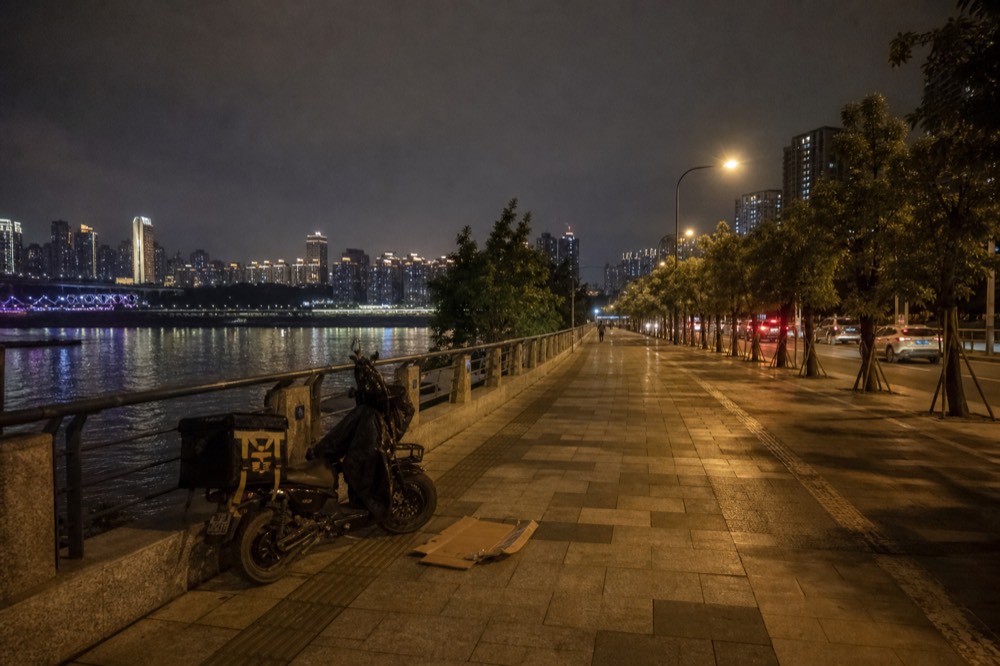
The motorcycle shoot turns that backdrop into the frame. Bookings fall within the 18:30 to 22:00 operating window along Nanbin Road on the south bank, meeting at the crew-confirmed point near Nanbin Road, with the Yuzhong skyline, Dongshuimen Bridge and Raffles City across the water. The video package is the one that includes the ride: a pillion seat behind a professional rider, a photographer following, and one edited clip of 25 to 35 seconds delivered by email or WeChat within one to three days. It is sold per person, 18 or over, and stills are not promised in the inclusion list, though some guests report receiving photos anyway. If a moving memory of the skyline is the goal, that is the package to pick.
The night window matters more than most visitors expect. Two-wheeled motorcycles are banned on the relevant stretch of Nanbin Road from 22:00 to 06:00, in force since January 2024, which is exactly why the operating window ends at 22:00. And the whole city runs one clock off its solar time, so in late June the sun sets at 19:58 and the lights come on at 20:00, nearly coinciding. In late December the sun sets at 18:00 and the lights wait until 19:30, leaving a dark gap a planner should know about.
The Honest Caveats: Heat, Fog, Stairs And Language
Practical considerations include summer heat with a station record of 43.7 C and July highs averaging 33.7 C, 37.2 foggy days a year that can swallow a viewpoint, relentless stairs, and a service economy that largely runs in Chinese. None of these is a dealbreaker, and all of them are manageable with timing and modest expectations.
Start with the calendar. Summer is the peak season for the night shoot but also the furnace season; if you visit between June and August, plan indoor activities for the afternoon and the riverfront for after dark. Winter is milder, with January highs around 10.4 C, but December is the foggiest month at about 6.8 foggy days on average, and the city averages just 16.6 hours of sunshine in January, about 5 percent of the possible total. Shoulder seasons, spring and autumn, are the sweet spot for both temperature and visibility.
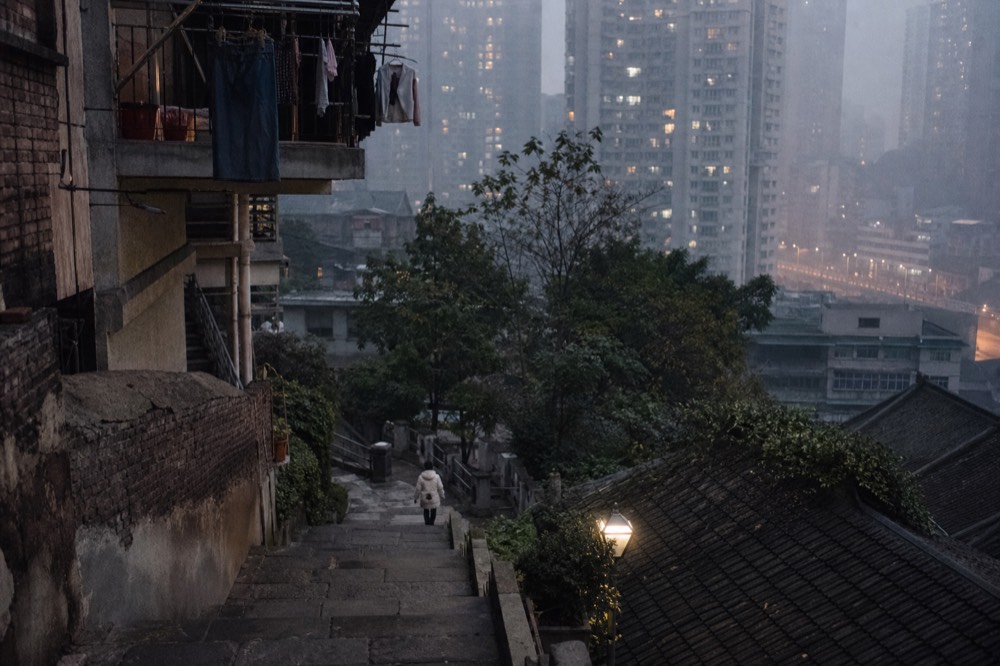
Then the stairs. Chongqing's metro is extensive, 12 lines and 324 stations over 574.12 km, mixing metro and monorail, and it is the right way to move. But exits surface on different hillside levels, and two points that look close on a map can be a vertical hike apart. Comfortable shoes are not a suggestion here, they are equipment.
Finally, language. This is the caveat that separates Chongqing from Beijing or Shanghai most sharply. The motorcycle shoot itself lists Chinese as its service language, with no English-speaking rider guaranteed. Payment apps and translation apps close most of the gap, but a traveller who wants full English support throughout the day will find the city harder work than its reputation suggests. Our Chongqing itinerary sequences a visit around these frictions rather than pretending they do not exist.
Who Should Skip It
Travellers who should skip Chongqing are those with limited mobility who cannot manage stairs and slopes, those seeking a relaxed, fully English-serviced city break, and anyone visiting in peak summer who cannot shift activities to the evening. For everyone else, including families with older children and photographers of any level, the city earns its place on the itinerary.
| Traveller type | Verdict | Why |
|---|---|---|
| Photographers and videographers | Go | The terrain and the lighting schedule are unmatched in China |
| Food travellers | Go | Hotpot and noodle culture are destination-worthy |
| Limited mobility | Consider skipping | Stairs and vertical streets are unavoidable in the core |
| Comfort-first city-break travellers | Consider Chengdu | Flatter, easier, more English support |
| Peak-summer visitors, midday plans | Shift to evening | July highs average 33.7 C, station record 43.7 C |
| Visa-free transit travellers | Go | CKG is an eligible port, 10 days, 57 countries |
| Short stopovers under a day | Be realistic | Transit between sights eats time; one night minimum is better |
The verdict, restated plainly: Chongqing is worth visiting for tourists, and the reasons are specific rather than generic. It is a city whose geography manufactures sights, whose government literally schedules its beauty, and whose newest tourist phenomenon grew from its oldest industry. The same city will exhaust you if you arrive unprepared for heat, fog, stairs and a language barrier. Know which traveller you are, and the decision makes itself.
These are the questions travellers actually ask before committing to Chongqing, answered with the verified figures from this page: whether the city is worth it compared with Chengdu, how many days it needs, whether summer heat and winter fog are dealbreakers, visa-free entry for 57 eligible countries, and how the night motorcycle shoot works for a tourist.
Common Questions About Visiting Chongqing
Is Chongqing Worth Visiting For Tourists?
Yes. Chongqing delivers terrain, a scheduled night skyline and a food culture that most Chinese cities cannot match, and it drew 2,147,800 inbound overseas visitors in 2025. It is harder than Chengdu on heat, stairs and English, so it rewards evening planning and comfortable shoes, but for most travellers the city earns its place on the itinerary.
Is Chongqing better than Chengdu?
Neither is objectively better. Chongqing wins on vertical terrain, night photography and dramatic geography; Chengdu is generally flatter, easier to walk, better set up for English speakers and home to the panda base. The cities are roughly an hour apart by high-speed rail, so many travellers visit both.
How many days do you need in Chongqing?
Two full days cover the core riverfront sights, Hongyadong, Liziba and a night shoot, while three or four allow day trips to the wider municipality, which holds 329 national A-rated scenic areas. Anything under one full day is too short to do the night skyline justice.
Is Chongqing too hot to visit in summer?
Summer is genuinely hot: July averages a daily high of 33.7 C and the Shapingba station's record is 43.7 C, set in August. It is manageable if you shift activities to early morning and evening, which is also when the skyline lighting, on at 20:00 in summer, is at its best.
Do I need a visa to visit Chongqing?
It depends on your nationality and route. China's 240-hour visa-free transit policy covers 57 countries arriving through 65 designated ports, including Chongqing Jiangbei International Airport, if you hold an onward ticket to a third country. Separately, China's unilateral 30-day visa-free entry covers roughly 50 countries with no onward ticket required. Check the National Immigration Administration's pages before booking.
Can you do the motorcycle photoshoot as a tourist?
Yes. The Chongqing Internet-famous Motorcycle Photo & Video Experience offers bookings within an 18:30 to 22:00 operating window along Nanbin Road. The static-photo package starts from about $52.85 per person, with free cancellation and no published window. Choose carefully between the two packages: the photo package is a posed shoot with a parked bike and no ride, while the video package is the pillion ride that produces one edited clip.
Choose Your Chongqing Experience
Making room for Chongqing? Check a full-day private tour for your date before fixing the rest of your itinerary.
8–9 hours · Private highlights tour with English/Mandarin guide and hotel pickup. Hongya Cave is a pass-by. Not wheelchair accessible.
Compare Experiences And Refine Your Choice
Premium Chongqing Private Tours: Highlights, Night View or Cruise: 8–9 hours. Private highlights tour with English/Mandarin guide and hotel pickup. Hongya Cave is a pass-by. Not wheelchair accessible.
Chongqing: One-Day Extravaganza: Hit All the Must-See Spots!: 6 hours. Private sightseeing with an English guide and vehicle. Hotel pickup and drop-off are listed; confirm your selected itinerary.
Chongqing Night Tour: Hongyadong, Bridge Views & Riverwalk: 3 hours. Private night walk with English selectable, Hongyadong and riverfront viewpoints. Confirm the meeting point for your option. Not wheelchair suitable.
Scheduled dates are not live availability. Confirm your date and final price on Viator.
Check your selected option, meeting arrangements and final price on the booking page.
Check Your Chongqing DayMaking room for Chongqing? Check a full-day private tour for your date before fixing the rest of your itinerary.
Check Your Chongqing Day