Things To Do In Chongqing: A Ranked Inventory Of The Mountain City
Chongqing is a city built on cliffs where the metro station is the direction, the best sights are free, and half the inventory only switches on after dark.
Short answer
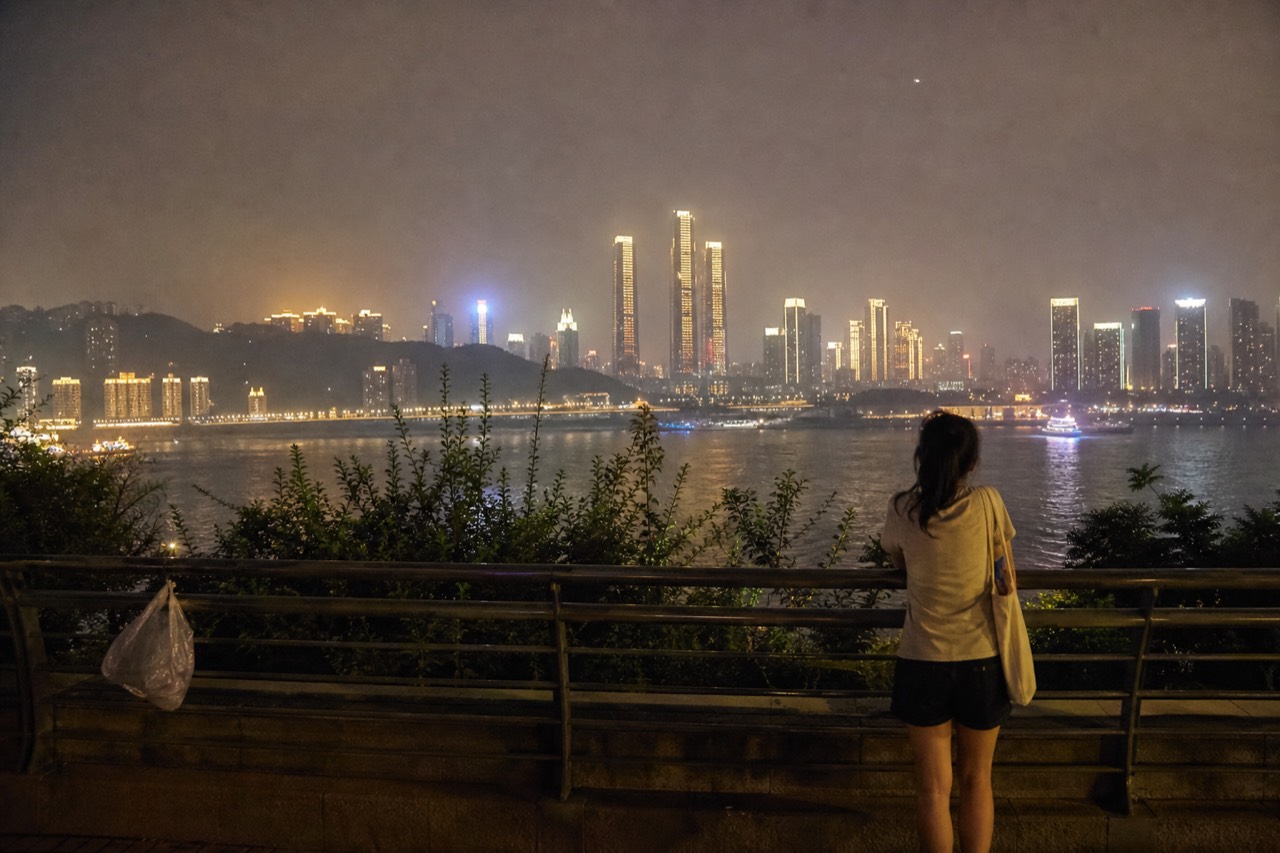
Chongqing's core inventory splits three ways: free public sights like Eling Park, the Liziba viewing platform and the Yuzhong skyline; ticketed decks and rides like the Yangtze Cableway at 30 yuan one way; and after-dark-only sights, where the skyline lighting runs on a published 20:00 summer and 19:30 winter schedule.
Chongqing counts 105 large and extra-large bridges over the Yangtze and Jialing rivers, a resident population of 31,872,600 at the end of 2025, and a skyline that switches on and off under a published municipal schedule. That last fact matters more here than in most cities, because a large share of what Chongqing offers a visitor only exists after dark, which is also why the evening motorcycle photo and video sessions on Nanbin Road run from 18:30 to 22:00, timed to the lit-up Yuzhong skyline across the water. This inventory sorts the city three ways: what costs nothing, what needs a ticket, and what only appears once the lights come on. Every entry carries the metro station that reaches it, because in a city stacked on cliffs, the station is the direction. It is the same organising principle Chongqing Motorcycle Photoshoot uses across its guides: the station is the direction.
What Is There To Actually Do In Chongqing?
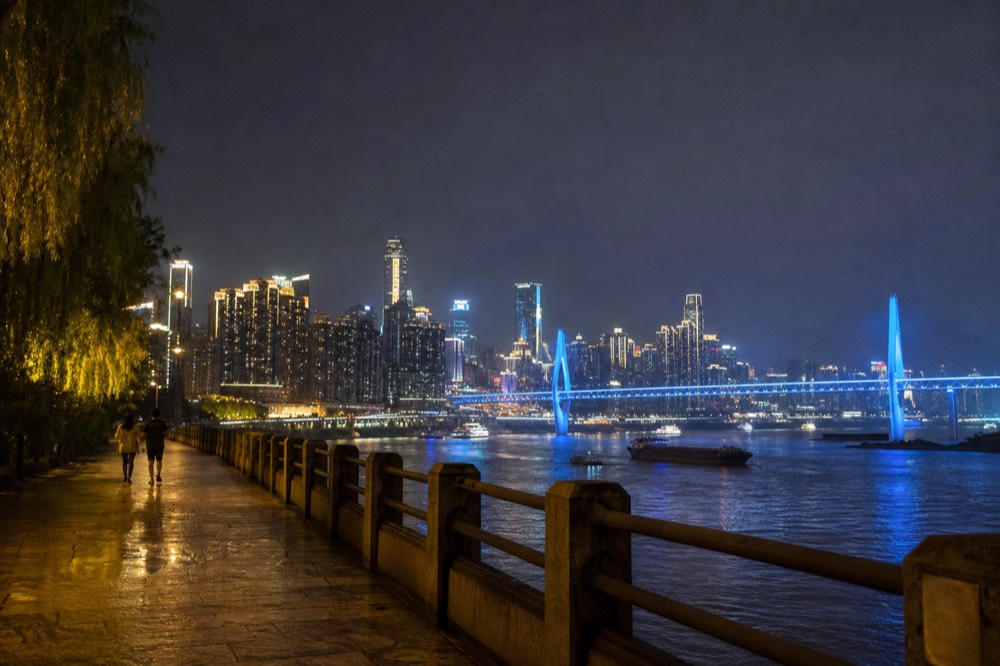
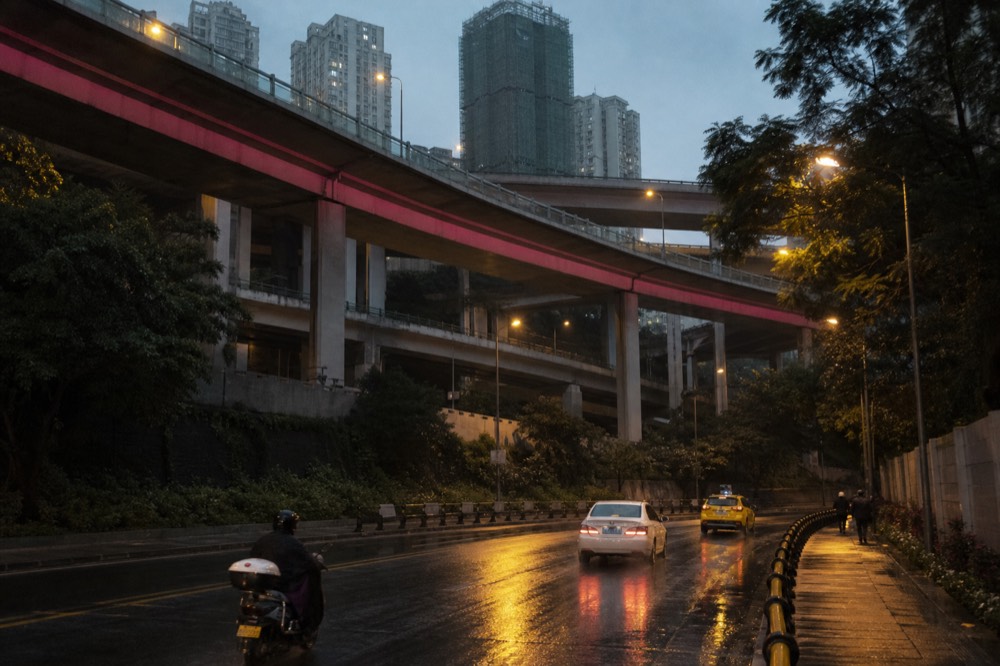
Chongqing's core visitor inventory runs to about a dozen sights across three districts: the Yuzhong peninsula's cliffside landmarks, the Nan'an south bank's river-facing corridor, and a handful of sights beyond the core, almost all reachable on a 12-line metro network where the station name is the address. The city is unusually compact for its population because the geography forces it: the Yuzhong peninsula rises from roughly 160 m at the riverside to nearly 390 m at Eling, so sights stack vertically rather than spreading outward. Hongyadong, the eleven-storey stilt-house complex built into the cliff on the Jialing, sits minutes from Jiefangbei's shopping district and the monorail that threads through Liziba's residential tower. Cross the river and you are on Nanbin Road, a 24.9 km riverside avenue administered by Nan'an District that serves as the south-bank viewing deck for the whole peninsula skyline.
The trend that put Chongqing in international headlines in 2026, the viral motorcycle night shoot along Nanbin Road, gathered more than 1.52 billion views across related videos, and it is one entry in this inventory, not the whole of it. Yang Gen of the Chongqing Municipal Development and Reform Commission put it on the record to the Global Times: the cityscape "have created a naturally three-dimensional cityscape. Many places here are themselves scenes that people can experience and capture on camera."
Here is the full inventory, sorted by district, with the nearest metro station for each.
| Sight | District | What it is | Nearest station | Cost |
|---|---|---|---|---|
| Hongyadong | Yuzhong | Eleven-storey stilt-house complex in the cliff | Xiaoshizi (1, 6, 18) | Free |
| Jiefangbei | Yuzhong | Liberation Monument and pedestrian shopping district | Jiaochangkou (1, 2) | Free |
| Kuixinglou | Yuzhong | Street-level plaza that meets a high tower via skybridge | Linjiangmen (2) | Free |
| Eling Park | Yuzhong | Hilltop park, high point of the peninsula | Eling (1) | Free |
| Liziba station | Yuzhong | Monorail through floors 6 to 8 of a residential building | Liziba (2) | Free |
| Chaotianmen / Raffles City | Yuzhong | Confluence point and the 354.5 m tower complex | Xiaoshizi (1, 6, 18) | Deck ticketed |
| Yangtze River Cableway | Yuzhong to Nan'an | Aerial tramway across the Yangtze | Xiaoshizi / Shangxinjie | Ticketed |
| Nanbin Road | Nan'an | 24.9 km riverside viewing avenue | Danzishi (Loop) | Free |
| Longmenhao Old Street | Nan'an | Restored terraced street below Dongshuimen Bridge | Shangxinjie (Loop, 6) | Free |
| Dongshuimen Bridge | crosses to Yuzhong | Double-deck bridge, 858 m, road above and metro below | Shangxinjie (Loop, 6) | Free |
| Yikeshu platform | Nanshan, Nan'an | Hilltop tree-framed panorama of the city | Taxi from core | Ticketed |
| Huangjuewan interchange | Nan'an | Five-level expressway spaghetti junction, viewing only | Danzishi (Loop) | Free |
Hongyadong deserves one clause, not a second full account: free to enter, lit until 23:00 under the last documented government notice, and covered in detail in our Hongyadong stilt-house guide. The same goes for the monorail-through-a-building shot at Liziba, which has its own page in the Liziba monorail station guide.
What Can You Do In Chongqing For Free?
Most of Chongqing's signature sights cost nothing: Hongyadong's public levels, the Liziba viewing platform, Eling Park, Jiefangbei, Kuixinglou, the whole of Nanbin Road and both bridge crossings are free, because the city's best asset is its own terrain and the publicly funded lighting that plays across it. This is unusual among Chinese mega-cities. The verticality that makes Chongqing famous, streets that enter buildings on one floor and exit ten storeys down, is public infrastructure, not a gated attraction. The free tier is not the consolation prize; it contains the majority of the photographs that made the city famous.
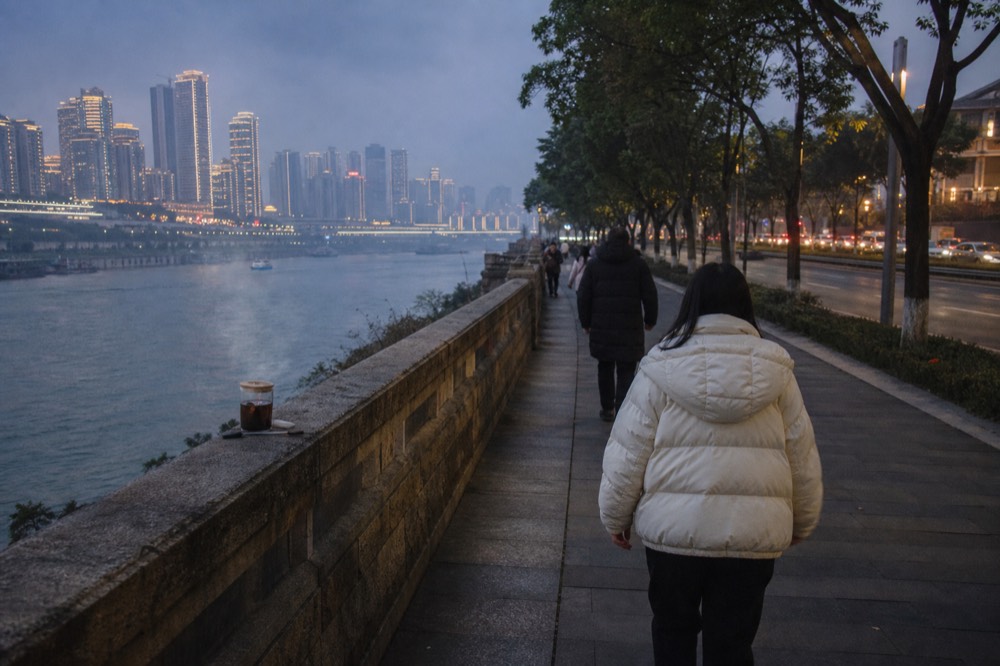
The split is roughly two to one in favour of free. What the ticketed tier sells is altitude or motion: the Crystal skybridge atop Raffles City, the Yangtze Cableway cabin, the Nanshan viewing platforms. None of those is essential. A visitor who spends nothing beyond metro fares still gets the peninsula skyline from Nanbin Road, the stilt houses from the Qiansimen side, and the monorail shot from the free Liziba platform, which opened in trial operation in August 2018 specifically so the public could take that photograph.
| Free sights | What you actually get | Ticketed sights | What the ticket buys |
|---|---|---|---|
| Liziba viewing platform | The monorail-through-building shot, from a purpose-built deck | Raffles City Crystal deck | A 300 m enclosed skybridge joining four 250 m towers |
| Eling Park | The high point of the peninsula, gardens and city views | Yangtze River Cableway | A 3.6-minute aerial crossing, 30 yuan one way, 50 return at the published ceiling |
| Nanbin Road corridor | The full lit peninsula skyline, at street level, all evening | Yikeshu platform on Nanshan | The classic tree-framed panorama from above the river haze |
| Hongyadong public levels | The stilt-house exterior and internal streets | Paid interior exhibits at Hongyadong | Optional immersive displays on level five |
For a fuller walk through the no-cost tier, see the free things to do in Chongqing guide, which covers the free sights in the depth this inventory cannot.
What Only Exists In Chongqing After Dark?
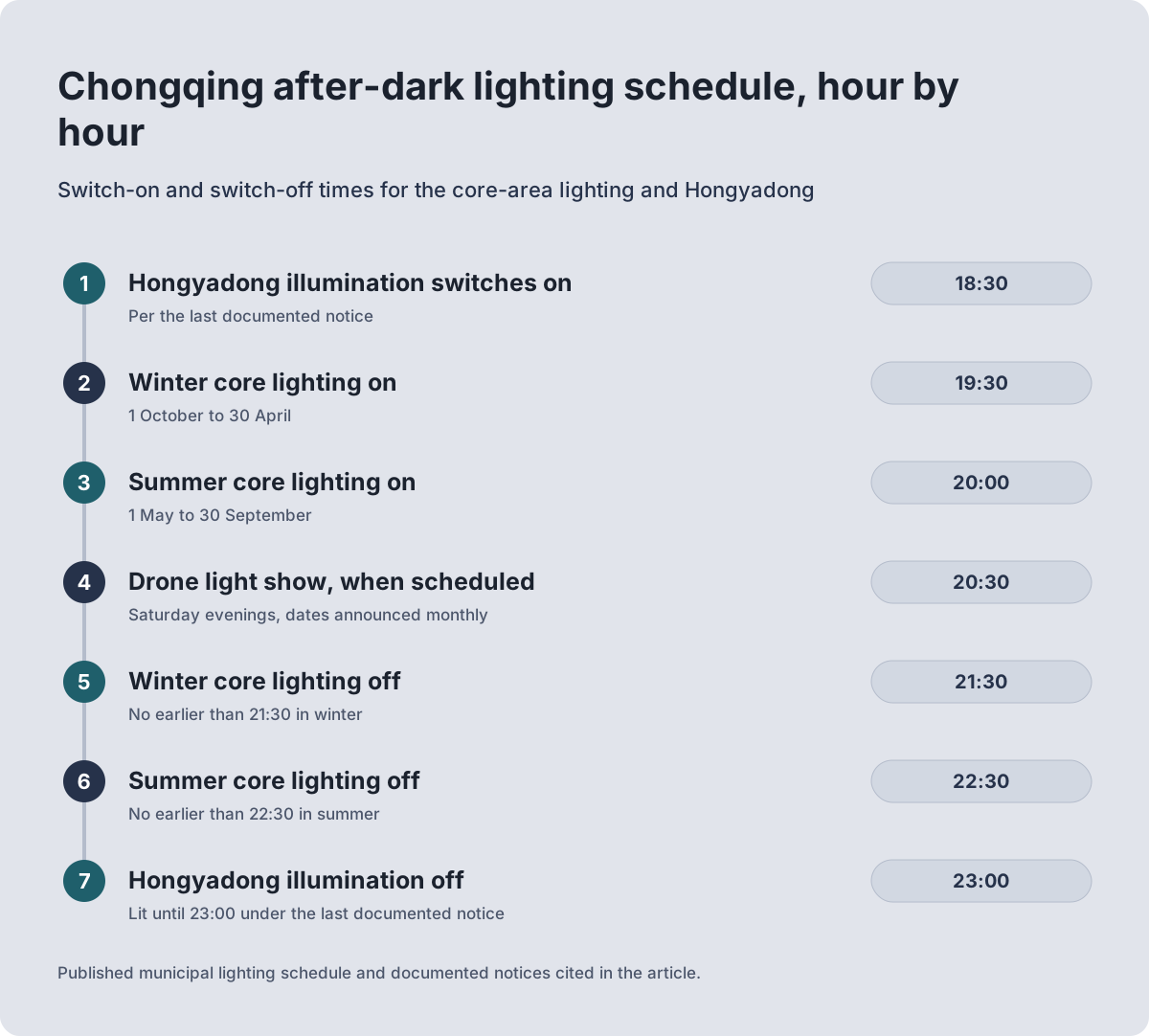
Chongqing's after-dark tier is governed by a published municipal schedule: the Two Rivers, Four Banks core-area lighting switches on at 20:00 from 1 May to 30 September and at 19:30 from 1 October to 30 April, off no earlier than 22:30 in summer and 21:30 in winter, with two-hour extensions over Spring Festival and National Day. That is the hour the free tier becomes worth the trip. Before switch-on, Nanbin Road is a pleasant riverside walk. After it, the Yuzhong skyline, the bridges and the riverside towers become the backdrop that a billion short-video views were built on. The schedule is fixed clock time, not sunset-triggered, published by the Chongqing Municipal Urban Administration Bureau under its night-lighting regulations, so you can plan around it weeks in advance.
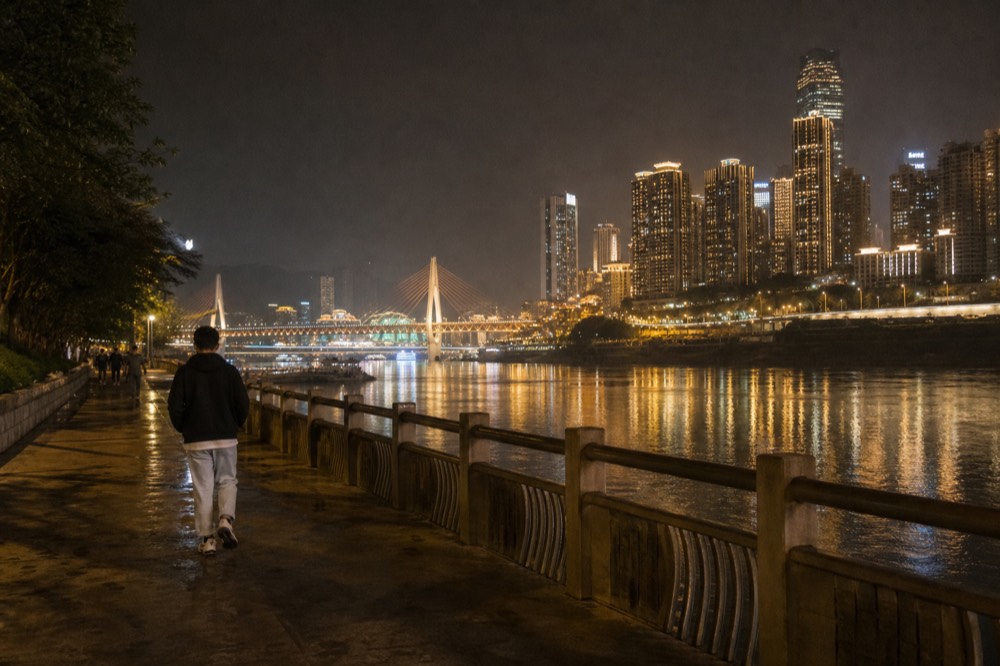
The after-dark-only list is short but it is the reason to be in Chongqing at night at all. It includes the skyline itself, viewed from the south bank; the bridge lighting on Dongshuimen and Qiansimen, both inside the core lighting area; the stilt-house illumination at Hongyadong, documented at 18:30 to 23:00; and the Nanbin Road corridor, where the city's recurring drone light show runs on Saturday evenings at 20:30 over the core riverfront, with extra dates on public holidays, announced one month at a time.
| After-dark sight | Hour it switches on | Where to stand |
|---|---|---|
| Yuzhong skyline, core area | 20:00 summer, 19:30 winter | Anywhere on Nanbin Road |
| Dongshuimen Bridge lighting | Same core schedule | Longmenhao Old Street, south end |
| Qiansimen Bridge lighting | Same core schedule | Hongyadong side, north bank |
| Hongyadong illumination | 18:30, per the last documented notice | Across the Jialing or from the bridges |
| Drone light show, when scheduled | 20:30 Saturdays, dates announced monthly | Core riverfront, both banks |
One entry in the after-dark group is the viral evening motorcycle session on Nanbin Road itself: a night-only shoot, 18:30 to 22:00, no daytime slot, meeting at the crew-confirmed point near Nanbin Road, with files delivered by email or WeChat within one to three days. It fits into this tier for a reason: the session window ends at 22:00 because two-wheeled motorcycles are banned on Nanbin Road from 22:00 to 06:00, a restriction in force since January 2024 under the Nan'an traffic police notice. The session window only partly overlaps the skyline lighting: it begins before switch-on, and late winter sessions may continue after the earliest 21:30 switch-off.
For the full after-dark inventory beyond this list, the Chongqing at night guide goes deeper on vantage points and timings.
Which Evening Experience Should You Actually Book?
If a motorcycle portrait or riding video is the souvenir you want, choose the Nanbin Road package by its deliverable: the photo package is 15 minutes of posed shooting with a parked bike and no ride at all, while the video package is a pillion ride with a professional rider that produces one edited 25 to 35 second clip. These are not tiers of the same thing, and choosing on price alone is how people end up disappointed. The listing carries only 15 reviews, too few to quote a star rating, but the single 1-star review on file is exactly a customer who expected the wrong thing.
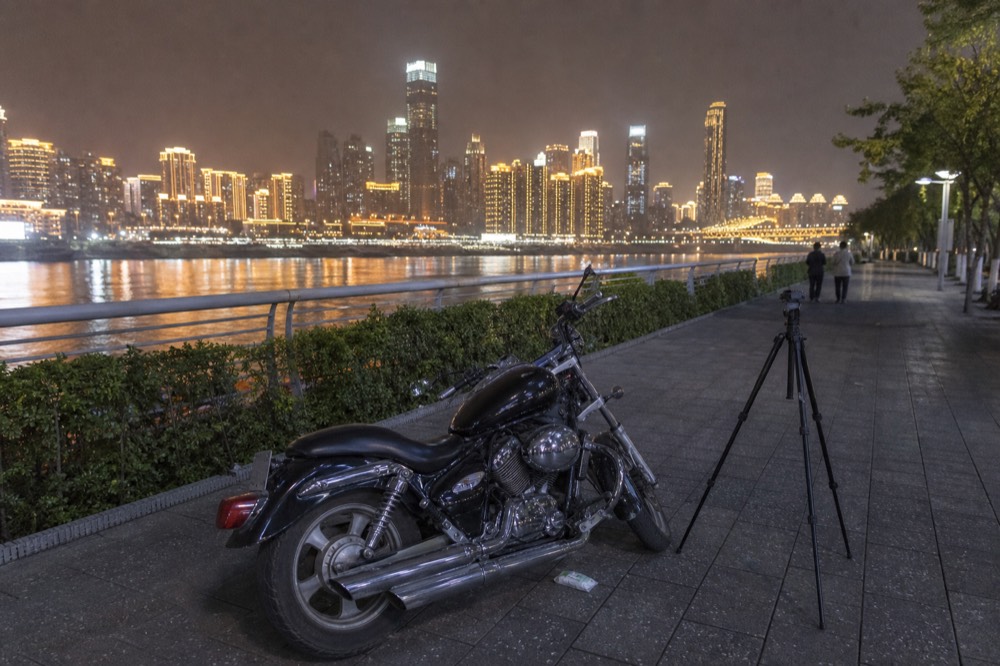
The Motorcycle Photo Shoot Package, sold as a single-person package, is the one that produces posed skyline stills: you stand and sit with the bike as a prop against the lit skyline, you receive all the negatives plus nine retouched photos, and the operator's own words are that it "only provides static photo shooting services and does not include a motorcycle riding experience." It is the cheaper of the two, from about $52.85 per person, excludes clothing and makeup, and has no stated age limit. If what you want is the portrait, the feed-ready still of you and a bike against the skyline, this is the one.
The Motorcycle Video Shoot Package is a different product: the pillion ride, with a professional rider and a photographer following, producing one edited video of 25 to 35 seconds with action guidance during the ride. It is restricted to riders 18 and over, excludes clothing and makeup, and, honestly, stills are not promised: the inclusion list names the ride, the clip and the delivery window and nothing else, though two reviewers were sent photos anyway. If you want a moving clip along Nanbin Road, choose the video package.
Both packages meet at the crew-confirmed point near Nanbin Road with the crew confirming the exact spot after booking, both are sold per single person, a helmet is provided, the service language is Chinese with no English-speaking rider guaranteed, and free cancellation applies with no published window. The operating window is 18:30 to 22:00 and the price moved between $50.31 and $52.85 on a single day on the operator's own surfaces, so treat any figure as "from about" and check the live listing before you commit.
How Do The Sights Cluster By Area?
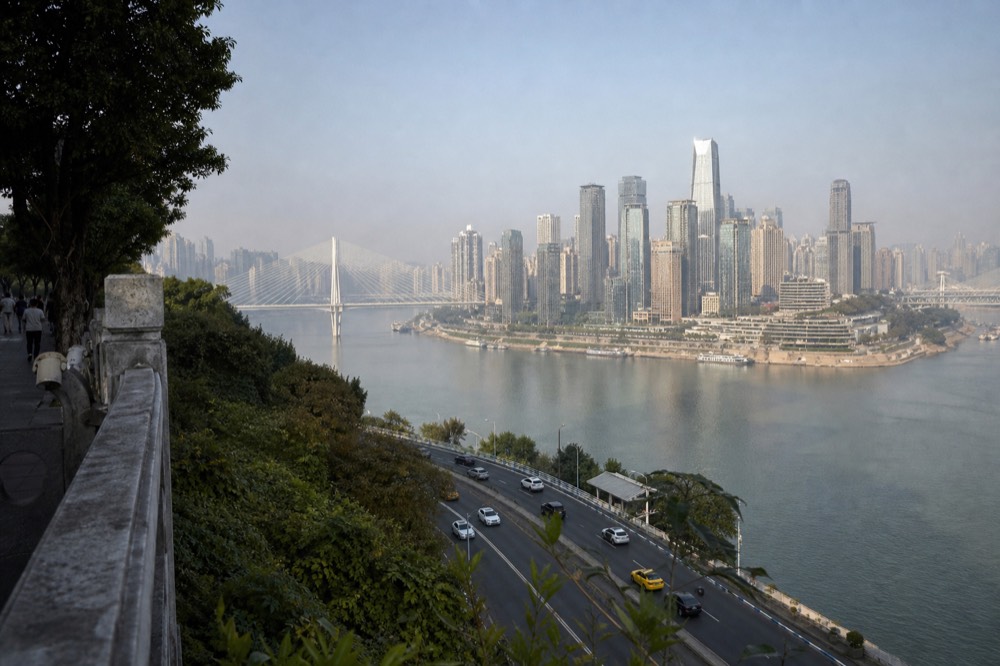
Chongqing's sights cluster into three areas: the Yuzhong peninsula, which stacks Hongyadong, Jiefangbei, Kuixinglou, Eling Park and Liziba within a few metro stops of each other; the Nan'an south bank along Nanbin Road, which is the viewing side; and a beyond-the-core ring of Nanshan viewpoints and the megainterchange. Planning by cluster saves real time, because crossing the river costs a cableway ride or a metro leg even when the two banks look adjacent on a map. The Yuzhong cluster is walkable with effort and vertical gain; the Nan'an corridor is linear and best done as one evening; Nanshan needs a taxi.
| Cluster | Sights | Best use |
|---|---|---|
| Yuzhong peninsula | Hongyadong, Jiefangbei, Kuixinglou, Eling Park, Liziba, Chaotianmen, Raffles City | Daytime walking plus the north-bank view of the lighting |
| Nan'an south bank | Nanbin Road, Longmenhao Old Street, Dongshuimen crossing, the shoot corridor, Danzishi old streets | The evening: skyline viewing and the night session |
| Beyond the core | Yikeshu platform on Nanshan, Huangjuewan interchange | One dedicated trip, best combined after dark |
The station mapping is the practical key. Xiaoshizi serves Hongyadong and Chaotianmen; Jiaochangkou serves Jiefangbei; Linjiangmen serves Kuixinglou; Eling serves the park; Liziba serves its own namesake. On the south bank, Shangxinjie on the Loop Line and Line 6 sits at the Dongshuimen end, and Danzishi on the Loop Line is the nearest station to the Bell Tower Plaza, roughly 1.8 km north. Note the Loop Line's last train on an ordinary day is 22:30, so a 22:00 finish on Nanbin Road leaves half an hour and a climb to reach it; a taxi is the realistic option, and the daytime tariff, 10 yuan flag-fall for the first 3 km, runs until 23:00. Getting around the city in general is covered in the getting around Chongqing guide.
How Long Does Each Sight Take?
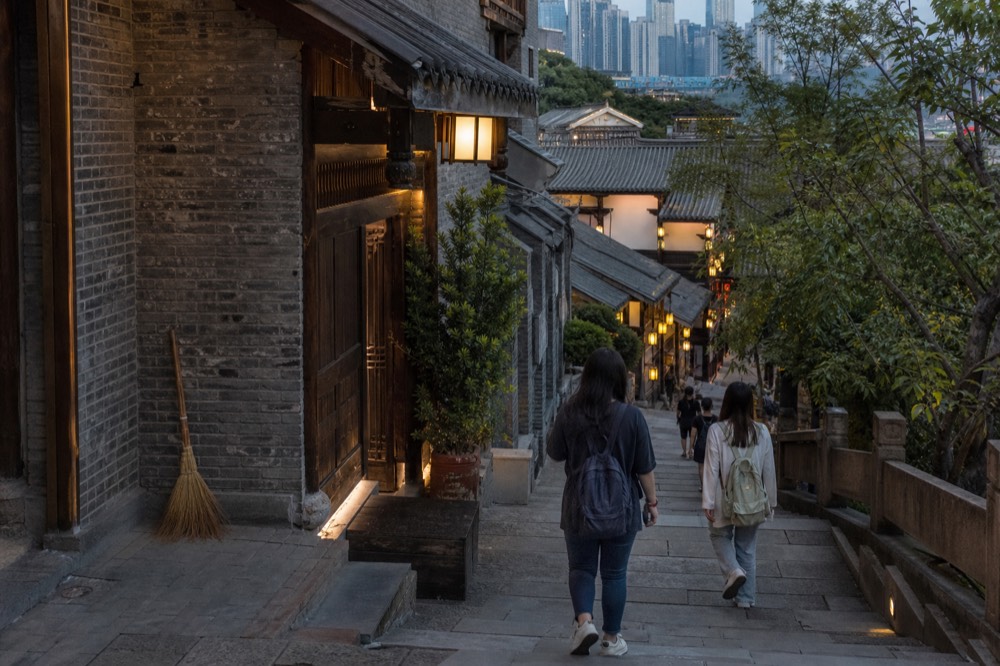
Realistically, the free sights take 30 minutes to an hour each, the viewing platforms and decks an hour to 90 minutes, and the evening skyline tier is best treated as one continuous block of two to three hours rather than a sequence of stops. Chongqing rewards slow vertical wandering more than checklist ticking, and the cliff geography means even adjacent sights involve stairs. The timings below are planning ranges, not operator promises.
| Sight | Rough time | Notes |
|---|---|---|
| Liziba platform | 30 to 45 minutes | Wait for a train pass; Line 2 runs frequently |
| Hongyadong exterior | 45 minutes to 1 hour | Longer at night, and crowded at peak |
| Eling Park | 1 hour | Add the climb time from Eling station |
| Jiefangbei | 30 minutes | Combine with shopping or a meal |
| Nanbin Road evening block | 2 to 3 hours | Viewing, dinner and the session window together |
| Yangtze Cableway | 45 minutes including queue | Crossing itself is 3.6 minutes |
| Motorcycle session | Depends on the package | Photo: 15 minutes of posed shooting; video activity: about 30 minutes |
The two packages side by side, for anyone deciding between them at the timing stage:
| Photo package | Video package | |
|---|---|---|
| What it is | 15 minutes of posed shooting, bike as prop, no ride | Pillion ride with a professional rider and a following photographer |
| What you get | All negatives plus 9 retouched photos | One edited video, 25 to 35 seconds |
| Age | No stated limit | 18 or over |
| Price | HK$415, from about US$52.85 | HK$482, about 16 percent more |
| Excludes | Clothing, makeup, any riding, video | Clothing, makeup; stills not promised |
When Should You Go, And On What Schedule?
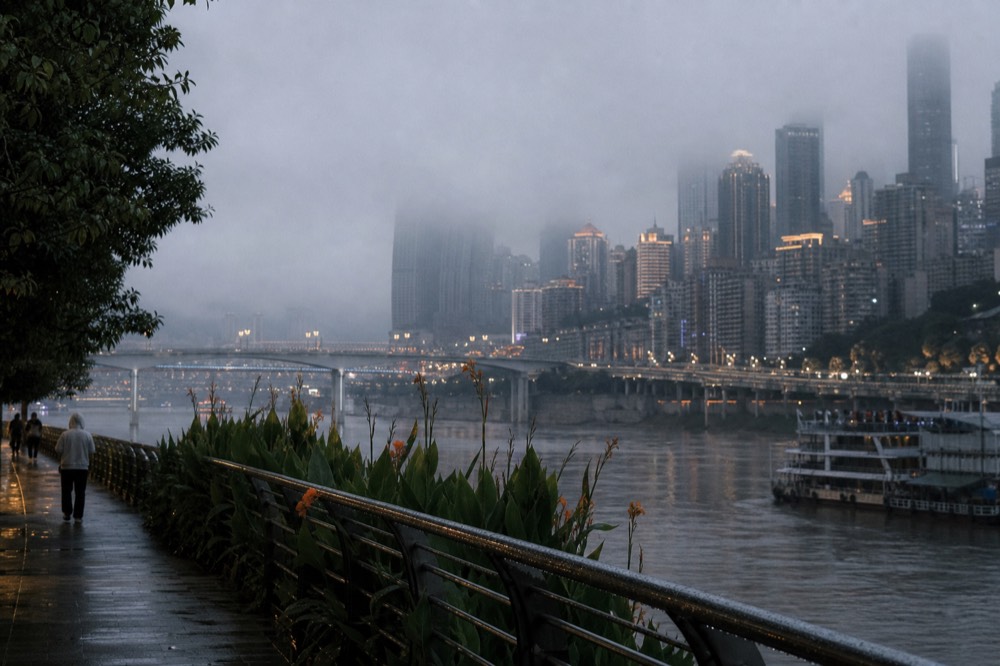
Time your visit around two clocks: the season, because summer switch-on at 20:00 lands almost exactly at the late-June sunset of 19:58, while winter lights come on at 19:30 a full 90 minutes after the 18:00 sunset; and the calendar, because National Day week, 1 to 7 October, extends the lighting by two hours and brings heavy crowds. The October schedule brings lights forward to 19:30, but does not guarantee twilight colour; the National Day extension can keep the skyline lit toward 23:30. Summer gives you the strongest blue-hour overlap in the examples but the most heat and rain. December and January bring fog, about 6.8 foggy days in December on average, which is atmospheric or ruinous depending on what you came for.
The drone show, when it is running, adds a 20:30 Saturday event over the core riverfront that pairs naturally with an evening already spent on Nanbin Road. The dates are announced month by month, so check what is published for your month rather than assuming a standing schedule. For the full seasonal breakdown, including month-by-month climate and light timings, the best time to visit Chongqing guide owns that question, and for sequencing these sights into days, the Chongqing itinerary guide does the day-by-day work this inventory deliberately does not.
What Should You Actually Do With Your Evening?
If you have one evening in Chongqing, the south bank is a straightforward skyline plan: arrive on Nanbin Road before the 20:00 summer or 19:30 winter switch-on, then watch from Longmenhao Old Street or the promenade. Add a motorcycle session if you want a posed portrait or riding-video souvenir; otherwise the public riverfront gives you the view without a booking.
Start from Danzishi station if the timing works, or take a taxi, and allow time for the riverside walk and dinner. Check your return transport before a late finish. A guided night route is a separate way to connect several viewpoints; a motorcycle session is for a specific photo or video souvenir.
For a deeper look at how the whole trend works, the article on the Chongqing motorcycle trend covers its origins and numbers, and the question of what the city is actually famous for is answered in what Chongqing is famous for.
The short answers: Chongqing is worth visiting, two days covers the core inventory, the city lights switch on at 20:00 in summer and 19:30 in winter, most signature sights are free, the motorcycle shoot should be booked ahead, and a handful of metro stations cover everything worth seeing. Each of these is addressed in full in the sections above; the details below condense them for quick planning.
Common Questions About Things To Do In Chongqing
Is Chongqing worth visiting for tourists?
Yes, and the inventory above is the argument: a free-tier majority of signature sights, a published lighting schedule that turns the skyline into a nightly event, and 2,147,800 inbound overseas visitors in 2025, a number growing fast. The city pairs a genuine manufacturing identity, 6,473,100 motorcycles built in 2025, with terrain no other Chinese mega-city has.
How many days do you need in Chongqing?
Two days covers the inventory: one for the Yuzhong peninsula cluster by day and one evening on the Nanbin south bank for the after-dark tier. Three days adds Nanshan and a slower pace. The itinerary guide sequences this in detail.
What time do the city lights come on in Chongqing?
The core-area landscape lighting switches on at 20:00 from 1 May to 30 September and at 19:30 from 1 October to 30 April, off no earlier than 22:30 in summer and 21:30 in winter. Spring Festival and National Day extend it by two hours.
What is free in Chongqing?
Most of the signature sights: Hongyadong's public levels, the Liziba viewing platform, Eling Park, Jiefangbei, Kuixinglou, the whole Nanbin Road corridor and the bridges. The ticketed tier is mainly altitude and motion: the cableway, the Raffles City deck and the Nanshan platforms.
Do you need to book the motorcycle shoot in advance?
Arrange it ahead if you want that photo or video souvenir: bookings fall within the 18:30 to 22:00 operating window, one person per booking, with the crew confirming the exact spot near Nanbin Road after booking. Free cancellation applies, with no published window, so check the live listing before you commit.
Which metro stations do I need in Chongqing?
Xiaoshizi for Hongyadong and Chaotianmen, Jiaochangkou for Jiefangbei, Linjiangmen for Kuixinglou, Eling for the park, Liziba for the monorail shot, and Shangxinjie or Danzishi, both on the Loop Line, for the south bank and Nanbin Road.
Choose Your Chongqing Experience
Reserve a full sightseeing day before arranging separate journeys: check dates for the 8–9-hour private highlights route with Liziba, Kuixinglou and hotel pickup.
8–9 hours · Private highlights tour with English/Mandarin guide and hotel pickup. Hongya Cave is a pass-by. Not wheelchair accessible.
Compare Experiences And Refine Your Choice
Premium Chongqing Private Tours: Highlights, Night View or Cruise: 8–9 hours. Private highlights tour with English/Mandarin guide and hotel pickup. Hongya Cave is a pass-by. Not wheelchair accessible.
Chongqing: One-Day Extravaganza: Hit All the Must-See Spots!: 6 hours. Private sightseeing with an English guide and vehicle. Hotel pickup and drop-off are listed; confirm your selected itinerary.
Chongqing Night Tour: Hongyadong, Bridge Views & Riverwalk: 3 hours. Private night walk with English selectable, Hongyadong and riverfront viewpoints. Confirm the meeting point for your option. Not wheelchair suitable.
Compare Your Trip Totals
Use the same currency and number of people. Include transport and tickets in your independent total; compare it with the total tour quote.
Scheduled dates are not live availability. Confirm your date and final price on Viator.
Check your selected option, meeting arrangements and final price on the booking page.
Check Your Chongqing Highlights DateReserve a full sightseeing day before arranging separate journeys: check dates for the 8–9-hour private highlights route with Liziba, Kuixinglou and hotel pickup.
Check Your Chongqing Highlights Date