Best Time To Visit Chongqing: Weather, Light And The Two Clocks
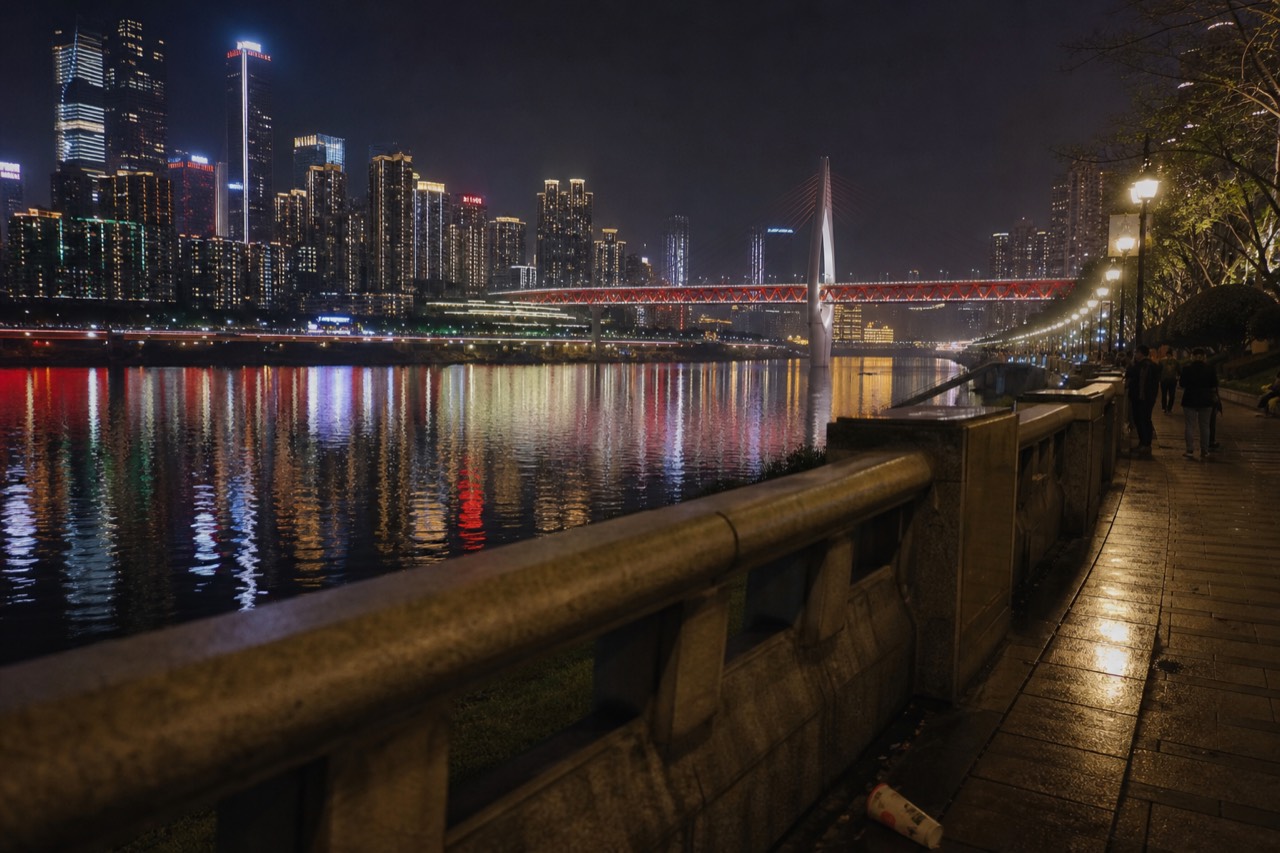
Every guide to timing a Chongqing trip talks about the weather. Almost none of them mention that the same evening booking is full night in December and broad daylight in June, because sunset moves by two hours across the year and the city's skyline lighting switches on at a fixed clock time.
Short answer
The best months for Chongqing are late March, April, and October into early November: mild temperatures, fewer fog days than midwinter, and a sunset that lands close to the skyline light switch-on. For an evening motorcycle photoshoot, April and late June give the only real blue-hour overlap, roughly 35 minutes of lit skyline and colored sky at once.
When Is The Best Time To Visit Chongqing?
The best time to visit Chongqing is late March through April, and again from mid-October into November, for milder temperatures. These are weather recommendations: autumn fog risk rises, and an October skyline switch-on does not promise a colored sky.
Most timing advice treats Chongqing as a weather problem only. That is half the picture, and the smaller half if night photography is the reason for the trip. The month you choose changes two separate clocks. The first is the weather clock: an annual mean of 18.8 C, 149.1 days a year with measurable rain, a station record of 43.7 C, and an average of 37.2 foggy days a year. The second is the light clock: because all of China runs on a single time zone while Chongqing sits near 106.55 degrees east, sunset moves from about 18:00 at the December solstice to about 19:58 at the June solstice. An 18:30 booking starts after civil dusk in late December and in daylight in midsummer; the skyline lights switch on later in both cases.
This page owns both clocks. If you are planning around the viral motorcycle shoot rather than general sightseeing, the light clock matters more, and the Chongqing motorcycle session, photo or video decision depends on it: the photo package poses with a parked bike, while the video package is a pillion ride, and they reward different skies. The site behind this guide, Chongqing Motorcycle Photoshoot, exists because that single decision catches out a lot of travellers.
Which Month Has The Best Weather?
On weather alone, April and October are the standout months: mean highs of 23.9 C and 22.0 C respectively, mean lows of 16.0 C and 16.8 C, and rainfall that has not yet reached the summer monsoon peak. March and November are close behind. Avoid July and August for heat, with mean highs of 33.7 C and 33.9 C, and expect the wettest stretch from June through September.
The figures below are the China Meteorological Administration's 1991-2020 climate normals for the Shapingba station, elevation 259 m, the official reference series for the city. They are averages, not forecasts: the record high at this same station is 43.7 C, set in August, and the record low is -1.8 C in January, with an extremes record running from 1951.
| Month | Mean high (C) | Mean low (C) | Rainfall (mm) |
|---|---|---|---|
| Jan | 10.4 | 6.4 | 20.7 |
| Feb | 13.6 | 8.3 | 22.4 |
| Mar | 18.6 | 11.7 | 55.6 |
| Apr | 23.9 | 16.0 | 103.4 |
| May | 27.4 | 19.4 | 142.5 |
| Jun | 29.8 | 22.4 | 212.1 |
| Jul | 33.7 | 25.4 | 174.2 |
| Aug | 33.9 | 25.3 | 125.7 |
| Sep | 28.5 | 21.5 | 124.7 |
| Oct | 22.0 | 16.8 | 95.3 |
| Nov | 17.3 | 12.5 | 50.4 |
| Dec | 11.7 | 8.0 | 24.7 |
Two details hide inside the averages. First, sunshine is scarce: 983.2 hours a year, only 21 percent of the possible total, and January averages 16.6 hours of sunshine for the entire month, about 5 percent of what is possible. Chongqing is an overcast city by default. Second, rain falls often but usually briefly: those 149.1 rain days carry 1,151.7 mm across the year, concentrated from June to September, and relative humidity averages 78 percent year round.
If you are timing a trip around the evening ride-and-shoot experience, the night activities guide covers how the city's fixed lighting schedule shapes every after-dark plan; the weather table above tells you which months you will actually be comfortable standing outside in.
What Does An 18:30 Session Start Actually Look Like?
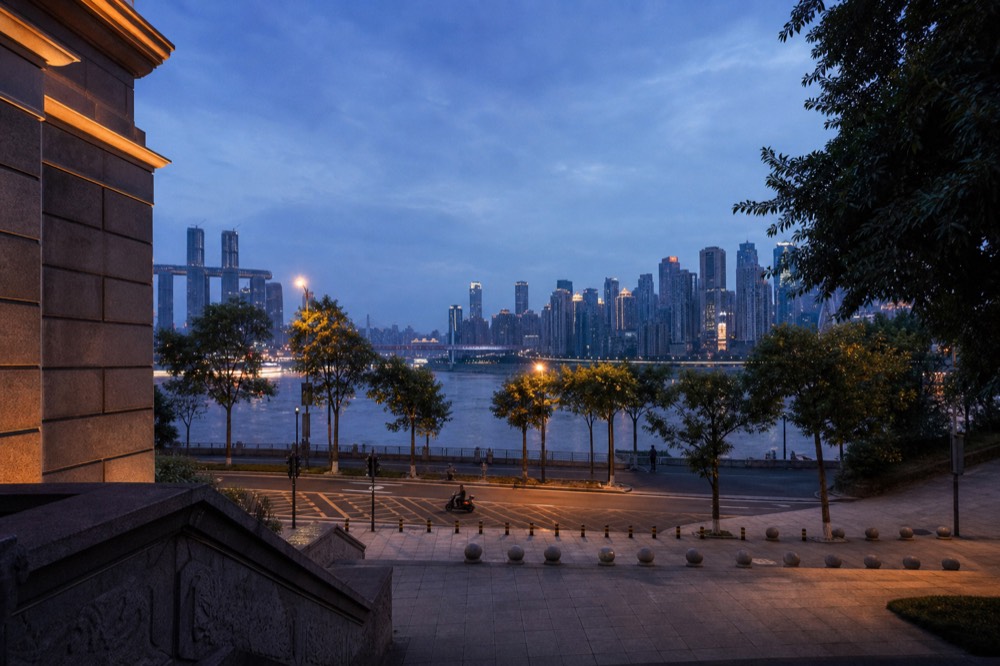
An 18:30 start is after civil dusk in late December, but February can still have daylight. In June and July it is broad daylight. The skyline lights switch on at 19:30 in winter and 20:00 in summer, so choose the actual booking slot for the backdrop you want.
This is the part of the timing question almost every guide misses. Bookings are offered within an 18:30 to 22:00 operating window; an individual photo session lasts 15 minutes. The light at your booked time depends on the date, because Chongqing's decorative skyline lighting, the "Two Rivers, Four Banks" core area that includes the Yuzhong skyline, the riverside towers and the cross-river bridges, switches on at fixed clock times under a municipal regulation: 20:00 from 1 May to 30 September, and 19:30 from 1 October to 30 April, as published by the Chongqing Municipal Urban Administration Bureau. Street lighting senses daylight; landscape lighting reads a calendar.
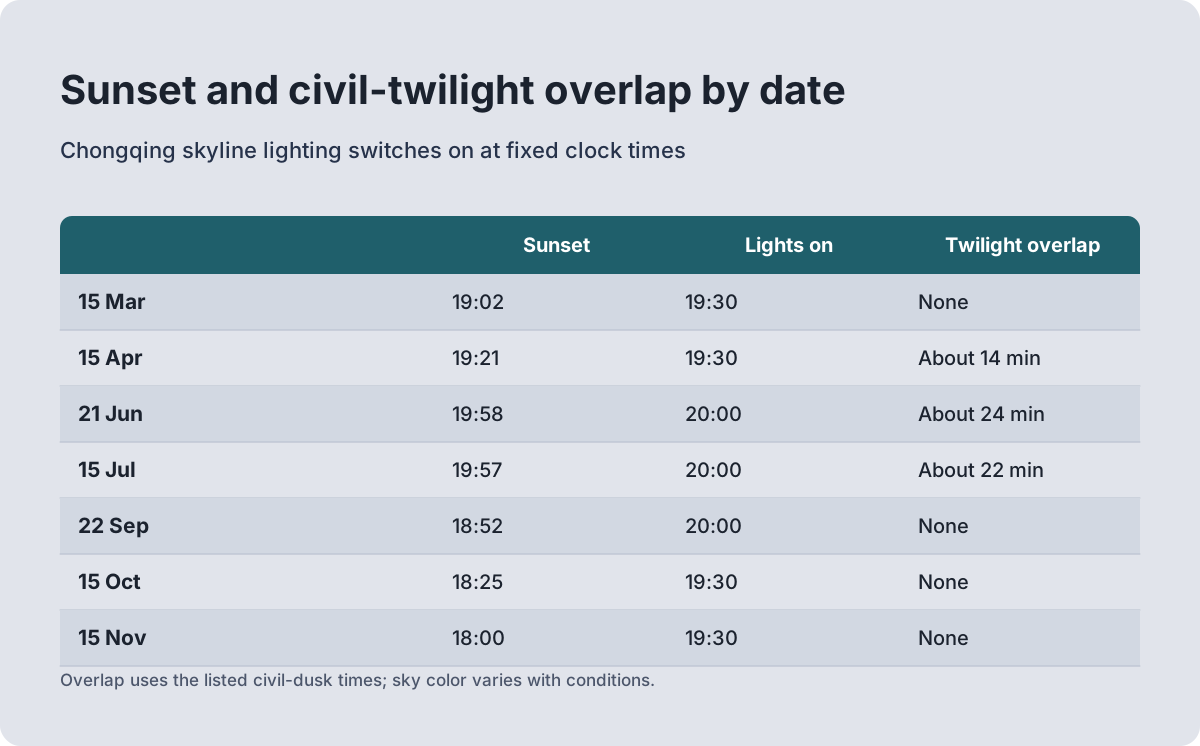
The sunset times below are computed for Chongqing's coordinates (29.5630 N, 106.5516 E) with the NOAA solar algorithm. Because China keeps one clock for the whole country, local solar noon in Chongqing falls roughly 50 minutes after clock noon, which is why these times look late for the latitude. The overlap column measures the minutes between skyline switch-on and the listed end of civil twilight. It is calculated from the times in this table, not a guarantee of blue sky or photographic conditions.
| Date | Sunset | Civil dusk ends | Skyline lights on | Civil-twilight overlap |
|---|---|---|---|---|
| 15 Jan | 18:18 | 18:42 | 19:30 | None |
| 15 Feb | 18:43 | 19:06 | 19:30 | None |
| 15 Mar | 19:02 | 19:25 | 19:30 | None |
| 15 Apr | 19:21 | 19:44 | 19:30 | About 14 min |
| 15 May | 19:40 | 20:05 | 20:00 | About 5 min |
| 21 Jun | 19:58 | 20:24 | 20:00 | About 24 min |
| 15 Jul | 19:57 | 20:22 | 20:00 | About 22 min |
| 15 Aug | 19:36 | 19:59 | 20:00 | None |
| 22 Sep | 18:52 | 19:14 | 20:00 | None |
| 15 Oct | 18:25 | 18:48 | 19:30 | None |
| 15 Nov | 18:00 | 18:23 | 19:30 | None |
| 21 Dec | 18:00 | 18:25 | 19:30 | None |
Read the table twice, once for each clock. On 21 December civil dusk ends at 18:25, just five minutes before an 18:30 booking, but the skyline lights do not switch on until 19:30. A 15-minute photo slot at 18:30 therefore finishes before switch-on. Choose a later confirmed slot if you want illuminated towers behind the parked bike.
Summer flips the trade. On 21 June, sunset is about 19:58, the skyline lights switch on at 20:00 and civil twilight ends at 20:24. That creates about 24 minutes of calculated overlap, although sky color depends on conditions. The video package produces an edited 25 to 35 second pillion-riding clip; it is for ages 18 and over, excludes clothing and makeup, and does not promise still photos.
Spring Festival and National Day carry a two-hour extension to the lighting schedule, and New Year's Day and Labour Day a one-hour extension, so the lit window stretches past the end of the session on those dates. On 22 September, sunset is 18:52 and civil twilight ends at 19:14, before the 20:00 skyline switch-on; there is no calculated civil-twilight overlap.
When Is Chongqing Foggy?
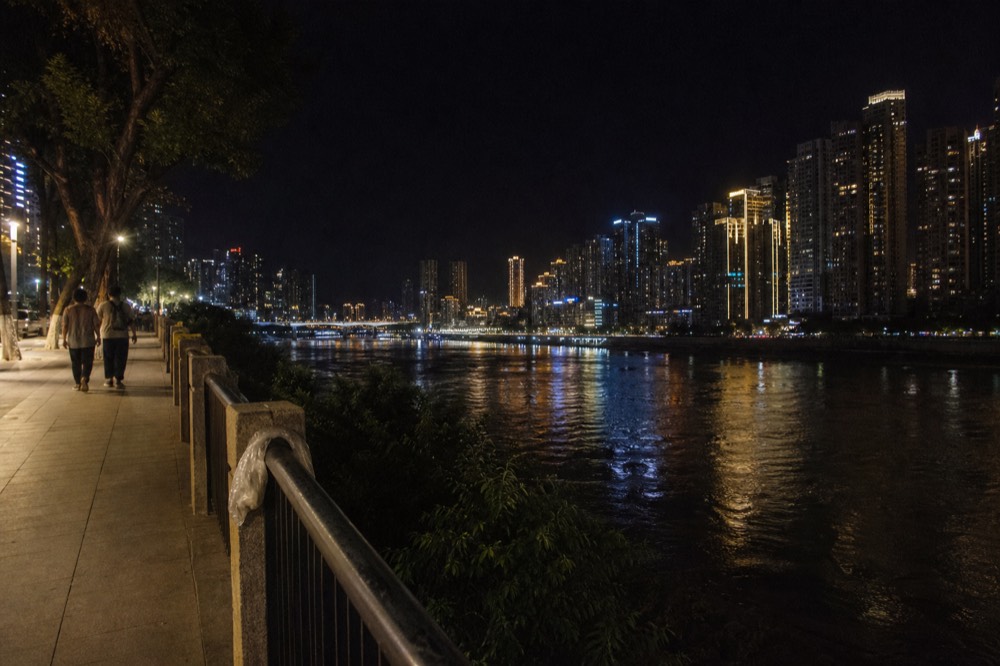
Chongqing averages 37.2 foggy days a year, and they are not spread evenly: autumn and winter carry 72 percent of them, October through February carries 66 percent, December is the foggiest month at about 6.8 days, and August the clearest at about 1.3. If fog would ruin your shoot, the April-to-July stretch is the safest bet.
The figures come from the China Weather Net's Chongqing station, covering the 1973 to 2010 reference period, and recent decades show a downward trend, so a modern winter visit may see less fog than the average suggests. The famous "Fog City" nickname is tied in Chinese government material to the city's topography, its two rivers, and a later era of industrial pollution and acid rain rather than any single official designation.
| Period | Fog character |
|---|---|
| March to May | Light risk, declining toward summer |
| June to August | Lowest of the year, August about 1.3 days |
| September to November | Rising sharply, autumn carries most of the annual total with winter |
| December to February | Peak, December about 6.8 days on average |
Fog is not purely a problem. A misty night on the river can soften the neon into something more atmospheric than a clear sky gives, and some of the city's most shared images lean on it. But it eats contrast and it swallows the far end of the skyline where Chaotianmen and Raffles City sit, so for a first visit with one shoot night, plan around it rather than hoping for it. If your dates are locked to winter, allow flexibility in your independent sightseeing. The listing shows free cancellation; check the selected booking terms before assuming a shoot can be changed or rescheduled.
How Hot Does Chongqing Actually Get?
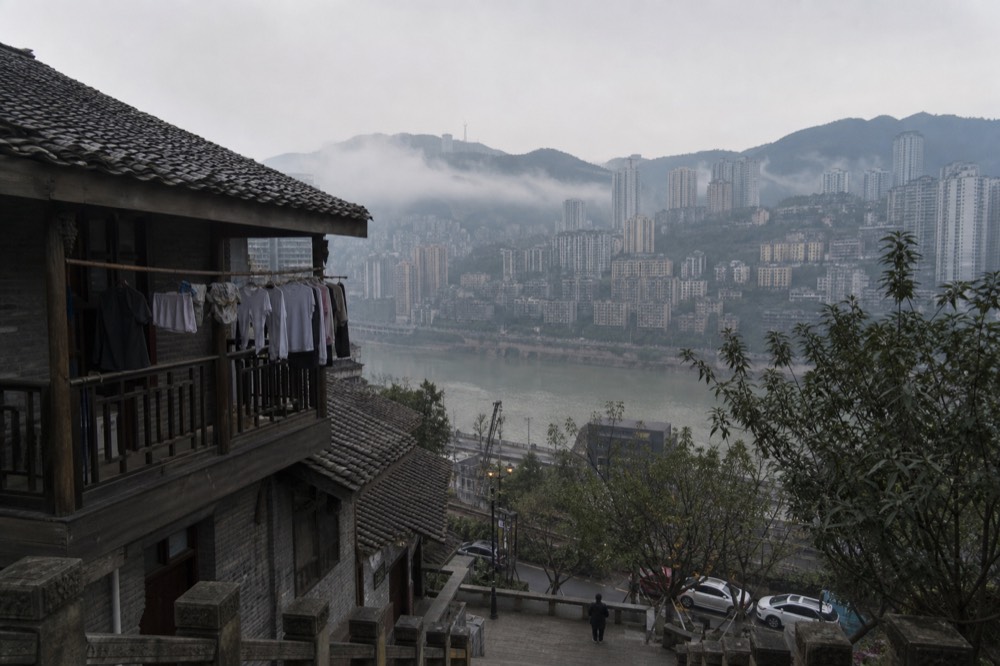
The Shapingba station record is 43.7 C, set in August, with a record low of -1.8 C. July 2025 brought 26 consecutive high-heat days peaking at 41.6 C, and days at or above 35 C ran to 77 in 2024 and 70 in 2025. Chongqing's furnace-city reputation is earned in July and August. Evening sessions can still be hot.
Not all of these figures carry the same weight, and the table below shows which is which. The 43.7 C record comes from the official CMA climate table for Shapingba. The 45.0 C reading sometimes quoted for Chongqing was taken at the Beibei national station on 18 August 2022, a different station in the municipality, and must not be presented as the city's record.
| Figure | Source status |
|---|---|
| 43.7 C station record, Shapingba, August | CMA 1991-2020 normals table, verified |
| -1.8 C station record low, January | CMA 1991-2020 normals table, verified |
| 45.0 C at Beibei, 18 August 2022 | Single source, a different station, not the city record |
| 26 consecutive high-heat days, July 2025, peak 41.6 C | Single source, Global Times |
| 77 days at or above 35 C in 2024, 70 in 2025 | Single source, compiled statistics, not a primary release |
The practical reading for a visitor: mean daily minimums in July and August sit at 25.4 C and 25.3 C, so nights remain warm. An evening booking is not a guarantee of cool conditions. Plan for the weather at your actual slot; an 18:30 photo booking in June ends well before the skyline switch-on.
What About China's 2026 Public Holidays?
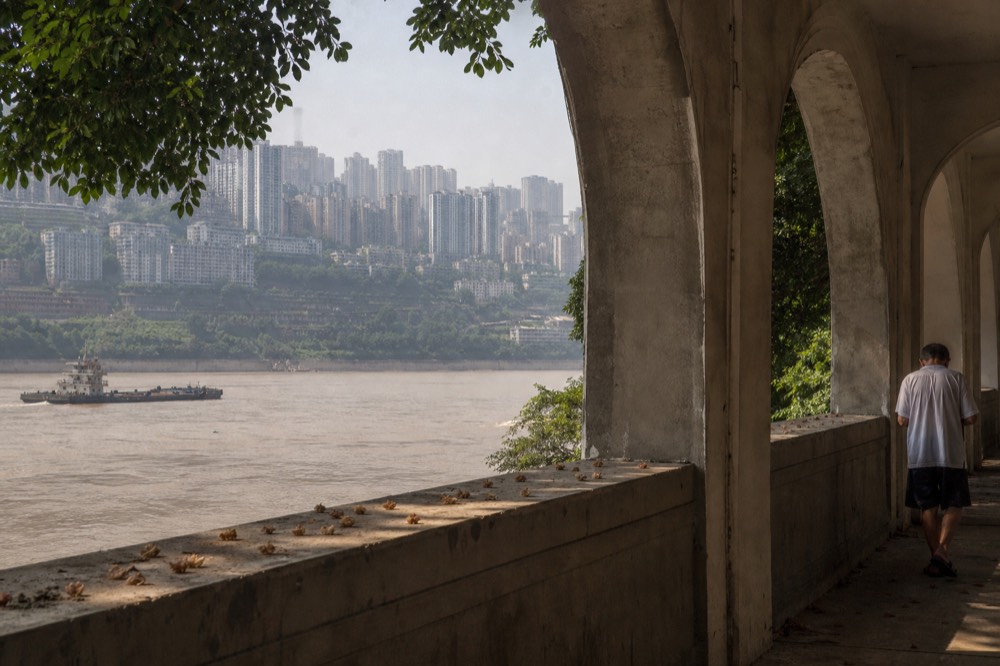
The 2026 holiday calendar runs Spring Festival from 15 to 23 February, Labour Day from 1 to 5 May, Dragon Boat from 19 to 21 June, Mid-Autumn from 25 to 27 September, and National Day Golden Week from 1 to 7 October. Spring Festival and National Day add a two-hour extension to the skyline lighting, and New Year's Day and Labour Day add one hour.
The dates are the State Council General Office's official notice of 4 November 2025, published in the gazette. The 2027 schedule has not been published yet, so anything you read about 2027 holiday dates is speculation.
| 2026 holiday | Dates | Lighting extension |
|---|---|---|
| New Year | 1 to 3 January | Plus 1 hour |
| Spring Festival | 15 to 23 February | Plus 2 hours |
| Qingming | 4 to 6 April | None published |
| Labour Day | 1 to 5 May | Plus 1 hour |
| Dragon Boat | 19 to 21 June | None published |
| Mid-Autumn | 25 to 27 September | None published |
| National Day | 1 to 7 October | Plus 2 hours |
Holidays cut both ways. The extensions mean the Yuzhong skyline stays lit until roughly 23:30 during National Day week, well past the 22:00 end of the session and past the Nanbin Road two-wheeler curfew that forces the session to end then. But holidays also mean domestic crowds at every vantage point, heavier traffic on the riverside roads the ride uses, and pressure on hotels. The late-September Mid-Autumn weekend, 25 to 27 September 2026, also overlaps the city's scheduled drone-show dates, which run on Saturday evenings at 20:30 over the core riverfront; the organiser publishes each month's dates, so check before assuming.
If you want the lit-skyline-plus-crowd trade to land in your favour, the week after Golden Week, from 8 October, keeps the winter lighting schedule's 19:30 switch-on, mild temperatures, and thinner crowds, and it is arguably the best-value week of the whole year. That is also when the 240-hour visa-free transit window is easiest to use calmly; the China 240-hour visa-free transit guide covers who qualifies.
What Does Each Month Mean For An Evening Shoot?
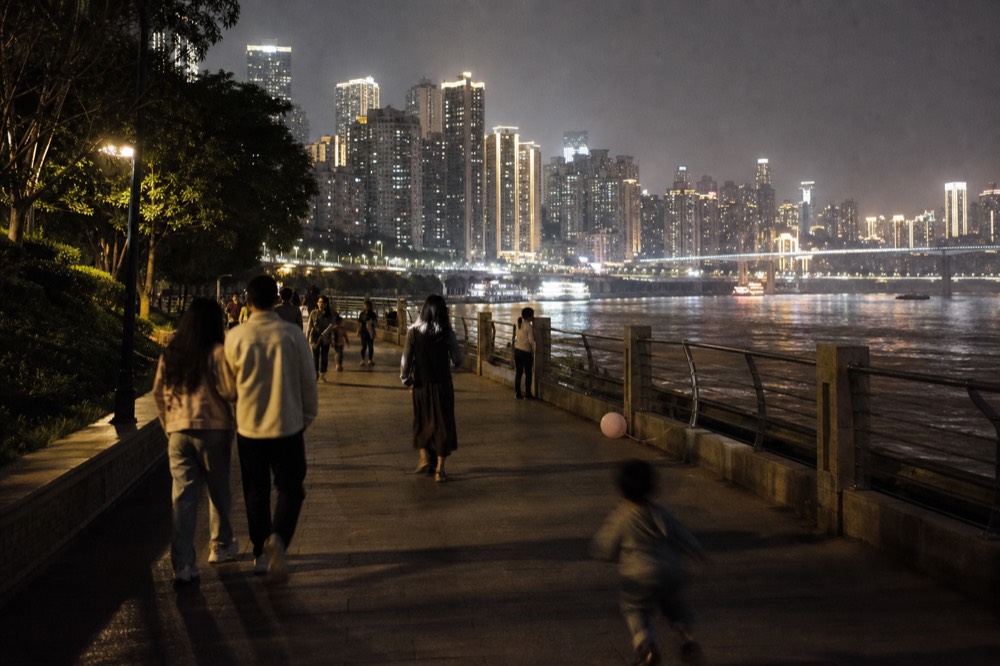
Each month combines different light, temperature and switch-on times. January and December bring early darkness and fog risk; April has a short civil-twilight overlap; June and July have a longer one but more heat. October returns to the 19:30 lighting schedule after civil dusk on the reference date.
The one-line table below compresses everything above into a decision aid. Treat it as planning guidance rather than a promise: clouds, rain and fog move any given evening either way.
| Month | An evening session in one line |
|---|---|
| January | Civil dusk 18:42 on the reference date; skyline lights at 19:30 |
| February | Sunset 18:43 on the reference date; an 18:30 start is still daylight |
| March | Civil dusk 19:25, before the 19:30 skyline switch-on |
| April | Mild; about 14 minutes of calculated civil-twilight overlap on 15 April |
| May | Warm; about 5 minutes of overlap on 15 May after the 20:00 switch-on |
| June | Hot; about 24 minutes of overlap on 21 June |
| July | Hot and humid; about 22 minutes of overlap on 15 July |
| August | Civil dusk 19:59 on 15 August, just before the 20:00 switch-on |
| September | Civil dusk 19:14 on 22 September, well before lights at 20:00 |
| October | Mild; lights at 19:30 after the 18:48 civil dusk on 15 October |
| November | Early darkness and returning fog; lights at 19:30 |
| December | Civil dusk 18:25 on 21 December; skyline lights at 19:30 |
The pattern to notice is that the best weather months and the best light months do not fully coincide. April is the rare month that wins on both. June and July win on light but cost you heat and the monsoon's wettest approach. October wins on weather and the switch-on time but has already lost most of the blue hour. This is why a single "best month" answer, the kind most timing guides hand out, undersells the choice: you are not picking one condition, you are picking a bundle.
Do The Two Clocks Ever Agree: The Crossover Months
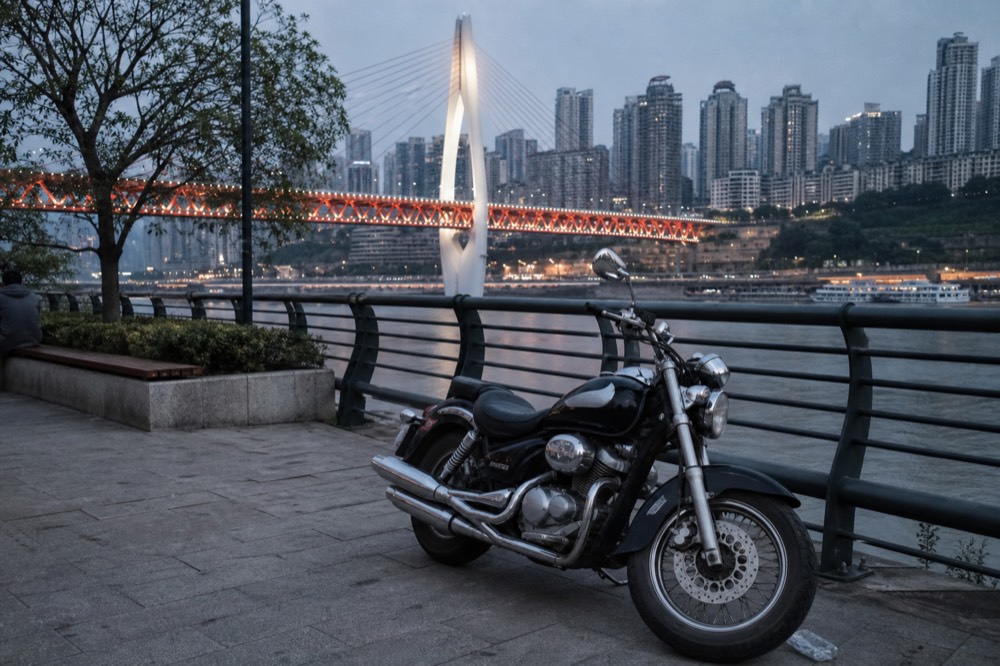
March and September both have civil dusk before the skyline lights switch on at the reference dates used here. April, May, June and July have some calculated overlap. Conditions and your exact date still determine the visible sky.
This is the single most common error in Chongqing timing advice, so it is worth laying the two clocks side by side rather than merging them into one claim. The sunset clock slides continuously through the year. The lighting clock jumps once, on 30 September to 1 October, and jumps back on 1 May. Any statement about "when the lights come on" is only true for half the year.
| Month | Sunset clock position | Lighting clock position | Civil-twilight overlap |
|---|---|---|---|
| 15 March | Sunset 19:02 | Lights 19:30 | None; civil dusk 19:25 |
| 15 April | Sunset 19:21 | Lights 19:30 | About 14 minutes |
| 15 May | Sunset 19:40 | Lights 20:00 | About 5 minutes |
| 21 June | Sunset 19:58 | Lights 20:00 | About 24 minutes |
| 22 September | Sunset 18:52 | Lights 20:00 | None; civil dusk 19:14 |
| 15 October | Sunset 18:25 | Lights 19:30 | None; civil dusk 18:48 |
The two-hour lighting extension on Spring Festival and National Day does not change the switch-on time, only the off time, so it extends the time for independent skyline viewing rather than the booked session duration. If a colored sky matters to your shot, the decision tree is short: April for comfort, late June for the longest overlap, and nothing in the second half of September.
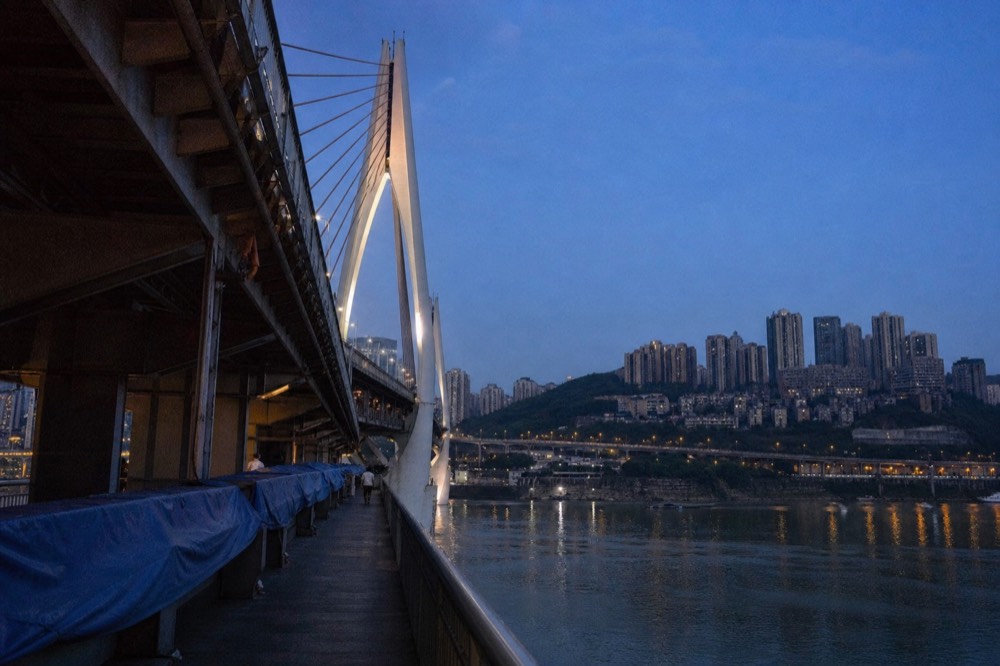
If the shoot is one part of a longer stay, pair this page with the free things to do in Chongqing guide, most of which cost nothing but daylight, and time the paid session for the one evening the clocks line up for you.
The timing questions travellers ask most cluster around the same few trade-offs: which month is comfortable, which month gives the blue hour, and whether the holidays help or hurt. The answers below pull the numbers from the climate normals, the light calendar and the holiday schedule above, so each one can be checked against the tables in the body of this guide.
Common Questions About The Best Time To Visit Chongqing
What is the best month to visit Chongqing?
April is the strongest single month: a mean high of 23.9 C, moderate rainfall, and about 14 minutes of calculated overlap between civil twilight and the lit skyline on 15 April. October into early November is the runner-up, with milder air and the 19:30 winter switch-on.
Is summer too hot for the motorcycle photoshoot?
July and August mean highs reach 33.7 C and 33.9 C, and July 2025 ran 26 consecutive high-heat days peaking at 41.6 C. Bookings fall within an 18:30 to 22:00 operating window; plan for heat at your actual slot.
Why does the same 18:30 booking look different in winter and summer?
Sunset in Chongqing moves from about 18:00 in late December to 19:58 in late June, while the skyline lighting switches on at fixed clock times, 19:30 in winter and 20:00 in summer. On 21 December an 18:30 start is five minutes after civil dusk; a June session starts in daylight.
When is the blue hour with the skyline lit?
The reference dates give about 14 minutes of civil-twilight overlap in April, 5 in May, 24 in June and 22 in July. March and September have none. These are calculated windows, not guarantees of sky color.
Are the Chinese public holidays a good or bad time to visit?
Holidays bring a one or two-hour lighting extension, so the skyline stays lit later, but they also bring heavy domestic crowds and traffic. The week after National Day, from 8 October, keeps the early switch-on with far thinner crowds.
Does fog ruin the photos?
Chongqing averages 37.2 foggy days a year, concentrated from October to February, with December the foggiest at about 6.8 days. Fog costs you contrast and the far skyline but can add atmosphere; the free-cancellation badge does not establish a right to reschedule. Check the selected booking terms.
Choose Your Nanbin Road Session
Have your month and evening in mind? Check a Nanbin slot before arranging dinner, then choose posed photos or the separate 18+ riding-video option.
Photo: parked bike and 9 retouched images. Video: pillion ride and one edited clip, ages 18+. Both are single-person packages with Chinese service.
Compare Packages And Refine Your Choice
These packages buy different results. The photo package keeps the bike parked; the video package includes a ride. Clothing and makeup are excluded. The crew confirms the meeting point near Nanbin Road. Service is Chinese; an English-speaking rider is not guaranteed.
Choose a month to see the published skyline-lighting window. Your actual appointment is confirmed by the crew.
Choose your package and date on the booking page; final price and availability are confirmed there.
Check Nanbin Session DatesHave your month and evening in mind? Check a Nanbin slot before arranging dinner, then choose posed photos or the separate 18+ riding-video option.
Check Your Nanbin Road Date