Can Tourists Take Photos In China? What The Published Record Actually Says
Photography in China involves location restrictions, privacy rights and security rules. See what this site found for Chongqing landmarks and riverfront portraits.
Can Tourists Take Photos In China? What The Published Record Actually Says
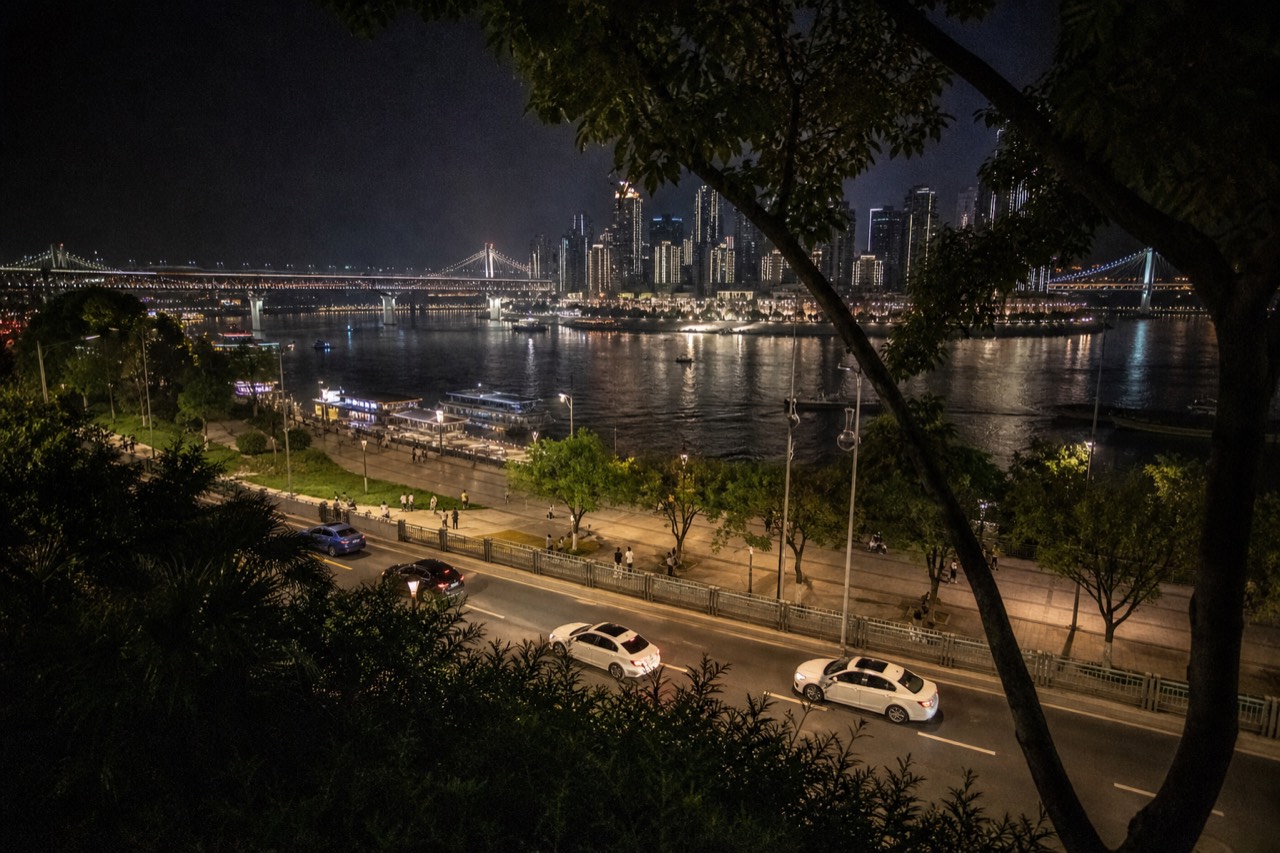
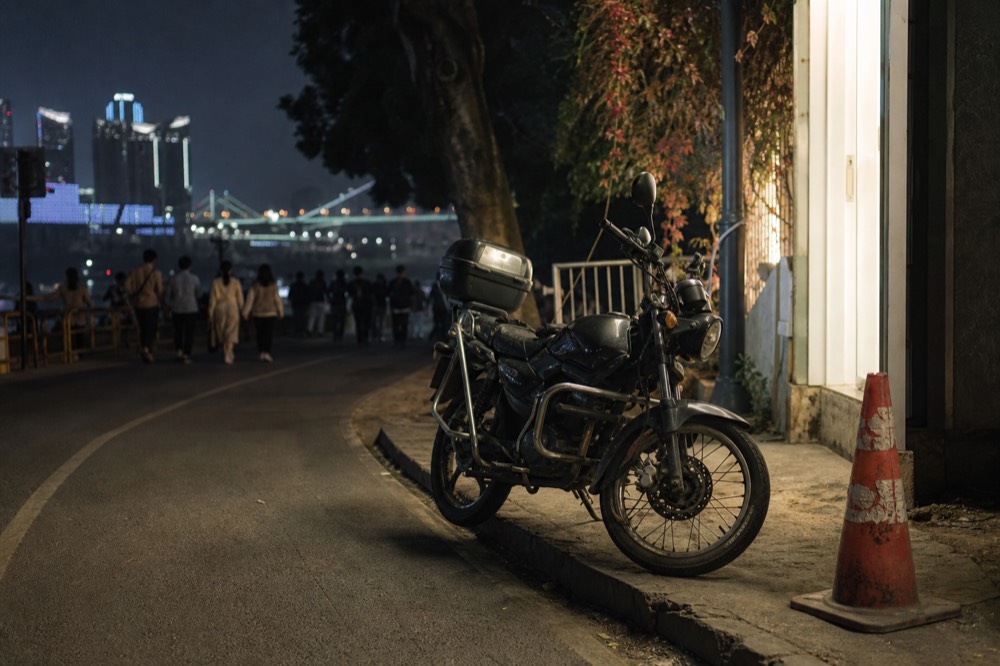
Yes, tourists commonly photograph public scenes, but location-specific restrictions, privacy rights and security rules still apply. This page separates what the published record actually limits, military zones and covert photography of strangers, from what is merely customary, and from the large third category: questions for which this site did not find a published photography-specific rule, including several Chongqing landmarks. That third category is where most visitor anxiety lives, and it is also the territory where the evening motorcycle photo and video sessions on Nanbin Road operate, although this site did not establish a complete account of the rules applying to every public-space shoot. Naming that gap out loud is more useful than a confident guess. What follows is a map of the published record, not a legal guide, and where nothing is published this page says so rather than inventing a rule.
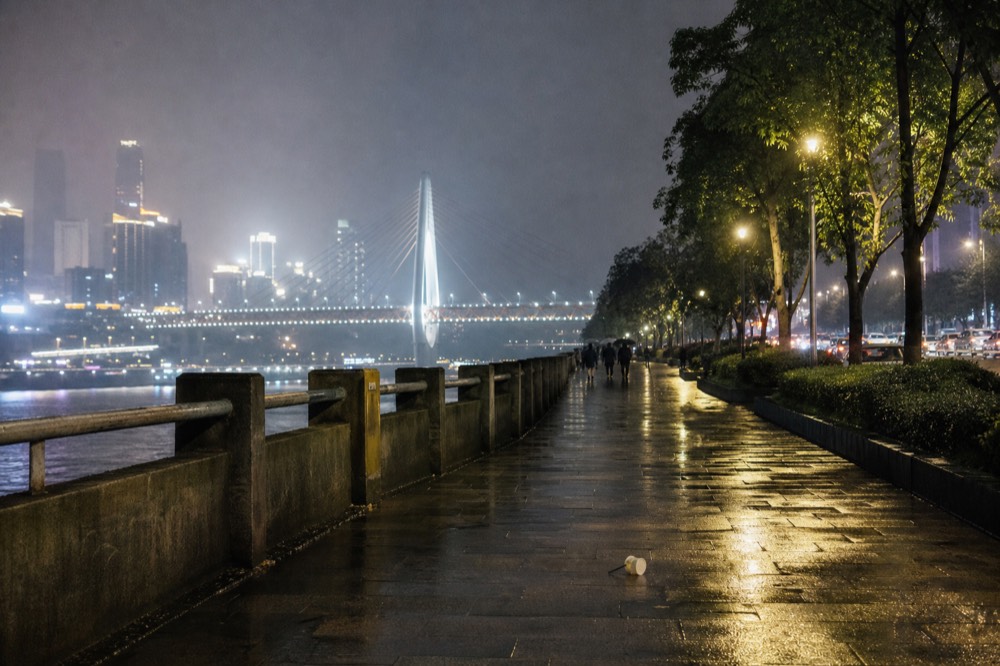
Roughly 1.52 billion views have accumulated across videos of Chongqing's night motorcycle shoots, a figure reported by the Global Times, and the trend includes footage made along the public riverfront. The practical reality on the ground is far more permissive than the travel-forum folklore suggests. The gap between folklore and record is exactly what this page works through, because a nervous visitor deserves to know which of their worries rest on a published rule and which rest on nothing at all.
This site's own research passes searched national and municipal sources for photography restrictions and repeatedly recorded the same finding: no general prohibition exists, and at most of Chongqing's photo landmarks, nothing is published either way. For the spots this site covers, the honest starting point is a companion piece on Chongqing cyberpunk photo spots, which owns the where. This page, published by Chongqing Motorcycle Photoshoot, owns the whether.
What Chinese Law Actually Restricts For Photographers
Three things. Military restricted zones may not be photographed at all; covert photography of people is a punishable offence; and commercial use of a recognisable stranger's image needs their consent. Ordinary photography of public scenes, streets, skylines and crowds is not restricted by any statute this site could find, and two independent research passes returned nothing. That absence is itself the finding, and it is recorded here as a fact rather than glossed over.
The hard prohibition is the Military Facilities Protection Law, revised in 2021. Its Article 17 bars photographing, filming, recording, surveying or even describing a military restricted zone, and Article 22 extends approval requirements to military administrative zones. The consequences are real: personnel may stop the photography, remove the offender, and seize equipment. Zones are marked by signage, and the UK Foreign Office's China travel advice notes that restricted military areas exist where foreigners found without authorisation can be detained, fined or deported, with signs typically indicating where they are. For a city-break photographer this is simple in practice: avoid military and other sensitive sites, follow restrictions and staff instructions, and do not assume missing signage means photography is permitted.
Photographing people is governed by the Civil Code. Article 1019 requires a subject's consent to make, use or publish their portrait, and Article 1020 lists exceptions, including the one that matters to tourists: a photograph made to show a particular public environment may unavoidably include people. In plain terms, a photo of a place where strangers happen to appear is covered. A photo that centres on an identifiable stranger is not, and any commercial use of a recognisable person's image needs consent. The customary rule and the legal rule converge here anyway: shoot the scene freely, and ask before you make a stranger the subject.
Covert photography is separately criminalised. Under the revised Public Security Administration Punishments Law in force from 1 January 2026, the offence sits in Article 50, covering covert filming and the spreading of private material, punishable by detention of up to five days or a fine of up to 1,000 yuan, doubling in serious cases. The operative word is covert: hidden cameras, up-skirt shots, filming people in private situations. Openly raising a phone toward a neon skyline is nowhere near this provision, and it is a mistake to write as though it were.
Drones are the one category with a clear, published, strict regime. The Interim Regulations on the Administration of Unmanned Aircraft Flight, in force since 1 January 2024, require real-name registration of civil drones and restrict airspace. Chongqing's central riverfront is inside a published no-fly area: the notices for the city's drone light show expressly prohibit unapproved drone flight across the Jiangbei Airport clearance protection zone, naming Chaotianmen Square, the Grand Theatre and Changjiahui Shopping Park on Nanbin Road. If you are not bringing a drone, none of this touches you; if you are, the honest summary is that the core riverfront is closed to you.
| Category | What the published record says | What it does not address |
|---|---|---|
| Public scenes, streets, skylines | Location-specific restrictions, privacy rights and security rules can apply to public photography | Nothing; the absence itself is the finding |
| Military zones | Photography prohibited without military approval, equipment can be seized | Where exactly every zone is, beyond signage |
| Strangers in your frame | Fine when unavoidable in showing a public environment; consent needed to centre or commercialise a person | Case-by-case outcomes, which depend on facts |
| Covert photography | Punishable under Article 50, fines up to 1,000 yuan | Not applicable to open photography at all |
| Drones | Registration required; central Chongqing riverfront is a published no-fly area | Practical registration for short-stay foreign visitors, unpublished |
| Government buildings | No national law prohibiting photography of them, despite the travel-blog claim | Local signage at specific sensitive sites |
What Is Actually Published At Chongqing's Photo Landmarks
Almost nothing about photography itself. What is published at the landmarks is access and crowd management: Liziba's viewing platform is free with one-way pedestrian flow at peaks, its station is under phased renovation until the end of December 2026, and this site did not find photography-specific rules for the landmarks it researched. The restriction a visitor actually meets is where they may stand, not whether they may shoot.
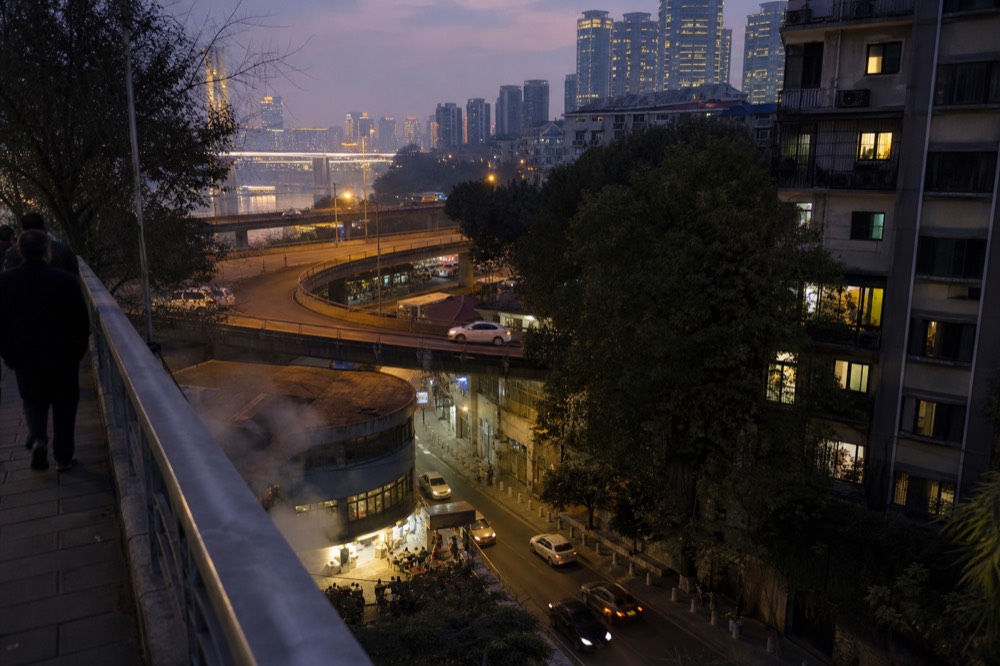
Liziba, the monorail station threaded through a residential building, is the clearest case. The station is open and in normal service; the reason people ask otherwise is a phased renovation the municipal government published in June 2026, closing parts of the platform, concourses and entrances in rotation, with the full schedule on the city government's site. The free viewing platform opposite stays open, with one-way clockwise circulation during peak periods for crowd safety. Chongqing's Rail Transit Regulations, revised in force from July 2025, contain no photography, tripod or live-streaming prohibition in their conduct lists, but they do bar drones within 100 metres of an elevated line, which covers Liziba exactly. So the published constraints at the city's most photographed station are: stand where the flow directs you, and leave the drone at home.
Hongyadong, the eleven-storey stilt-house complex, publishes even less. Its public areas are free to enter, reservation is advised at peak periods, and its illumination ran 18:30 to 23:00 under a February 2025 government notice. On tripods, professional cameras or commercial shoots, neither the operator nor the district publishes anything. Raffles City's Crystal skybridge and the other riverfront landmarks are the same: opening and ticketing questions may have answers, photography rules do not.
This is the honest map, and it generalises. Across the whole shoot corridor on Nanbin Road, this site's research searched the municipal, culture-tourism, city-management and transport-authority sites for any permit requirement for commercial or professional photography on public streets, and found none. What exists is a general road-occupation permit regime about obstructing traffic, which no document ties to photography. Thousands of paid motorcycle shoots happen openly on Nanbin Road every week, in a corridor with police posts and regular patrols, which is itself strong practical evidence of how the rules are applied.
Shooting The Chongqing Skyline Yourself
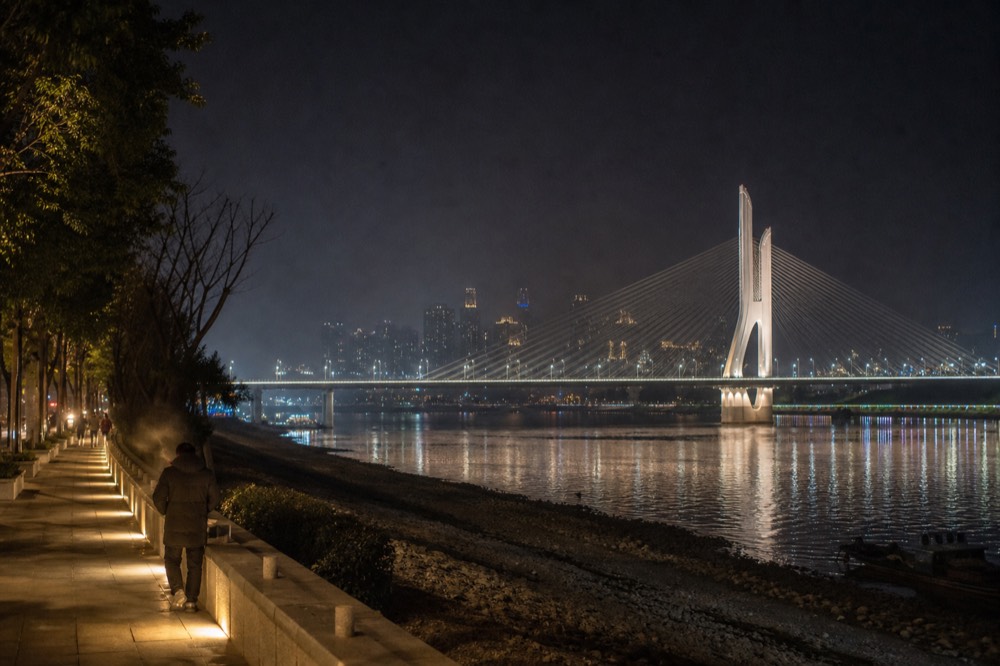
Yes, you can, and the skyline is the easiest subject in the city. Nanbin Road on the south bank faces the Yuzhong peninsula directly, the landscape lighting runs on fixed clock times published by the city, and visitors should choose an open public viewpoint and follow current barriers, signage and staff instructions. The only hard edge is time: two-wheeled vehicles are banned on the road from 22:00 to 06:00, which is why every photo session on the corridor ends by 22:00.
The lighting schedule is worth knowing before you pick a time. Under the municipal landscape-lighting rules, the Two Rivers and Four Banks core area, meaning the Yuzhong skyline, the riverside towers and the bridges, switches on at 20:00 from May through September and at 19:30 from October through April, off no earlier than 22:30 in summer and 21:30 in winter, with two-hour extensions over Spring Festival and National Day. In late June the switch-on lands two minutes after sunset; in late December it comes a full 90 minutes after dark. Plan around the clock, not the sun.
If you would rather pose against that skyline than photograph it, the photo-only package of the same experience is the cheaper way in. The Motorcycle Photo Shoot Package gives you 15 minutes of posed shooting with a parked bike, all the negatives and nine retouched photos, with no ride at all, at the listing’s photo-package from-price.
For what it is worth as context, the paid shoots you will see lining up along the railings are doing exactly what you would be doing: standing in public, in a designated corridor, with the skyline opposite. The package buys photography and editing; it does not establish permission for other locations or activities. Riding as part of the shot is a separate question with its own rules, covered in can a foreigner ride a motorcycle in China.
What A Local Crew Handles That You Handle Alone
Spot selection, timing against the lighting schedule, posing and file delivery. The listing this site covers is conducted in Chinese with no English-speaking rider guaranteed, files arrive by email or WeChat within one to three days, and the crew confirms the exact meeting spot near Nanbin Road after booking. None of that is a legal question, and all of it is the difference between a usable clip and a blurry evening.
A solo visitor arriving at 20:15 in July with a phone is guessing at where the sightlines are, where the lights switch on, which stretch has the cleanest background, and how to move a busy promenade out of the frame. A crew that runs sessions every night from 18:30 to 22:00 has already made those calls. The same logic applies to the practicalities of getting there: the corridor's metro stations, Shangxinjie and Danzishi, are both on the Loop Line, which stops at 22:30 on an ordinary day, half an hour after the sessions end.
| Practicality | Solo visitor | Paid crew |
|---|---|---|
| Choosing the spot | Trial and error along a 25 km road | Fixed corridor, crew confirms the exact meeting point |
| Timing vs the lights | You learn the schedule or miss it | Sessions are built around the lit window |
| Posing and direction | Self-directed | Action guidance during the ride, posed direction in the photo package |
| Delivery | Whatever your own camera captured | Files by email or WeChat within 1 to 3 days |
| Language | Your Mandarin vs the city's | Service is in Chinese; English communication is not guaranteed |
The full experience this site covers, the Chongqing Internet-famous Motorcycle Photo & Video Experience, offers 15 minutes of posed shooting for photos or about 30 minutes for the video activity, from about $52.85 per person for the photo package, and 200-plus bookings have come through the listing, which carries 15 reviews. The 240-hour visa-free transit policy, covering 57 countries through ports including Chongqing's airport, is what makes even a long layover long enough for one of these sessions; the details live in the China 240-hour visa-free transit guide.
What This Site Could Not Find A Published Rule For
Permits for commercial photoshoots on Chongqing streets, photography rules at every landmark covered here, drone registration outcomes for short-stay visitors, and any Chongqing crime rate whatsoever. This site did not find published answers to these questions in the sources it checked. A research process that records its gaps is worth more than a confident voice that fills them.
Take the permit question, because it is the one this site's readers ask most. The general Chongqing market prices these shoots at 198 to about 598 RMB for base packages, and scripted, story-driven packages at 2,000 to 4,000 RMB. An industry of that size operating openly along a policed riverside corridor for years is strong circumstantial evidence that no permit regime is being enforced against it. But no document establishing that was found, on any official site, in either language. The honest sentence is: no published rule was found, and the visible practice suggests none is being applied.
The same honesty applies to the questions this page has deliberately not answered. Road law for riders, including helmet rules and the pillion age minimum, belongs to the riding article. Personal safety and government travel advisories belong to the question of whether Chongqing is safe, covered in is Chongqing safe for Americans. This page's territory is the camera, and on the camera the published record is short, permissive in public space, and silent almost everywhere a nervous visitor expects it to shout.
For everything the record does not cover, custom and visible practice are the only guides, and in Chongqing both point the same way: photograph freely, ask before centring a stranger, avoid military and other sensitive sites even when boundaries or signs are unclear, skip the drone, and follow the arrows at crowded platforms. That is the whole of what can honestly be said, and it is enough to plan an evening around. The rest of the internet's certainty on this subject is not something this site will borrow.
Yes, tourists can take photos in China, and the law restricts far less than the folklore claims: military zones, covert photography of people, and commercial use of a stranger's image. At Chongqing's landmarks almost no photography rule is published at all, only access and crowd management. The answers below restate the specific questions visitors ask most, using only what the published record and this site's own verified research support. Where this site did not find a rule, the answer says so plainly rather than filling the gap with a guess.
Common Questions About Photography For Tourists In China
Can Tourists Take Photos In China?
Yes. Ordinary public-scene photography is common, but location-specific restrictions and privacy rights still apply, and this site's research passes found no general prohibition on any national or municipal source. What the law restricts is specific: military zones, covert photography of people, and commercial use of a recognisable stranger's image without consent.
Can I photograph strangers in the street?
Not as the subject without asking. A photo of a public environment that unavoidably includes people is covered by the Civil Code's exceptions; a photo centred on an identifiable person, or any commercial use of their image, needs their consent. The practical rule matches custom: shoot the scene, ask before you make someone the subject.
Do I need a permit for a photoshoot in Chongqing?
This site did not find a published photography-specific permit requirement in the sources it checked. This site searched the municipal, culture-tourism, city-management and transport-authority sites for a permit requirement for commercial or professional photography on public streets and found nothing. The only related regime is a road-occupation permit about obstructing traffic, which no document ties to photography.
Are there photography restrictions at Liziba or Hongyadong?
This site did not find a photography-specific rule in the sources it checked for either landmark. What is published is access and crowd management: Liziba's free viewing platform uses one-way pedestrian flow at peak periods, and parts of the station are closed in rotation for renovation until the end of December 2026. Hongyadong's public areas are free, with reservation advised at peaks.
Can I fly a drone to film the skyline?
Not over the central riverfront. Chongqing's core area sits inside a published no-fly zone that expressly includes Chaotianmen Square, the Grand Theatre and Changjiahui Shopping Park on Nanbin Road, and drones are separately barred within 100 metres of elevated rail lines, which covers Liziba. Registration is required nationwide regardless.
Is it safe to raise a camera in public in Chongqing?
Yes. Thousands of paid shoots, personal photos and videos happen openly along the Nanbin Road corridor every week in a policed public space, and the trend's related videos have drawn more than 1.52 billion views. Follow signage, avoid anything marked as a military zone, and check current restrictions at the location.
Choose Your Nanbin Road Session
Ready to put yourself in the frame? Check your date for the static portrait package before setting your riverfront evening; it includes no motorcycle ride.
Stationary motorcycle, 15 minutes of posed shooting, all negatives and 9 retouched photos. No ride.
Compare Packages And Refine Your Choice
These packages buy different results. The photo package keeps the bike parked; the video package includes a ride. Clothing and makeup are excluded. The crew confirms the meeting point near Nanbin Road. Service is Chinese; an English-speaking rider is not guaranteed.
Compare Your Quoted Totals
Enter totals for the same number of people in the same currency. The difference buys a different deliverable, not an upgraded version of the same shoot.
Choose your package and date on the booking page; final price and availability are confirmed there.
Check Your Static Photo DateReady to put yourself in the frame? Check your date for the static portrait package before setting your riverfront evening; it includes no motorcycle ride.
Check Your Nanbin Road Date