Chongqing Cyberpunk City Photo Spots: A Shot List, Not A Scenery List
Chongqing's cyberpunk look is not one viewpoint, it is a set of specific frames: which bank you stand on, which station reaches it, the hour the light works, and whether a guided motorcycle session can even get you there.
Short answer
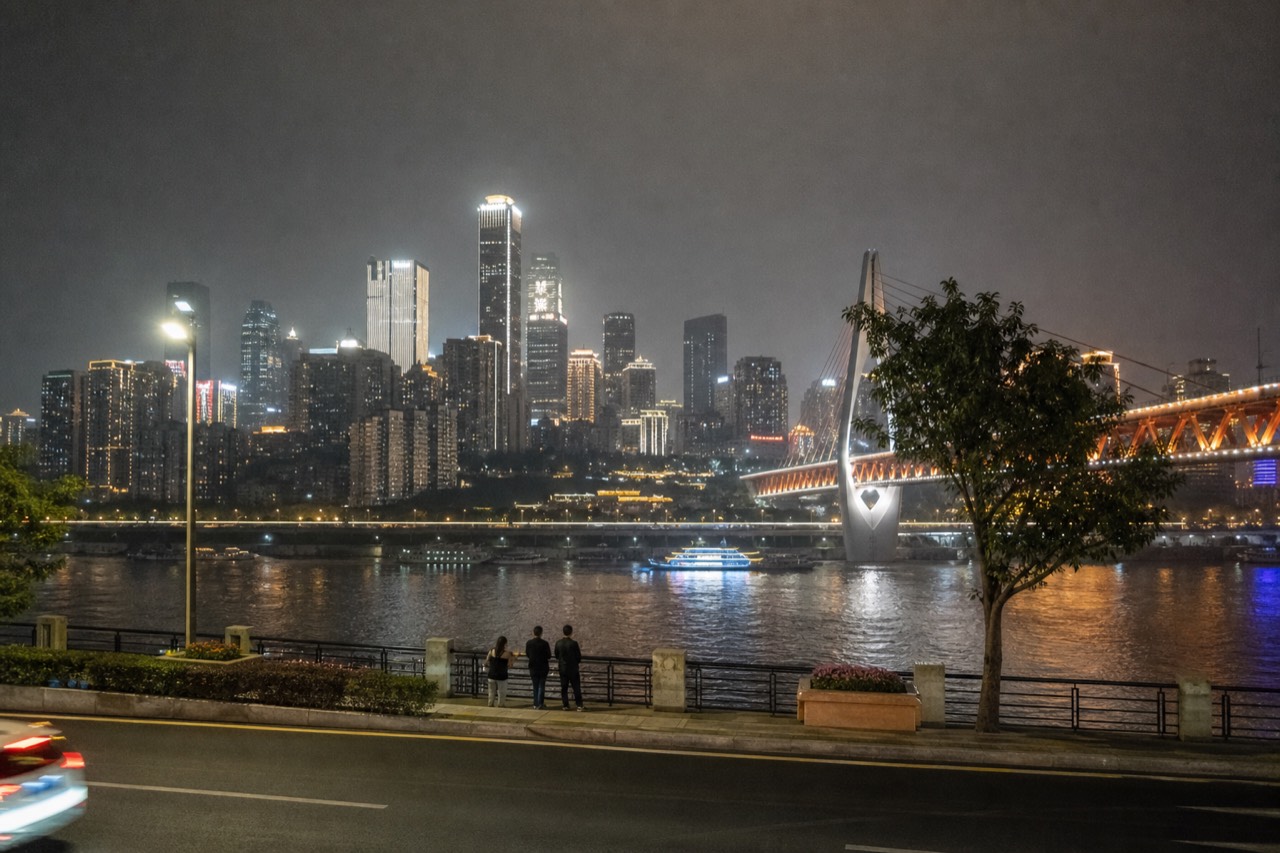
Chongqing's shoot corridor is Nanbin Road on the south bank, looking north across the Yangtze at the Yuzhong skyline, reached from Danzishi or Shangxinjie stations. Every other cyberpunk frame, Hongyadong, Liziba, Eling, Qiansimen, is off that corridor and reached on your own by metro and on foot. Bookings fall within the 18:30 to 22:00 operating window, night only.
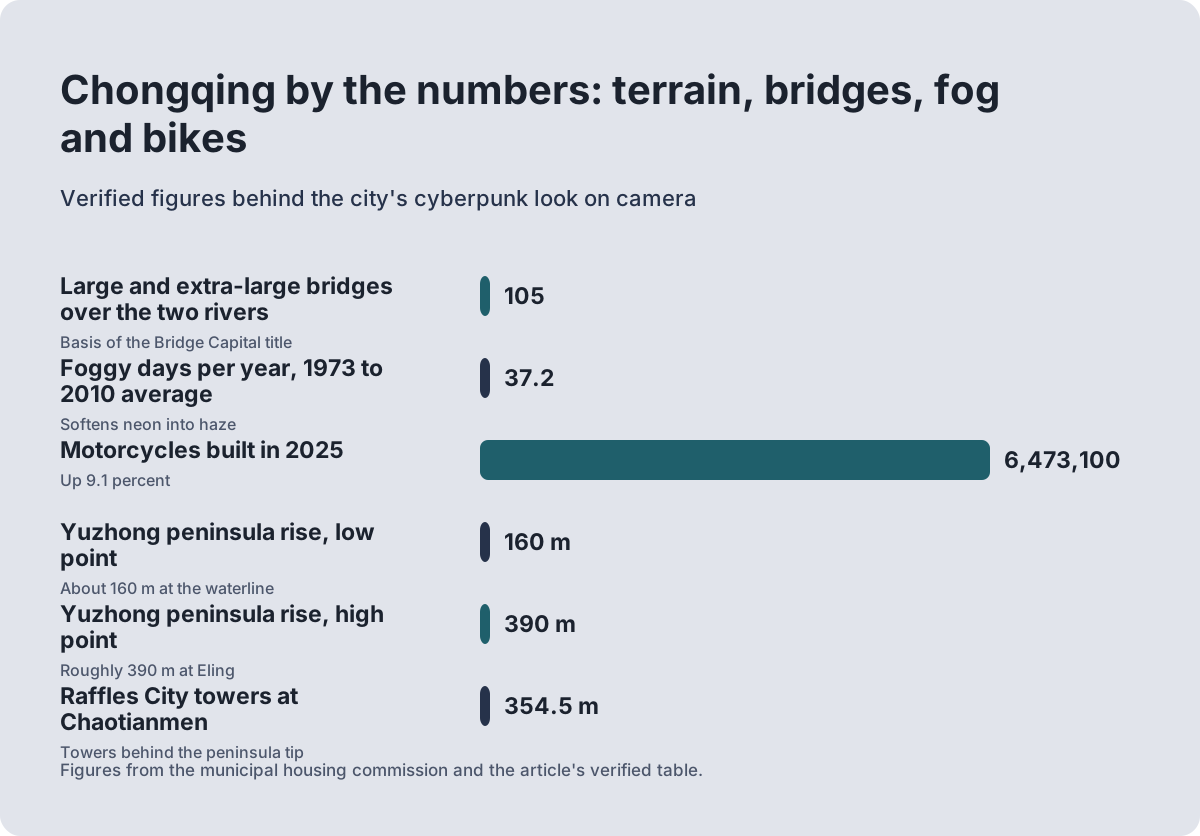
Chongqing did not set out to look like a cyberpunk film set, and that is exactly why it photographs like one. The city counts 105 large and extra-large bridges over the Yangtze and Jialing rivers, its rail transit threads monorails through residential towers, and its skyline lighting switches on by municipal regulation at a fixed clock time every evening of the year. The result is a set of repeatable frames, and once you know which bank each frame is shot from, the whole city arranges itself into a shortlist.
This page is a shot list, not a scenery list. For each spot you get what the frame actually is, which bank you stand on, the station that reaches it, the hour it works, and whether it sits on the guided motorcycle session's route or not. That last column matters more than any other, because the session shoots from exactly one corridor and nowhere else. If you want the rest of this list, you reach it yourself, by metro and on foot. For the broader question of what the city is famous for, see our guide to what Chongqing is famous for.
Why Does Chongqing Look Like A Cyberpunk City On Camera?
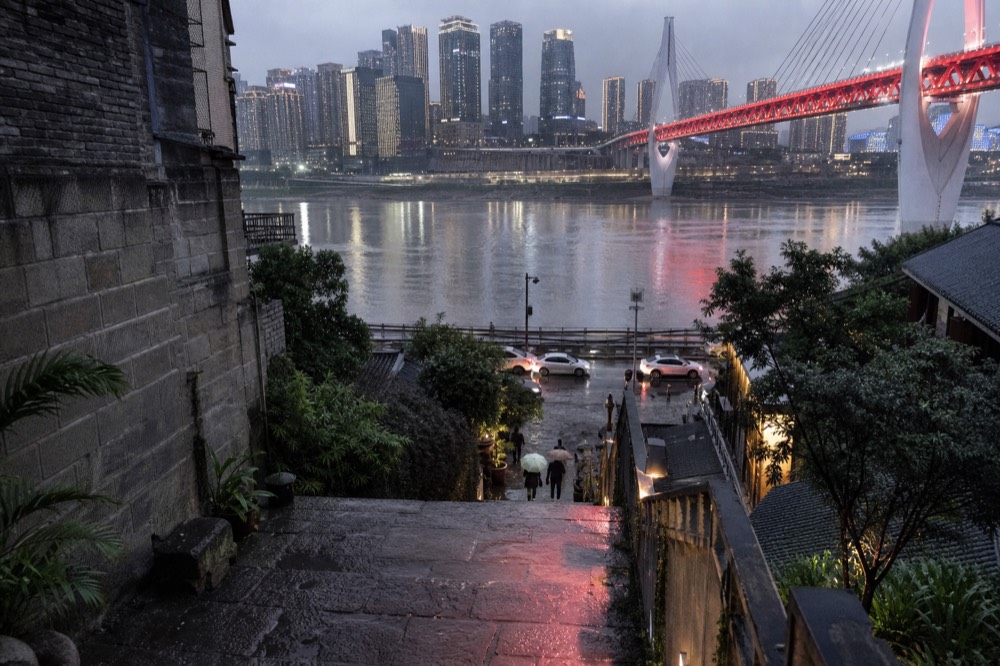
Chongqing looks cyberpunk on camera because the city stacks three things into one frame: a vertical terrain that stacks roads on roads, a river-and-bridge geography that gives every shot water and reflection, and a municipal lighting scheme that switches the entire core skyline on at a single fixed clock time each evening. The Yuzhong peninsula rises from roughly 160 m at the riverside to around 390 m at its high points, so the towers appear to climb.
The terrain is the foundation. The Yuzhong peninsula, the downtown core on the north bank, climbs from about 160 m at the waterline to roughly 390 m at Eling, a vertical range on the order of 220 m, which is why streets enter buildings at what feels like impossible floors. This is the "8D magic city" effect, a popular nickname rather than an official designation, and we unpack it properly in why Chongqing is called an 8D city.
The bridges are the second layer. The municipality's housing and construction commission counts 105 large and extra-large bridges over its two rivers, with more than 20,000 bridges of all kinds citywide, the basis of its "Bridge Capital" title. On camera, each one is either a lit foreground bar across the water or an elevated platform to shoot from. Dongshuimen Bridge, 858 m long with a 445 m main span, and its sister Qiansimen Bridge, 720 m with a 312 m span, both carry rail Line 6 beneath their road decks, so a single frame can hold a lit bridge and a train passing inside it.
The third layer is industry and weather. Chongqing built 6,473,100 complete motorcycles in 2025, up 9.1 percent, and the air carries an average of 37.2 foggy days a year over the 1973 to 2010 reference period, which softens the neon into haze. Stack the three and the frames compose themselves.
| Element | Verified figure | What it does to a frame |
|---|---|---|
| Bridges over the two rivers | 105 large and extra-large | Lit foreground bars and elevated vantage points |
| Yuzhong peninsula rise | Roughly 160 m to 390 m | Towers appear to climb the hillside |
| Foggy days per year | 37.2 average | Softens neon, adds depth |
| Skyline lighting | Fixed clock switch-on, citywide | Whole skyline activates at once |
| Motorcycle output, 2025 | 6,473,100 units | Motorcycling is part of the city’s industrial identity |
Where To Take Pictures In Chongqing: The Shot List
The shortlist for a cyberpunk Chongqing shoot is nine frames, and the single most important column in the list is bank: the guided motorcycle session shoots only from the south bank along Nanbin Road looking north across the Yangtze, while every other frame on this list, Hongyadong, Liziba, Kuixinglou, Eling, Qiansimen, Chaotianmen, sits off that corridor and is reached independently by metro and on foot. Stand on the wrong bank and you photograph the wrong skyline.
Work the list top to bottom. The two banks give entirely different pictures: from the south bank you get the Yuzhong peninsula's wall of towers with Raffles City and the bridges, while from the north bank, at Hongyadong or Eling, you get the river, the south-bank hills and whatever light sits across the water. Stations matter as much as banks, because Chongqing Rail Transit runs 12 lines and almost every frame on this list has a station within walking distance, sometimes a station that is itself the shot, as at Liziba.
Here is the list, with the essentials for each frame. The "session route" column reflects the verified corridor, Nanbin Road on the south bank, and nothing else: any copy implying the ride passes through Hongyadong or Liziba is simply wrong.
| Spot | What the frame is | Bank | Nearest station | On session route |
|---|---|---|---|---|
| Nanbin Road | Bike or rider against the lit Yuzhong skyline across the water | South (looking north) | Danzishi, Loop Line | Yes, the corridor itself |
| Longmenhao Old Street | Terraced old street, open sightline to the skyline beside Dongshuimen Bridge | South | Shangxinjie, Loop Line and Line 6 | Corridor vantage, not a confirmed stop |
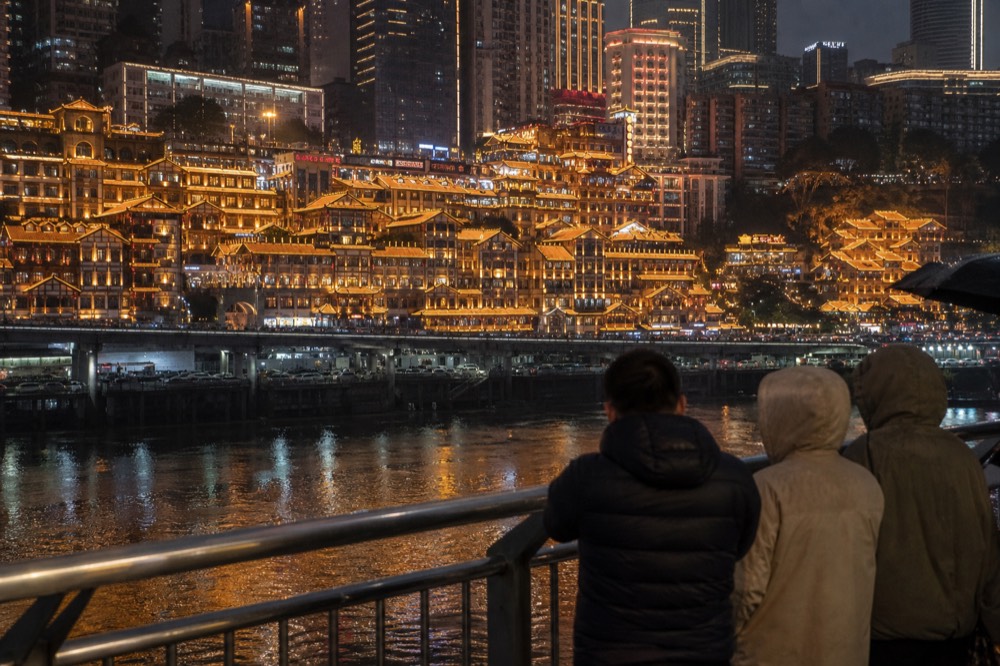
| Hongyadong | Eleven-storey stilt-house stack lit at night, seen from across or above | North (Jialing side) | Xiaoshizi, Lines 1, 6, 18 | No |
| Qiansimen Bridge | Elevated deck view over Hongyadong and the Jialing | North | Xiaoshizi, Lines 1, 6, 18 | No |
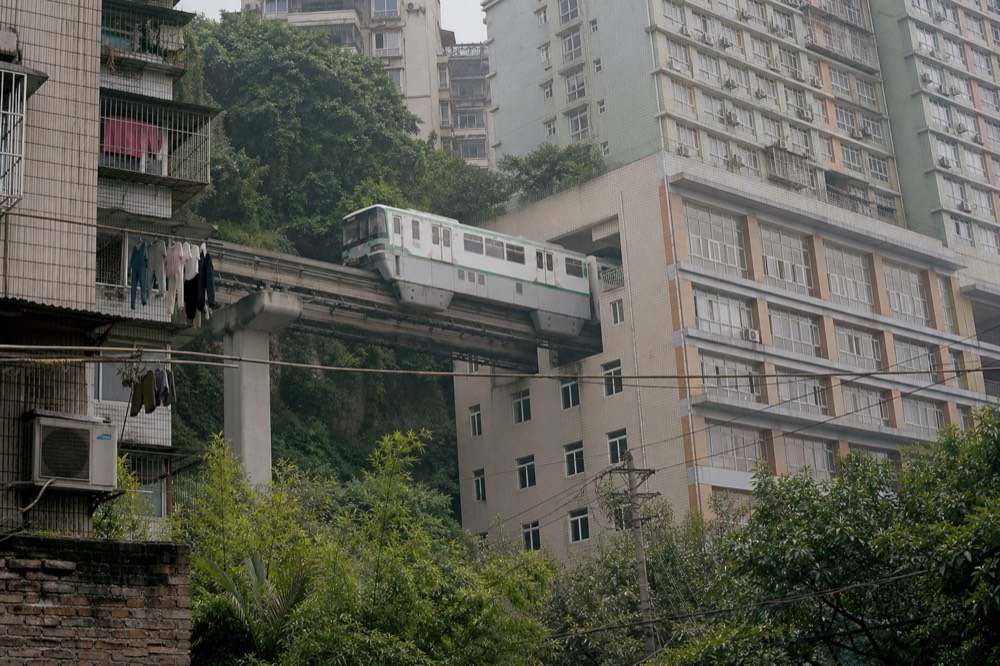
| Liziba | Monorail passing through floors 6 to 8 of a residential tower | North (Jialing side) | Liziba, Line 2 | No |
| Eling Park | The peninsula's high point, city and both rivers below | North | Eling, Line 1 | No |
| Kuixinglou | Pedestrian skybridge with streets far below, the verticality shot | North | Linjiangmen, Line 2 | No |
| Baixiangju | 1990s cliffside block with street-level entrances at different heights | North | Xiaoshizi area | No |
| Chaotianmen and Raffles City | The peninsula tip where the rivers meet, 354.5 m towers behind | North, viewed from south | Chaotianmen, Line 1 | Background only, from across the water |
If you want to build an evening out of this list rather than one shot, our Chongqing itinerary sequences the walkable ones, and free things to do in Chongqing covers which of these cost nothing, which is most of them. The moving motorcycle shot requires a rider, a bike and a photographer, and that is where the guided session comes in.
The session listing splits into two genuinely different products, and picking on price alone is how people end up disappointed, a point the listing's own single 1-star review makes for you.
What Is The One Spot The Guided Session Actually Shoots From?
The guided motorcycle session shoots from exactly one corridor: Nanbin Road in Nan'an District, on the south bank, meeting at the crew-confirmed point near Nanbin Road, with the Yuzhong skyline, Dongshuimen Bridge and Raffles City across the water as backdrops. Bookings fall within the 18:30 to 22:00 operating window, evening and night only, with no daytime slot, and two-wheeled motorcycles are banned on the road from 22:00 to 06:00, which is exactly why the window ends when it does.
The corridor is about 24.9 km long in total, a riverside landscape avenue the district government describes as the core of the Two Rivers, Four Banks area. The ban on two-wheelers, in force since 29 January 2024 between the Lanhua Road and Tengjiang Road junctions, is published on the municipal government's own notice page, and the crew confirms the exact meeting spot after booking. A helmet is provided, and files arrive by email or WeChat within one to three days.
Getting there is straightforward. Danzishi station on the Loop Line is the nearest to Bell Tower Plaza, roughly 1.8 km north, and Shangxinjie on the Loop Line and Line 6 sits at the Dongshuimen Bridge end of the corridor. One timing trap: the Loop Line's last train on an ordinary day is 22:30, and the operating window ends at 22:00, so a booking finishing at 22:00 leaves little time to reach the metro. A taxi is the realistic option, and at 22:00 you are still inside the daytime tariff band, 10 yuan for the first 3 km.
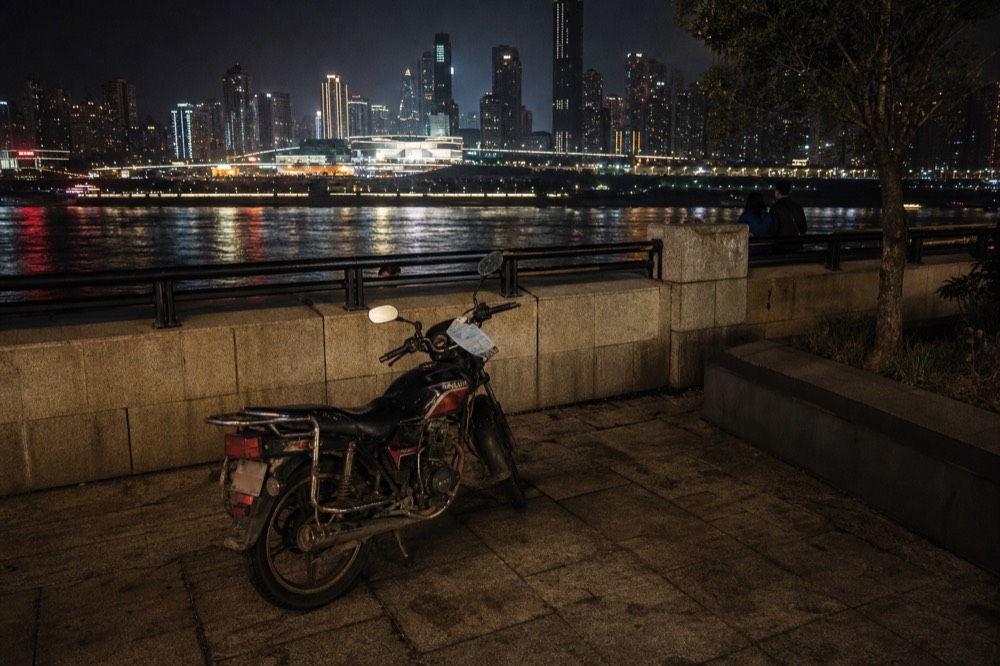
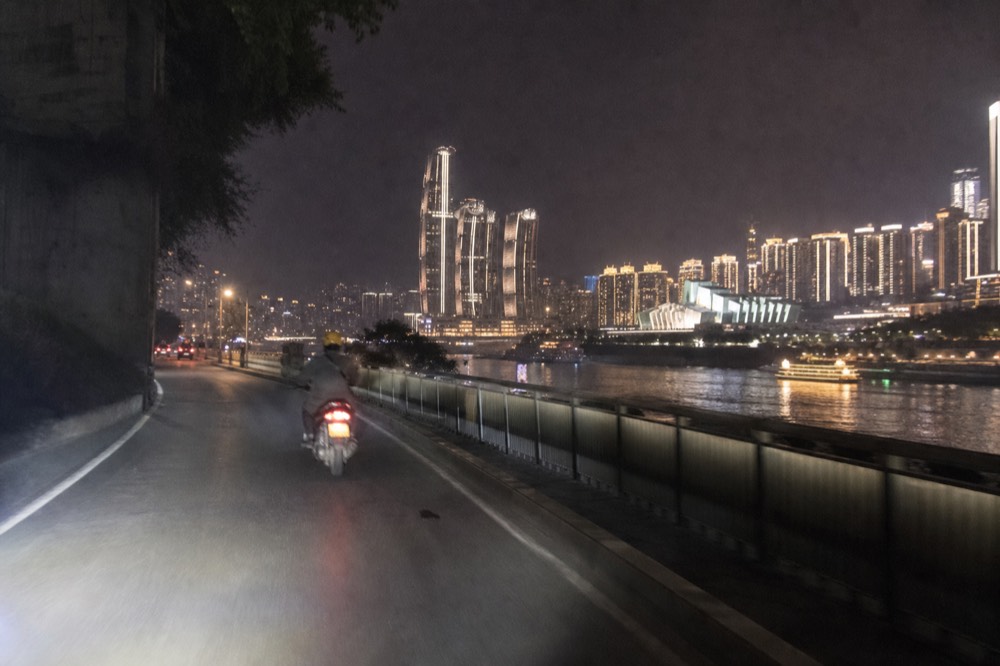
What the corridor gives you that no other spot can is the water between you and the skyline. From Nanbin Road the whole north-bank wall of light sits across the Yangtze, and a bike in the foreground completes the frame. That specific composition, rider against the glittering skyline, is what the viral trend actually is, and a Global Times report describes it in almost exactly those words. Everything else in this city, you shoot standing still on your own feet.
Which Spots Are On The Session Route, And Which Are Not?
Exactly one location on this page is on the guided session's route: the Nanbin Road corridor. Longmenhao Old Street is a vantage point within the same corridor but not a confirmed stop. Every other spot, Hongyadong, Qiansimen, Liziba, Eling, Kuixinglou, Baixiangju, Chaotianmen, is explicitly off the route, and the honest way to plan is to treat the session as one evening's shot and the rest as your own walking and metro list.
The separation is not a marketing gap, it is geography. The video package includes a ride: it stays on the south bank because that is where the backdrop is, and a motorcycle cannot usefully tour the north bank's pedestrian stacks and skybridges during this short shoot. Hongyadong is on the Jialing side of the peninsula, Liziba sits roughly 5 km west of the corridor, and Eling Park is a hilltop garden, none of them rideable shoot stops.
So build the trip in two halves. Book the session for one night, then spend another evening, or the same one starting earlier, walking the north-bank frames. Hongyadong's current complex opened in 2006 and spans 53,000 sq m, Liziba's free viewing platform has been open since 2018, and Eling Park dates to 1909. Between them and the session you cover every frame in the table above. Our Chongqing at night guide covers the lighting schedule itself in detail, and if you are weighing the two session formats first, our photo or video comparison does that side by side.
One more honest note for planners: Chongqing traffic police have handled the photoshoot trend through enforcement and education rather than a ban, with designated safe filming zones on Nanbin Road and time controls, and zero tolerance for hands-off riding or illegal modifications. Nothing in any source describes a formal licensing scheme for photoshoot operators, so treat any claim of one with suspicion.
What Does Each Shoot Package Give You At These Spots?
The photo package gives you 15 minutes of posed shooting with a parked bike as a prop, all the negatives plus 9 retouched photos, and no ride at all; the video package gives you a pillion ride with a professional rider and a following photographer, producing one edited video of 25 to 35 seconds, with stills not promised. They are not tiers of the same product, and the operator's own listing words say so.
The photo package is the one for the shot list on this page. You pose with the bike on the south bank, the skyline does the background work, and you leave with all the negatives plus 9 retouched stills, delivered within one to three days. It is from about US$52.85 per person, a live figure that has moved between roughly $50.31 and $52.85, which is why every honest write-up says "from about". The video package costs HK$482, about 16 percent more, and includes only the ride, the clip and the delivery window. The listing's own words on the photo package: "this package only provides static photo shooting services and does not include a motorcycle riding experience."
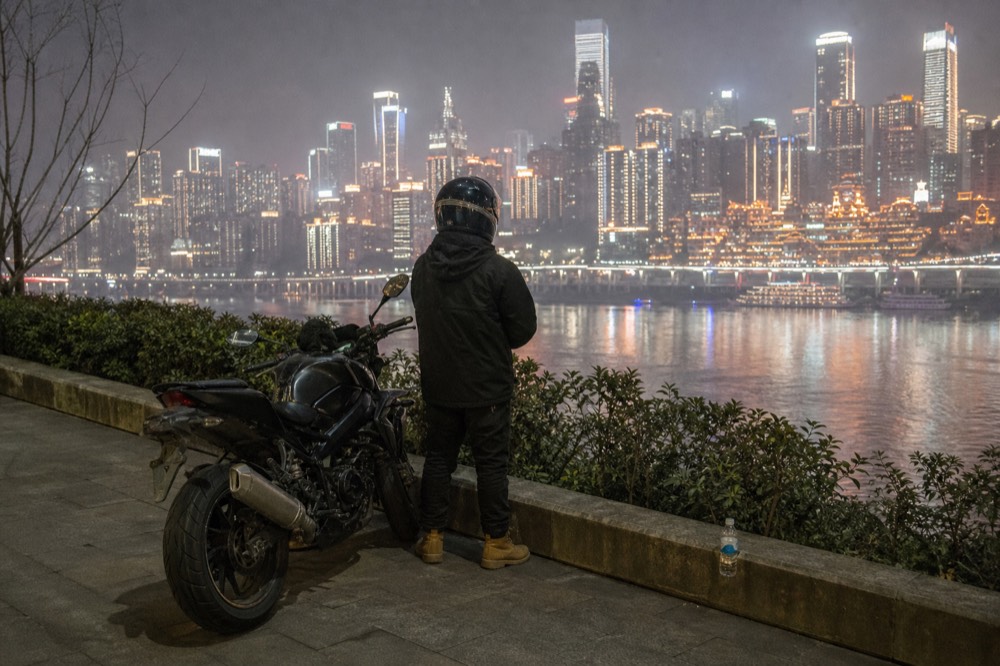
The video package is a different animal. You are a pillion passenger, the rider handles the machine, and a photographer follows on another bike to film the moving shot, with action guidance during the ride. The inclusion list names the ride, one edited clip of 25 to 35 seconds and the delivery window, and nothing else. Two reviewers were sent photos anyway, but the honest wording is "not promised", never "never given". It is restricted to riders 18 and over, and both packages are sold per single person.
| Photo package | Video package | |
|---|---|---|
| What it is | 15 minutes of posed shooting, bike as prop | Pillion ride with rider and following photographer |
| What you receive | All negatives plus 9 retouched photos | One edited video, 25 to 35 seconds |
| Ride included | No ride at all | Yes, the ride is the product |
| Age limit | None stated | 18 or over |
| Price | From about US$52.85 per person | HK$482, about 16 percent more |
| Not included | Any riding, video, clothing, makeup | Stills, clothing, makeup |
One legal footnote that matters for the video side: Chinese road rules require a passenger on a two-wheeled motorcycle to sit astride, facing forward, and both rider and passenger must wear helmets. The operator supplies the helmet. Do not assume a pose seen in a viral clip is suitable for your ride. Follow the crew’s instructions and the requirement to sit astride facing forward.
What Hour Does Each Spot Work?
The skyline lighting, the thing that makes every one of these frames, switches on at 20:00 from 1 May to 30 September and at 19:30 from 1 October to 30 April, with a two-hour extension over Spring Festival and National Day. Sunset runs from about 18:00 at the December solstice to about 19:58 in late June, so the hour each spot works depends on the season more than on the spot.
The full schedule explainer lives in our Chongqing at night guide, but the shot-list consequences belong here. The mismatch to plan around is that the lights come on by calendar, not by sunset: in late December a session starting at 18:30 begins in full darkness with the skyline still unlit, and the backdrop only arrives at 19:30. In late June the switch-on at 20:00 lands almost exactly at the end of sunset, and the blue hour and the lights nearly coincide.
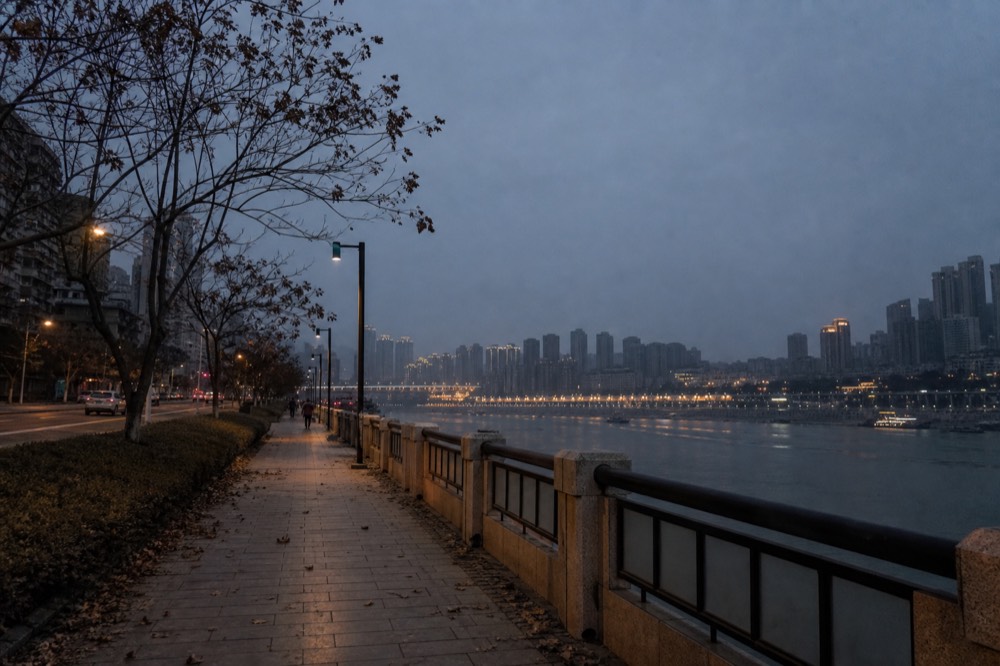
For the off-route spots, the same clock applies. Hongyadong's illumination was set at 18:30 to 23:00 by a government notice in February 2025, the last documented state, so check locally rather than assuming it holds all year. The bridges and riverside towers follow the core-area schedule above. Fog is the wildcard: December averages about 6.8 foggy days, the foggiest month, while August is the clearest at about 1.3.
| Season | Sunset (mid-month) | Lights on | Best appointment window within 18:30 to 22:00 |
|---|---|---|---|
| Late December | 18:00 | 19:30 | From 19:30; winter skyline switch-off can begin at 21:30 |
| March | 19:02 | 19:30 | From 19:30; winter skyline switch-off can begin at 21:30 |
| Late June | 19:58 | 20:00 | Roughly 20:00 to 22:00, blue hour meets switch-on |
| Late September | 18:52 | 20:00 until 30 Sep | Roughly 20:00 to 22:00 |
| Early October | 18:25 | 19:30 | Skyline on after the twilight end shown for October |
Early October changes the lighting schedule, but National Day brings crowds: the schedule flips to the winter switch-on of 19:30 on 1 October, which shortens the wait for the skyline without guaranteeing blue-hour colour, and National Day week adds a two-hour extension to the lighting, though the operating window still ends at 22:00 with the curfew. For a wider view of the seasons, our best time to visit Chongqing guide covers the full year.
What Is Verified And What Is Not, Spot By Spot?
Honest shot-list planning needs a column nobody else publishes: for each spot, what is confirmed by a primary source and what is not. The Nanbin Road corridor, the bridges, the stations, Hongyadong's basic facts and Liziba's platform are all verified, while Kuixinglou's famous floor number, Yikeshu's hours and price, the Crystal deck's current ticket and Baixiangju's details are unresolved, meaning no primary source publishes them and any number you read elsewhere is a guess.
This matters because Chongqing's photo spots attract confident invented numbers. The widely repeated line that Kuixinglou's street-level bridge meets the 22nd floor could not be confirmed from any primary source across three research passes, so describe the verticality effect, not a figure. Yikeshu's opening hours, ticket price and elevation are likewise unpublished, and parts of Nanshan carry night-time motor-vehicle restrictions, so plan a taxi, not a hired bike, if you go.
| Spot | Verified | Unresolved or single-source |
|---|---|---|
| Nanbin Road | 22:00 to 06:00 two-wheeler ban, 24.9 km length, meeting plaza | No published schedule for Nanbin's own promenade lights |
| Hongyadong | Opened 2006, 53,000 sq m, illumination 18:30 to 23:00 as of Feb 2025 notice | Current hours beyond that notice, reservation rules, tripod rules |
| Liziba | Station through floors 6 to 8, free platform since 2018, phased renovation to 30 Dec 2026 | Train frequency, one-way flow dates |
| Kuixinglou | Skybridge exists, Linjiangmen station serves it | The 22nd-floor claim: no primary source |
| Yikeshu | Classic hilltop vantage on Nanshan | Hours, price, elevation all unpublished |
| Raffles City Crystal | 354.5 m towers, 300 m skyway | Current ticket price and hours: aggregator numbers only |
| Baixiangju | 1990s cliffside block, 24 storeys | No primary source for the details |
The photography-rules side has its own honest answer: no general Chinese statute restricts photography in ordinary public places, and no Chongqing rule requires a permit for a small paid photoshoot on public streets. The real prohibitions are specific, military zones above all. Our can tourists take photos in China piece covers that properly, and it is worth reading before you point a long lens at anything official-looking.
Which Spots Are Free And Which Need A Ticket?
Almost the entire shot list is free to shoot: Nanbin Road, the bridges' footways, Hongyadong's public areas, the Liziba platform, Kuixinglou's bridge, Eling Park's grounds and Baixiangju's exteriors all cost nothing to stand at. The only ticketed frame on this page is the Raffles City Crystal observation deck, whose current price is not authoritatively published, and the only paid experience is the guided motorcycle session itself, from about US$52.85 per person for the photo package.
That free-to-paid ratio is why Chongqing photographs so well for budget travellers. Several off-route spots can be combined using walking and metro journeys, which starts at 2 yuan for trips up to 4 km. Hongyadong has paid interior exhibits but its public levels and platforms are free. The Liziba platform is free with no ticket, though it runs one-way pedestrian circulation at peak periods while the station's renovation continues in phases until the end of December 2026.
| Spot | Cost to shoot | Note |
|---|---|---|
| Nanbin Road | Free | Guided session is the paid add-on |
| Hongyadong public areas | Free | Paid interior exhibits optional |
| Liziba viewing platform | Free | Renovation in phases to 30 Dec 2026 |
| Qiansimen Bridge footway | Free | Public bridge |
| Eling Park | Free | Park grounds |
| Kuixinglou skybridge | Free | Open access |
| Baixiangju | Free | Residential block, shoot respectfully |
| Raffles City Crystal | Ticketed | Price not authoritatively published, check the deck's own counter |
If the walkable free list and the one paid ride are both on your plan, this site's whole purpose at Chongqing Motorcycle Photoshoot is to help you book that ride with an honest picture of what each package contains. One person per booking, helmet provided, free cancellation with no published window, and a service language of Chinese with no English-speaking rider guaranteed: those are the terms as the listing states them.
The questions below cover the practical details photographers ask most: whether the session covers the whole shot list, which stations reach the corridor, when the lighting switches on, whether permits are needed, what separates the two packages, and whether famous landmarks like Hongyadong or Liziba sit on the ride route. Each answer is short, sourced from the verified facts above, and points back to the relevant section.
Common Questions About Chongqing Cyberpunk Photo Spots
Is the guided motorcycle session shot from all these spots?
No. The session shoots from exactly one corridor, Nanbin Road on the south bank, looking north across the Yangtze at the Yuzhong skyline, with Dongshuimen Bridge and Raffles City as backdrops. Every other spot on the shot list, Hongyadong, Liziba, Eling, Qiansimen, Kuixinglou, is off the route and reached on your own by metro and on foot.
Which metro station is best for the Nanbin Road corridor?
Danzishi on the Loop Line serves the Bell Tower Plaza area, while Shangxinjie on the Loop Line and Line 6 serves the Dongshuimen Bridge end. Choose after the crew confirms your meeting point. Note that the Loop Line's last train on an ordinary day is 22:30, and the operating window ends at 22:00, so a taxi is often the realistic way back.
What time does the skyline lighting come on?
The core-area landscape lighting switches on at 20:00 from 1 May to 30 September and at 19:30 from 1 October to 30 April, staying on no earlier than 22:30 in summer and 21:30 in winter, with extensions over Spring Festival and National Day. It runs on fixed clock times, not sunset, so the overlap with blue hour depends on the season.
Do I need a permit to photograph these spots?
No Chongqing municipal rule requires a permit for photography on public streets, squares or bridges, and no general Chinese statute restricts photography in ordinary public places. The hard prohibition is military zones, which are signed. The Chongqing metro regulations contain no photography ban, though drone flight within 100 m of an elevated line, which includes Liziba, is expressly prohibited.
What is the difference between the photo and video session packages?
The photo package is 15 minutes of posed shooting with a parked bike, no ride at all, and you receive all the negatives plus 9 retouched photos, from about US$52.85 per person. The video package is a pillion ride with a professional rider and a following photographer, producing one edited clip of 25 to 35 seconds, with stills not promised, at HK$482, and it is restricted to those 18 and over.
Is Hongyadong or Liziba on the motorcycle ride?
No. Hongyadong is on the Jialing side of the Yuzhong peninsula and Liziba sits roughly 5 km west of the shoot corridor. Both are city landmarks worth visiting on their own, but copy implying the ride passes through them, which appears in some travel write-ups, is factually wrong.
Choose Your Chongqing Experience
Set your photography evening before filling the rest of your itinerary: check the three-hour Hongyadong, bridge-view and Nanbin night tour.
3 hours · Private night walk with English selectable, Hongyadong and riverfront viewpoints. Confirm the meeting point for your option. Not wheelchair suitable.
Compare Experiences And Refine Your Choice
Chongqing Night Tour: Hongyadong, Bridge Views & Riverwalk: 3 hours. Private night walk with English selectable, Hongyadong and riverfront viewpoints. Confirm the meeting point for your option. Not wheelchair suitable.
Chongqing: One-Day Extravaganza: Hit All the Must-See Spots!: 6 hours. Private sightseeing with an English guide and vehicle. Hotel pickup and drop-off are listed; confirm your selected itinerary.
Compare Your Trip Totals
Use the same currency and number of people. Include transport and tickets in your independent total; compare it with the total tour quote.
Check your selected option, meeting arrangements and final price on the booking page.
Check Your Guided Night Route DateSet your photography evening before filling the rest of your itinerary: check the three-hour Hongyadong, bridge-view and Nanbin night tour.
Check Your Guided Night Route Date