Hongyadong Stilt Houses: A Complete Visitor Guide To Chongqing's Most Photographed Building
Eleven storeys of timber-framed facade built into a cliff above the Jialing River, switched on at night and photographed by almost everyone who visits Chongqing. Here is what it is, what it costs once you are inside, and the exact hour the lights come on.
Short answer
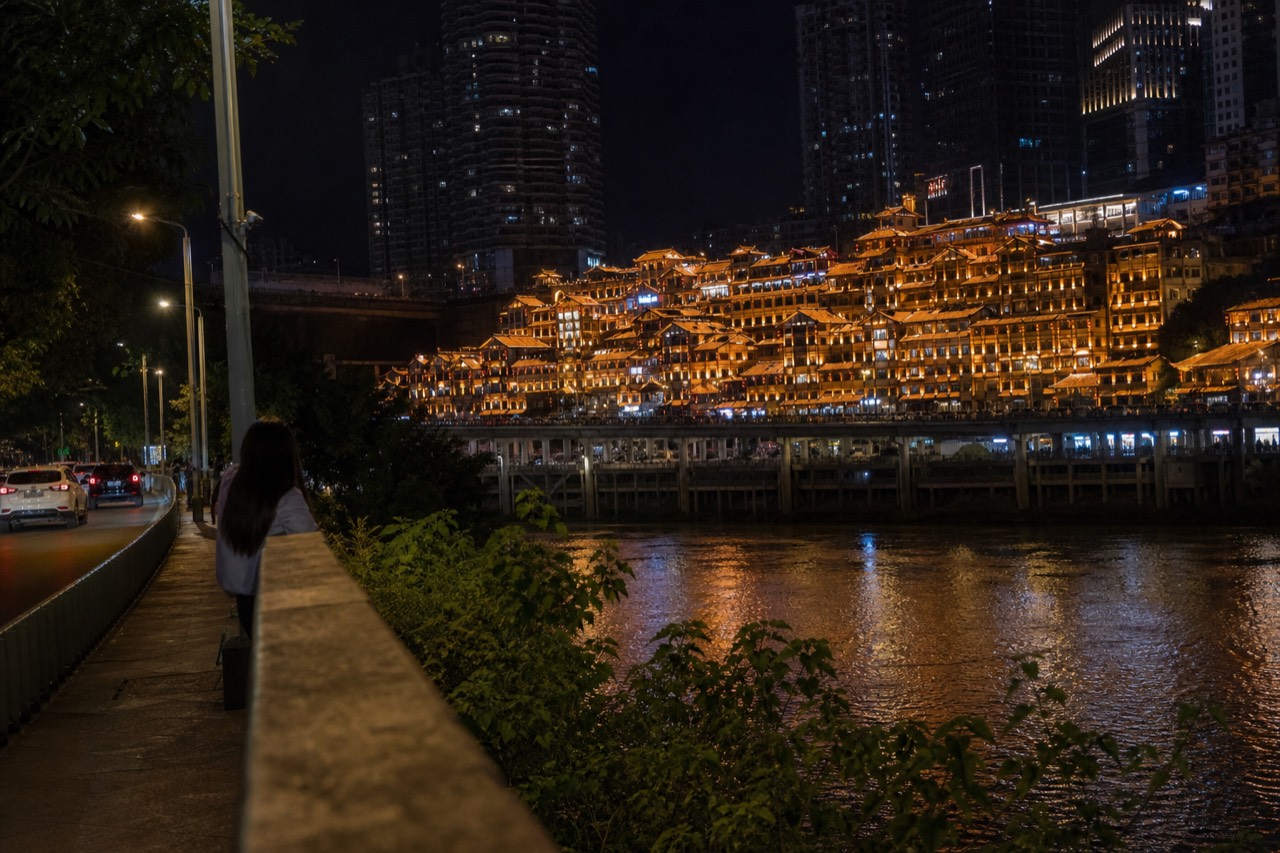
Hongyadong is an eleven-storey stilt-house complex that opened in September 2006 on the Jialing River bank. Its public areas are free to enter, its illumination runs 18:30 to 23:00 under a city notice, and the nearest metro stop is Xiaoshizi station on Lines 1, 6 and 18, a short walk away.
What Is Hongyadong, And Why Did It Become The City's Most Photographed Building?
Hongyadong is an eleven-storey stilt-house complex, built into the cliff on the south bank of the Jialing River in Yuzhong District, that opened on 29 September 2006. The current complex cost 385 million yuan, covers 53,000 square metres, was built by Chongqing Little Swan Investment Holding Group, and carries a national AAAA scenic-area rating. At night, lit from below, it is the single most photographed thing in Chongqing.
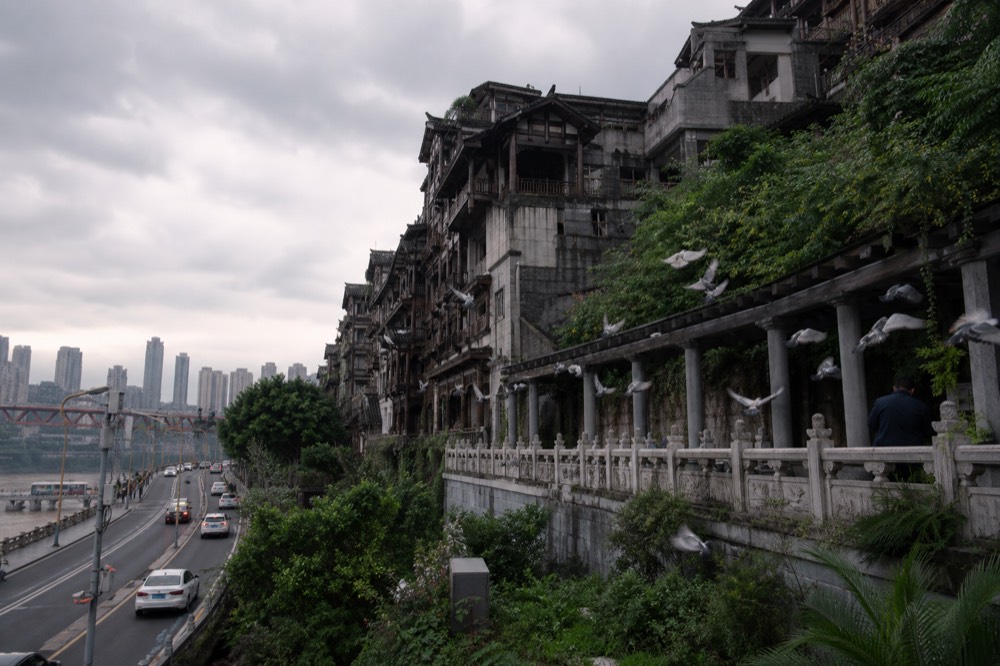
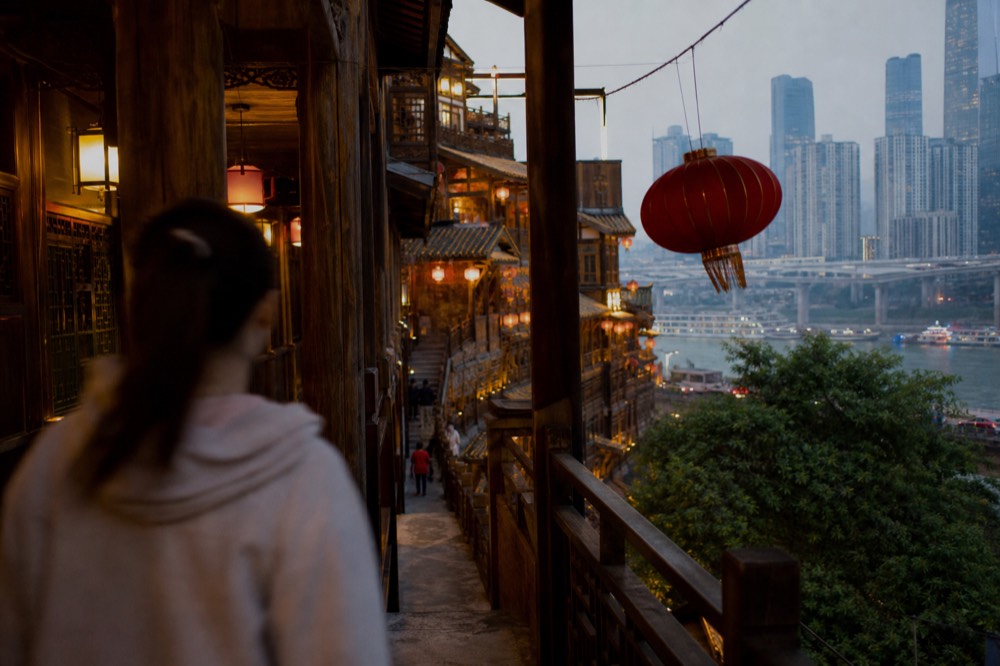
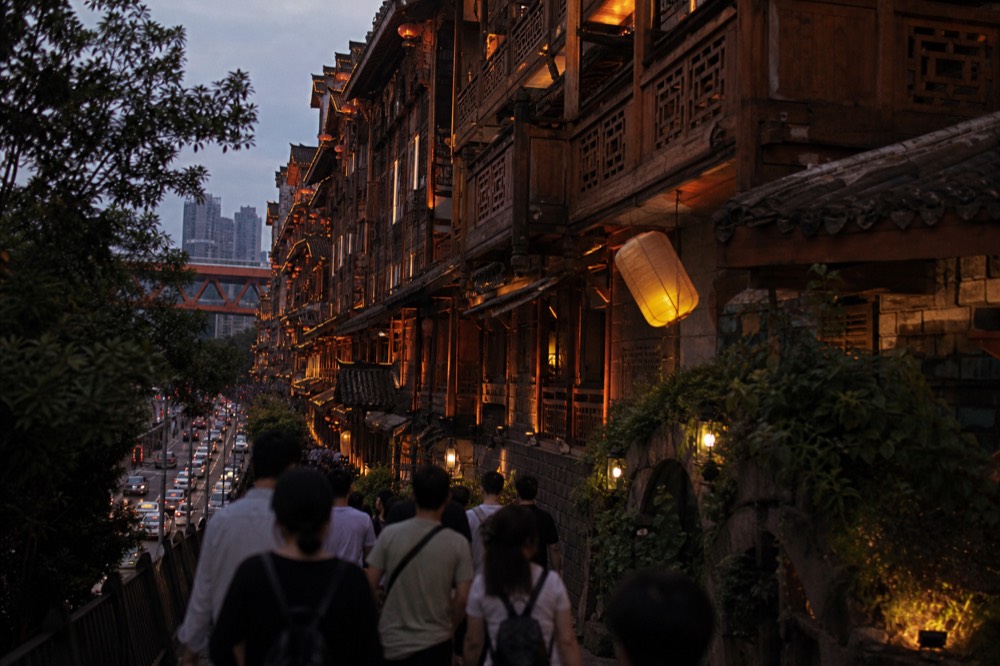
The Chinese name, 洪崖洞, is often rendered as Hongya Cave, and the site does carry the memory of a historic city gate and cliff-side settlement. What stands there today is a modern reconstruction in the Ba-Yu diaojiaolou style: timber-framed balconies stacked one above another, threaded by stairways and walkways, with retail floors between. The building is not a museum piece. It is a working commercial complex dressed as an old one, and the dressing is what the camera loves.
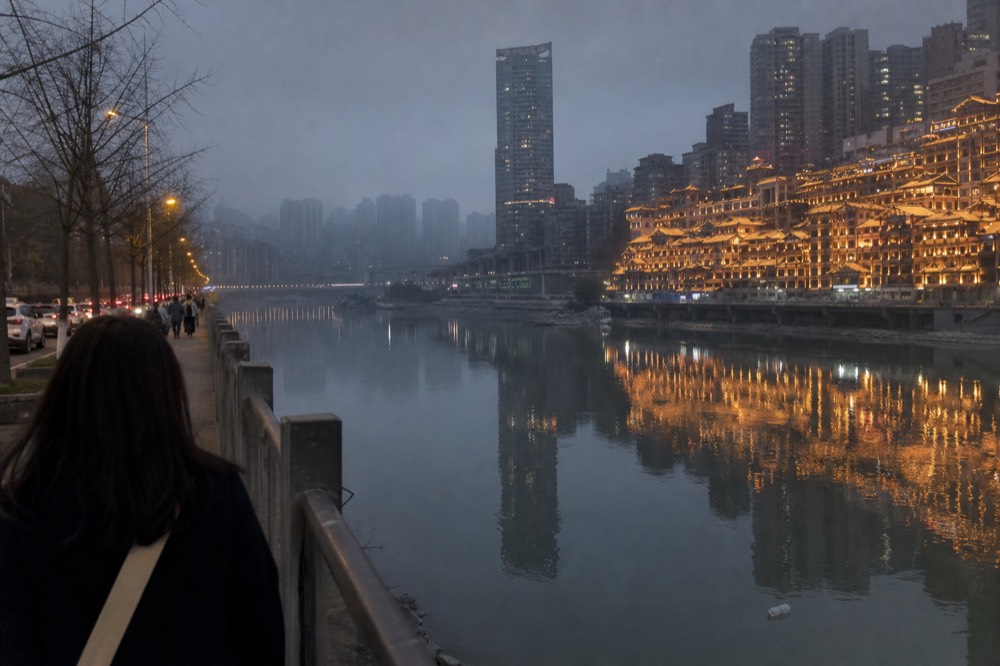
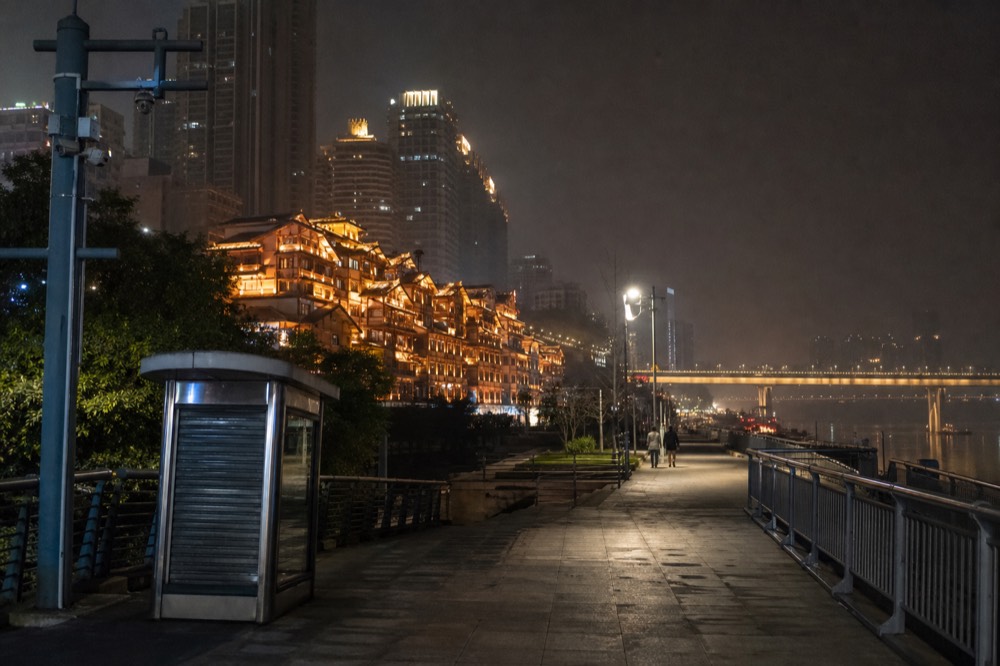
Two things made it the icon it now is. The first is engineering: eleven storeys of facade gripping a cliff that drops toward the river, so that from across the water the building reads as a wall of lit lanterns hanging off the rock. The second is adjacency. It sits at the Jiefangbi end of the Yuzhong peninsula, beside Qiansimen Bridge, with the modern towers of the peninsula stacked behind it, so a single frame catches the old timber idiom and the vertical city in one exposure. That contrast is Chongqing's whole visual argument compressed into one building, which is why the question of what Chongqing is famous for tends to get answered with this picture.
Its fame has a second life on Chinese social platforms, where the night facade is a fixed stop on the standard Chongqing short-video circuit. The building predates the current motorcycle-video wave by two decades, but the two feed each other: people who come for the video discover the facade, and people who come for the facade see the bikes running the far bank. Roughly 43,000 related notes circulate on Xiaohongshu, and the wider wave of Chongqing night-imagery the building anchors has drawn more than 1.52 billion views across related videos, as reported by an international outlet covering the trend.
Is Hongyadong On The Chongqing Motorcycle Shoot Route?
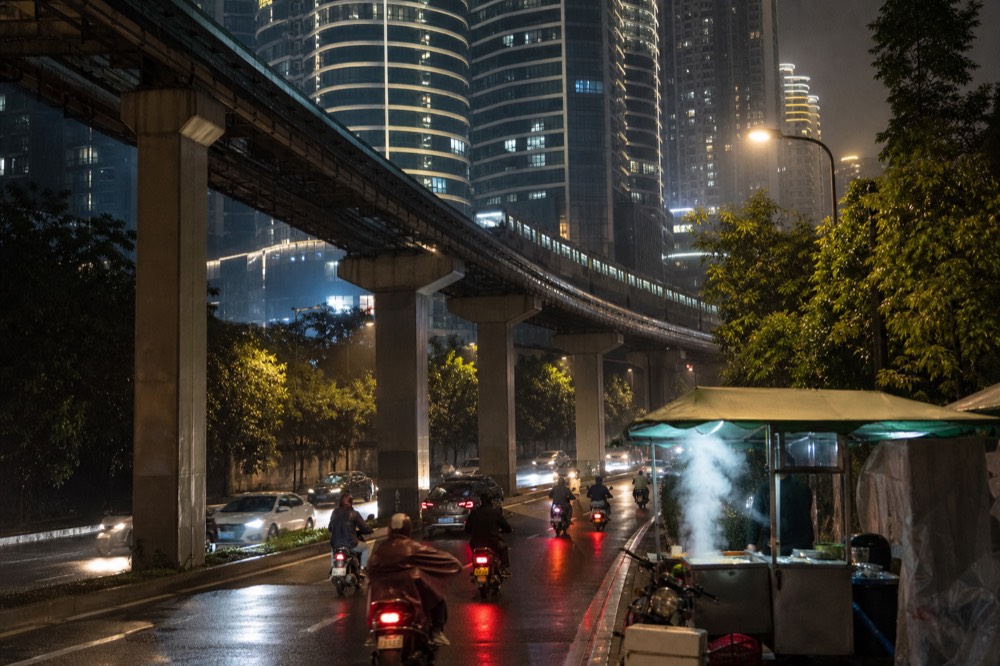
No. The motorcycle photo and video session does not pass through Hongyadong, and no copy that says it does is accurate. The shoot runs along Nanbin Road on the south bank of the Yangtze, with the crew confirming the Nanbin Road meeting point, with Dongshuimen Bridge and the Raffles City night view as backdrops. Hongyadong sits roughly five kilometres away on the Jialing side of the peninsula.
This is the question most readers arrive with, and the honest answer is simple: the two experiences are on opposite banks and opposite rivers. Hongyadong is on the Jialing, at the neck of the Yuzhong peninsula near Jiefangbi. The shoot corridor is on the south bank of the Yangtze, looking back at the peninsula from Nanbin Road. From the ride you can see the lit peninsula skyline that Hongyadong belongs to, in the far distance behind Raffles City, but the bike never goes there.
What this means for planning an evening is more useful than the geography itself. The two are not combinable into one walking loop. You reach Hongyadong by metro, and the ride home from the shoot corridor is a taxi or a metro trip with a transfer, because the Loop Line stations that serve Nanbin Road stop at 22:30 on an ordinary day and the shoot booking window ends at 22:00. Anyone who wants both on the same night should do the building first, earlier in the evening, and the session after, or split them across two evenings. The getting around Chongqing guide covers the lines and the last-train problem in full.
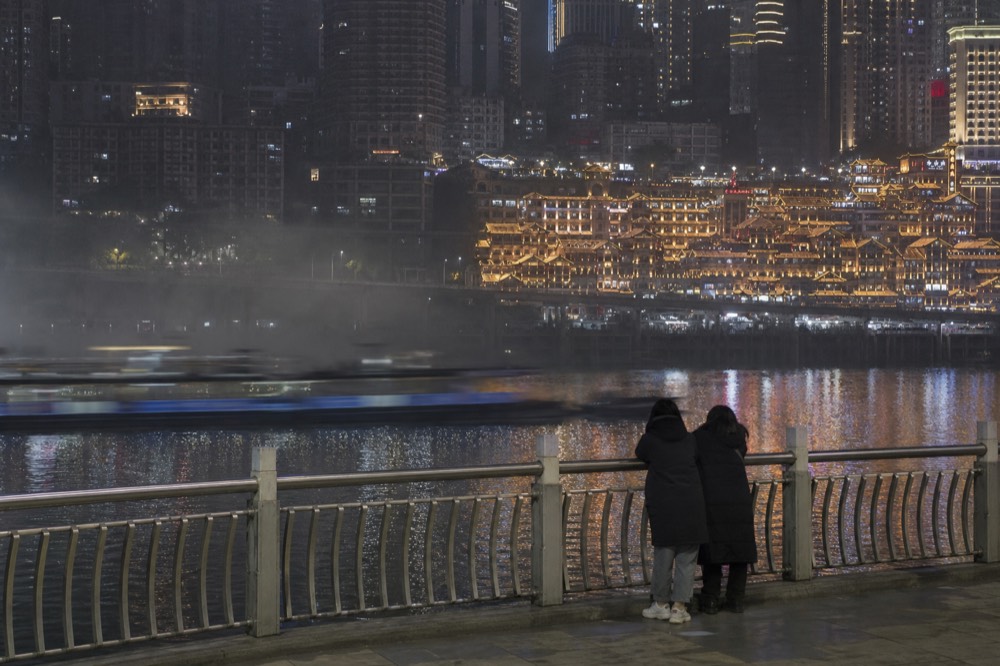
One clarification worth making while we are here: the building does appear as a faint backdrop element in skyline shots taken from the south bank, and some listing imagery blurs this fact. But appearing in the distance behind a river is not being on the route, so do not book the video package expecting a ride through the stilt houses. Choose the product for what it is, not for the city you hope it loops through.
How Do You Photograph Hongyadong Well?
The three shots that work are the Qiansimen Bridge elevation, the riverside level view from the Jialing bank, and the interior walkways shot from inside the complex itself. The building's illumination switches on at a fixed clock time set by the city, and the single biggest photographic mistake is arriving before that time and leaving before the sky has fully darkened around it.
Start with the bridge. Qiansimen Bridge crosses the Jialing immediately upstream of the complex, and its pedestrian deck gives the elevated, slightly oblique angle that every postcard uses: the timber facade below, the towers behind, the river in the foreground. It is a public bridge, free to walk at any hour, and it is where the commissioned photographers set up. The second angle is from the riverside promenade at the base, looking straight up the cliff, which exaggerates the eleven storeys. The third is from inside, on the mid-level walkways, where you shoot along the balconies and catch the crowd and the lantern light together.
For a picture of Hongyadong itself, bring a phone or camera and choose your angle and hour. The public viewpoints are free; a motorcycle portrait session elsewhere does not replace visiting the building.
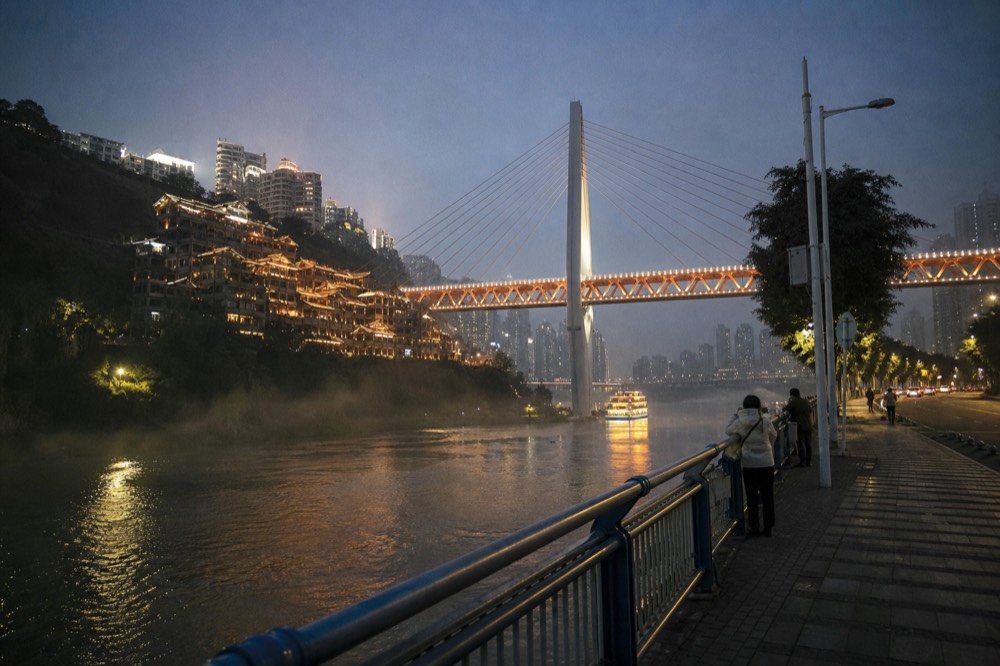
For settings, treat the facade as a low-light still-life. The lantern light is warm and dim, so a steady surface or a small tripod helps on the bridge deck, and the sky colour follows sunset rather than the lighting switch-on; compare the month-specific twilight and lighting times below. Crowds are the other variable: the walkways tighten after dark, and the bridge deck fills with phone screens. Arriving on the early side of the illumination window, before the after-dinner surge, buys you a cleaner foreground.
What Is Free Inside Hongyadong, And What Is Ticketed?
The public areas, platforms, lifts and connecting corridors are free to enter, as local tourism sources reproducing the operator's arrangements describe. Paid items are interior experiences, exhibits and some attractions on the upper and lower floors, sold separately, and one cited example is an immersive exhibit on the fifth floor priced in the range of tens of yuan. Reservations through the venue's WeChat channel are advised at peak periods.
The honest framing is that Hongyadong is a mall wearing a costume, and the costume is free. You walk in at street level, ride up through the levels, step out onto the viewing platforms and photograph the river, all without paying anything, provided entry is not being flow-controlled at that moment. What you pay for is content: exhibits, themed floors and the commercial experiences inside. Whether you want any of that depends entirely on whether you came for the building or for the attraction inside it.
| Area or item | Free or paid | Notes |
|---|---|---|
| Street-level entry and lobby | Free | Public access, subject to flow control at peak times |
| Internal lifts and connecting corridors | Free | Local sources reproducing the operator's arrangements |
| Viewing platforms facing the Jialing | Free | The main photographic asset costs nothing |
| Walkways and stair levels 1 to 11 | Free | Expect crowds after dark |
| Immersive exhibit, fifth floor | Paid | Priced in the tens of yuan, single-source figure, check on site |
| Themed and commercial floors | Paid | Optional retail and experience content |
| Photography from public angles | Free | No published permit rule for personal shooting |
Two cautions. First, capacity: notices cited by local media put a daily maximum around 122,000 and an instantaneous maximum around 16,000, and those numbers are not confirmed against a municipal document, so treat them as indicative. Second, holidays: on Golden Week and Spring Festival evenings the complex has imposed reservation requirements and temporary entry stops, and a visitor who turns up unreserved at 20:00 on 2 October may meet a queue that outlasts the lights. Reserve ahead on any holiday evening, and see the free things to do in Chongqing guide for how the free layers of this city stack up on the same ticket price of nothing.
When Do The Lights Come On: The City's Own Notice
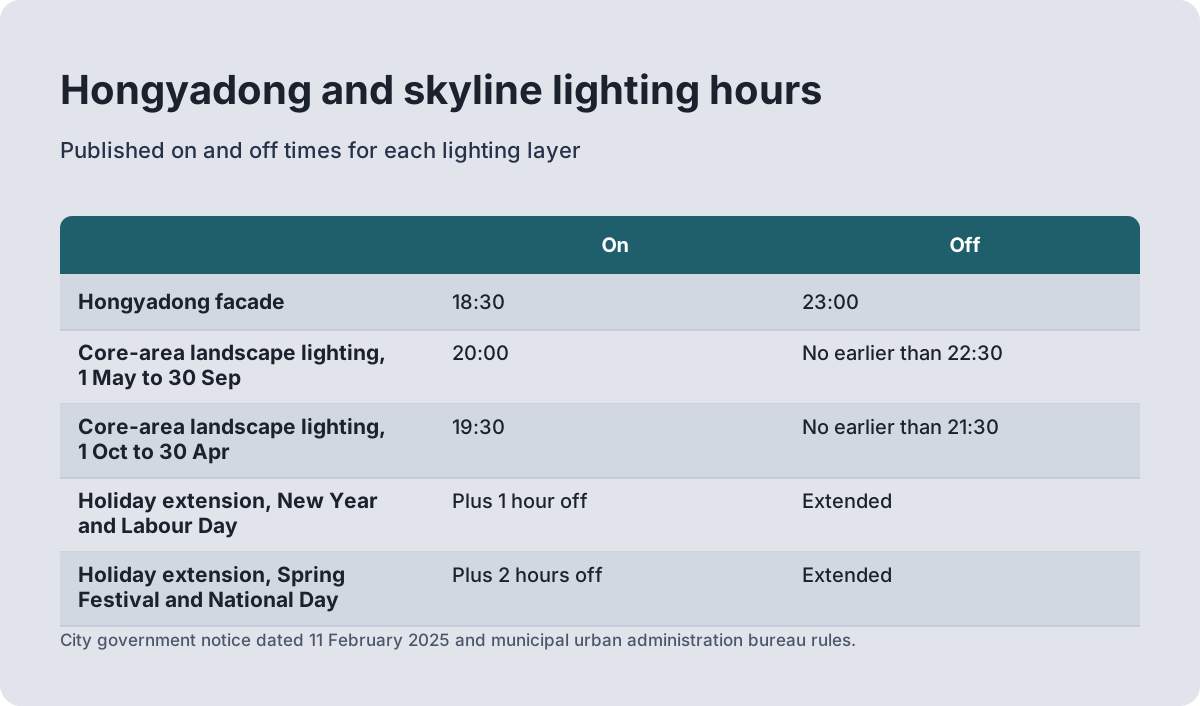
Hongyadong's illumination runs 18:30 to 23:00, under a Chongqing government notice dated 11 February 2025 that set those hours from 10 February 2025. That is the last documented state published by an official source, and it should not be read as a permanent all-year schedule. Separately, the wider core-area landscape lighting, the skyline behind the building, switches on at 20:00 in summer and 19:30 in winter under the city's landscape-lighting rules.
This is where the page earns its keep, because the two schedules are not the same and most visitors do not know either exists. The building's own facade follows the district notice. The towers, the bridges and the riverside buildings behind and around it follow the municipal landscape-lighting schedule, on at fixed clock times with holiday extensions. A photographer standing on Qiansimen Bridge is looking at both at once, and knowing the gap between them is the difference between a dead frame and the one you came for.
| Lighting layer | On | Off | Source of the rule |
|---|---|---|---|
| Hongyadong facade | 18:30 | 23:00 | City government notice dated 11 February 2025, last documented state |
| Core-area landscape lighting, 1 May to 30 Sep | 20:00 | No earlier than 22:30 | Municipal urban administration bureau |
| Core-area landscape lighting, 1 Oct to 30 Apr | 19:30 | No earlier than 21:30 | Municipal urban administration bureau |
| Holiday extension, New Year and Labour Day | Plus 1 hour off | Extended | Same bureau rules |
| Holiday extension, Spring Festival and National Day | Plus 2 hours off | Extended | Same bureau rules |
The pattern to notice: in winter the facade comes on at 18:30, a full hour before the skyline behind it at 19:30, so for that hour the stilt houses glow against a dark, unlit backdrop. In high summer the order nearly inverts, with the facade still at 18:30 while sunset runs to about 19:55 and the skyline waits until 20:00. Neither layer follows the sun. Both run on fixed clock times, confirmed by the urban administration bureau, which notes that ordinary street lighting uses daylight sensors but landscape lighting does not. The official notice setting the building's hours is published on the municipal government site at cq.gov.cn, and the core-area rules are explained on the urban administration bureau's own page.
What Is The Best Hour To See It, Month By Month?
Choose between twilight on the facade and the fully lit skyline after dark; they do not overlap in every month. In winter distinguish the earlier twilight from the later skyline switch-on; in June and July aim for 20:00 to 21:00. The February 2025 notice gives an 18:30 facade switch-on; confirm the current hours for your visit.
The table below is built from the verified sunset and civil-twilight times for Chongqing and the two published lighting schedules. All of China runs one clock, UTC+8, while Chongqing sits west of the meridian at 106.55 degrees east, so local solar noon falls roughly 50 minutes after clock noon and sunsets run late for the latitude. That single fact is why a 19:30 lights-on in December lands more than an hour after full dark, while a 20:00 lights-on in June lands almost exactly at sunset.
| Month | Sunset, mid-month | Twilight ends | Facade on | Skyline on | Best arrival window |
|---|---|---|---|---|---|
| January | 18:18 | 18:42 | 18:30 | 19:30 | 19:00 to 20:00 |
| February | 18:43 | 19:06 | 18:30 | 19:30 | 19:15 to 20:15 |
| March | 19:02 | 19:25 | 18:30 | 19:30 | 19:00 to 20:00 |
| April | 19:21 | 19:44 | 18:30 | 19:30 | 19:30 to 20:30 |
| May | 19:40 | 20:05 | 18:30 | 20:00 | 20:00 to 21:00 |
| June | 19:58 | 20:24 | 18:30 | 20:00 | 20:00 to 21:00 |
| July | 19:57 | 20:22 | 18:30 | 20:00 | 20:00 to 21:00 |
| August | 19:36 | 19:59 | 18:30 | 20:00 | 19:40 to 20:40 |
| September | 18:52 | 19:14 | 18:30 | 20:00 | 19:20 to 20:20 |
| October | 18:25 | 18:48 | 18:30 | 19:30 | 18:45 to 19:45 |
| November | 18:00 | 18:23 | 18:30 | 19:30 | 18:30 to 19:30 |
| December | 18:00 | 18:25 | 18:30 | 19:30 | 18:30 to 19:30 |
The hidden gem in the table is early October. From 1 October the skyline moves to its winter switch-on of 19:30 while sunset is still around 18:25, so the skyline lights come on after the twilight end shown in the table, and National Day week adds a two-hour extension that keeps the whole scene lit until roughly 23:30. The trade-off is crowds: the first week of October is the busiest stretch of the year at this building, and the February Spring Festival window, 15 to 23 February in 2026, is the other. Mid-week evenings in late October or February give you the same light with a fraction of the people.
Weather matters more than most visitors expect. Chongqing averages 37.2 foggy days a year, concentrated from October to February, with December the foggiest month at about 6.8 days, and the fog can either kill the bridge view or, on the right nights, wrap the lower storeys in haze while the towers disappear above, which photographs beautifully. Rain falls on 149.1 days a year on average, so check the evening forecast rather than gambling a single night on it.
How Do You Get To Hongyadong By Metro?
The nearest station is Xiaoshizi (小什字), served by Lines 1, 6 and 18, a short walk from the complex. Fares across the urban network run from 2 to 10 yuan by distance: 2 yuan covers the first 4 km, rising in steps to 9 yuan at 40 to 55 km. From the Nanbin Road corridor the trip needs a transfer.
Chongqing Rail Transit runs twelve lines over 574.12 km with 324 stations, mixing conventional metro with straddle-beam monorail, and the fare steps above come from the municipal pricing notice in force since 30 July 2025. Xiaoshizi is the stop the operator and every local guide names for this building, and its exits put you within a few minutes' walk of the street-level entrance. The station is also the stop for Chaotianmen and the Raffles City end of the peninsula, so one journey covers three sights.
| Approach | Station | Lines | Then on foot |
|---|---|---|---|
| From Jiefangbei / peninsula core | Xiaoshizi | 1, 6, 18 | Short walk to the street-level entrance |
| From the Nanbin Road corridor | Shangxinjie, transfer | Loop Line and 6, then transfer | Cross to Line 6 toward Xiaoshizi |
| From Liziba monorail | Liziba, transfer | 2, then transfer at Jiaochangkou | Line 1 two stops to Xiaoshizi |
| From the airports | Terminal 3 | 10, then transfer into the network | Allow a transfer at Liyuchi or Niujiaotuo |
| By taxi | Anywhere central | Daytime flag-fall | 10 yuan covers the first 3 km until 23:00 |
Two timing notes from the published schedules. Lines 1, 2, 3, 6 and 10 run to 23:00 on an ordinary day, and Line 18 and the Loop Line have earlier or initial-operation windows, so check the last train for your specific line if you are leaving after the lights go off at 23:00. And if you are combining the building with the motorcycle session, remember the shoot booking window ends at 22:00 on the far bank and the Loop Line stops at 22:30 on ordinary days, which makes a taxi, at the daytime rate until 23:00, the realistic way back. The station detail is on the record at the station's own reference page, and the wider network is covered in our getting around Chongqing guide.
How Does Hongyadong Compare With The Other Free Night Landmarks On The Same Evening?
Hongyadong, Qiansimen Bridge, the Liziba monorail platform, Eling Park and the Kuixinglou skybridge are all free, all lit at night and all reachable by metro, which makes them the standard one-evening set. Hongyadong and the bridge pair naturally as one stop; Liziba is a separate Line 2 trip west; Eling gives the panoramic skyline instead of a single building. Each owns a different photographic idea, and the mistake is trying to do all of them in one night.
The honest comparison is about what each one gives you. Hongyadong is the only one that is a building you walk inside, a warm, crowded, commercial interior as well as a facade. Qiansimen is its camera platform and costs nothing but the walk across. Liziba is motion, a monorail sliding through a residential block, best shot from the free viewing platform opposite, and it is currently under phased renovation until the end of December 2026, with parts of the platform and entrances closed in rotation, so check the current state before you build an evening around it. Eling Park is the height, the high point of the peninsula, with the whole lit grid below. Kuixinglou is the vertical illusion, a pedestrian bridge that meets a building at what feels like the wrong floor, and its famous floor number could not be verified from any primary source, so enjoy the effect without quoting a figure.
| Landmark | Cost | Best time | What it gives you | Line and station |
|---|---|---|---|---|
| Hongyadong | Free public areas | Facade lit 18:30 to 23:00 | The lit stilt-house facade, inside and out | Xiaoshizi, Lines 1, 6, 18 |
| Qiansimen Bridge | Free | Same hours, elevated angle | The postcard view of the facade with the towers | Walk from Hongyadong |
| Liziba viewing platform | Free | Dusk, for train lights | The monorail-through-building shot | Liziba, Line 2 |
| Eling Park | Free | After skyline lights-on | The panoramic peninsula view | Eling, Line 1 |
| Kuixinglou skybridge | Free | After dark | The 8D vertical-illusion shot | Linjiangmen, Line 2 |
If you only have one evening, the strongest single pairing is Hongyadong and Qiansimen Bridge in the hour after the skyline lights come on, then the short metro hop to Jiaochangkou for Jiefangbei, which is lit, walkable and full of food. The wider sight list, including the paid attractions and the day-time stops, belongs to our things to do in Chongqing guide, and the fuller story of why this city photographs the way it does is in what Chongqing is famous for.
One last planning note that ties the whole page together. The building's lights and the city's lights run on clock times, not on sensors, and they finish at fixed hours: the facade at 23:00, the core-area skyline no earlier than 21:30 in winter and 22:30 in summer, extended on holidays. Everything worth photographing here happens inside a window of roughly four and a half hours, 18:30 to 23:00, and in midwinter a fully lit skyline composition requires waiting until the 19:30 skyline switch-on. Plan the hour, not just the day, and the building gives you the frame it gave everyone whose photo brought you here.
Hongyadong is free to enter in its public areas, its lights run 18:30 to 23:00 under the city's 2025 notice, and the nearest metro stop is Xiaoshizi on Lines 1, 6 and 18. The answers below cover cost, timing, access and the angles that make the frame.
Common Questions About Hongyadong
Is Hongyadong free to enter?
Yes, the public areas, platforms, lifts and corridors are free, as local tourism sources reproducing the operator's arrangements describe. Paid items are interior exhibits and experiences, sold separately. Reservations through the venue's WeChat channel are advised or required at peak periods such as Golden Week.
When do the Hongyadong lights come on?
The facade illumination runs 18:30 to 23:00 under a Chongqing government notice dated 11 February 2025, which is the last documented official state. The skyline behind it follows the separate citywide landscape schedule, on at 20:00 from May to September and 19:30 from October to April.
What is the nearest metro station to Hongyadong?
Xiaoshizi station, served by Lines 1, 6 and 18, a short walk from the complex. It is also the stop for Chaotianmen and the Raffles City end of the Yuzhong peninsula. A single metro fare runs from 2 yuan for the first 4 km up to 9 yuan at 40 to 55 km.
Is Hongyadong on the motorcycle photoshoot route?
No. The motorcycle photo and video session runs along Nanbin Road on the south bank of the Yangtze, with the crew confirming the Nanbin Road meeting point, with Dongshuimen Bridge and the Raffles City night view as backdrops. Hongyadong is about five kilometres away on the Jialing side and you reach it by metro.
Where is the best place to photograph Hongyadong?
The pedestrian deck of Qiansimen Bridge gives the classic elevated angle, and the riverside promenade at the base gives the low, cliff-exaggerating view. Both are free. For a frame with the skyline fully illuminated, plan for the city lighting schedule, after the 19:30 skyline switch-on in winter, or around 20:00 to 21:00 in midsummer.
How long should I spend at Hongyadong?
About ninety minutes covers the platforms, the interior walkways and a lap of the best angles, longer on a holiday evening when queues and crowds slow every level. If you are photographing seriously, add the walk to Qiansimen Bridge and budget two to three hours across the lights-on window.
Choose Your Chongqing Experience
Choose your evening before arranging dinner: check the three-hour Hongyadong night tour and the meeting point for your selected option.
3 hours · Private night walk with English selectable, Hongyadong and riverfront viewpoints. Confirm the meeting point for your option. Not wheelchair suitable.
Compare Experiences And Refine Your Choice
Chongqing Night Tour: Hongyadong, Bridge Views & Riverwalk: 3 hours. Private night walk with English selectable, Hongyadong and riverfront viewpoints. Confirm the meeting point for your option. Not wheelchair suitable.
Compare Your Trip Totals
Use the same currency and number of people. Include transport and tickets in your independent total; compare it with the total tour quote.
Check your selected option, meeting arrangements and final price on the booking page.
Check Your Hongyadong Tour DateChoose your evening before arranging dinner: check the three-hour Hongyadong night tour and the meeting point for your selected option.
Check Your Hongyadong Tour Date