Why Is Chongqing So Popular Now?
A dated account of Chongqing’s motorcycle-video trend, its reported viewing figures and the inbound tourism growth recorded alongside it.
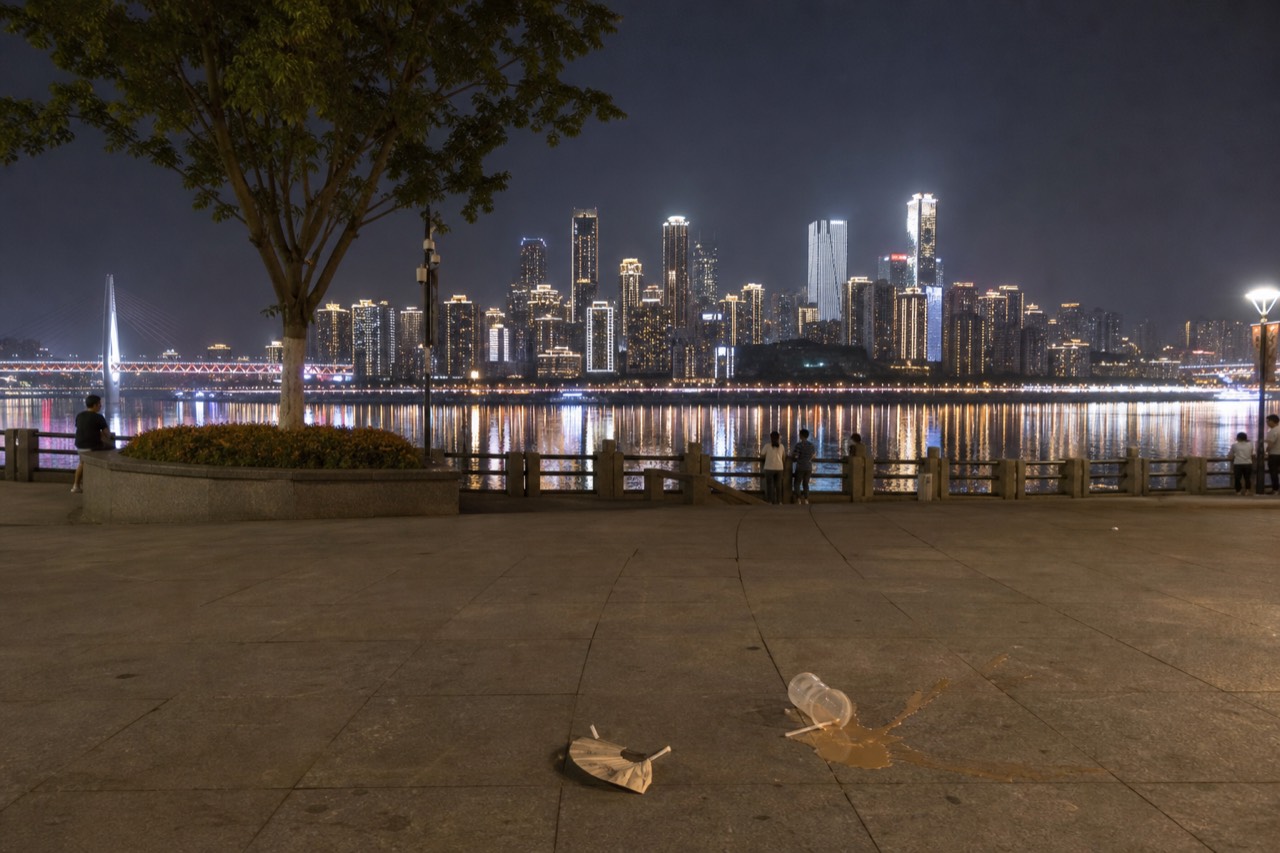
Chongqing is a city of 31,872,600 people that built 6,473,100 complete motorcycles in 2025, and for most of the past two decades international tourists largely skipped it in favour of Beijing, Shanghai, Xi'an and Chengdu. That changed over roughly eighteen months. A motorcycle video trend, carried almost entirely by Chinese short-video platforms, turned the city's south-bank riverside into a widely filmed riverside setting, and the visitor numbers followed. This page owns the chronology: what happened, when it was reported, and the visitor figures recorded alongside it.
If you want the deeper background, the companion pages on what the Chongqing motorcycle trend actually is and on what Chongqing has always been famous for cover the definition and the long history. Here, the "now" is the whole story. For the riders and the roads behind the viral clips, Chongqing Motorcycle Photoshoot is the site that tracks them session by session.
Why Is Chongqing So Popular Now?
Chongqing is popular now because a short-video trend nicknamed the "Chongqing Landing Visa" went viral in stages through late 2025 and 2026, racking up more than 1.52 billion views across related videos, and international coverage in August 2026 pushed it to a global audience. Inbound travel moved with it: nearly 70,000 foreign travellers entered Chongqing in July 2026 alone, up 84.7 percent. The city did not plan this; visitors discovered it.
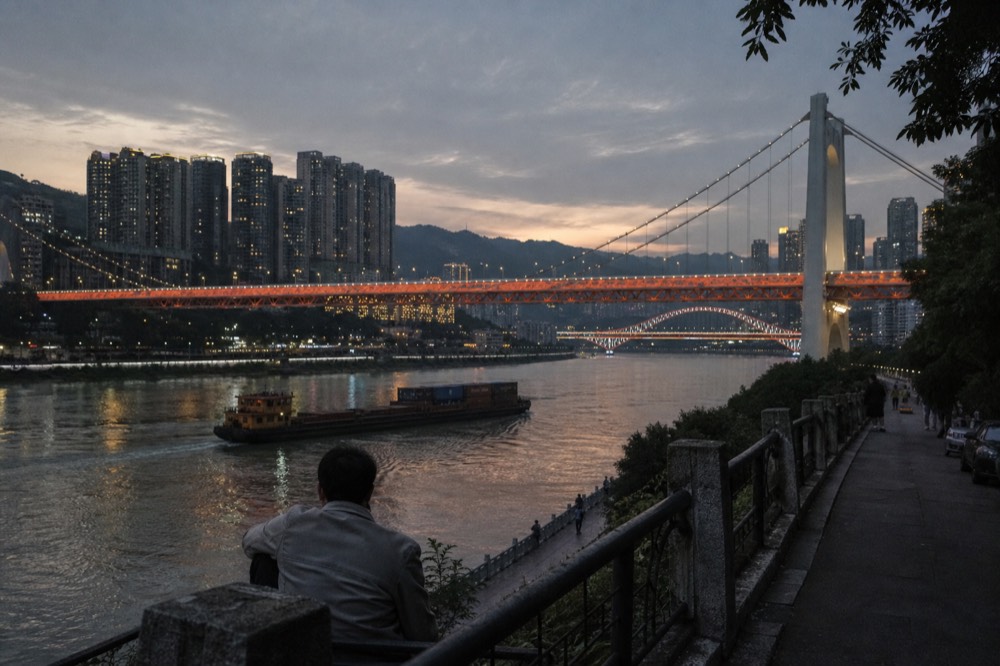
The mechanism is worth stating plainly, because it explains why a city that was always photogenic suddenly became unavoidable. Chongqing's terrain, the layered roads, the 105 large and extra-large bridges over the Yangtze and Jialing, the neon stacked up a cliff face, has been there for decades. What changed is that a repeatable, fifteen-to-thirty-second video format gave that terrain a script, and Douyin's recommendation system gave the script an audience. Once the format worked, it copied itself: same poses, same road, same song, different rider.
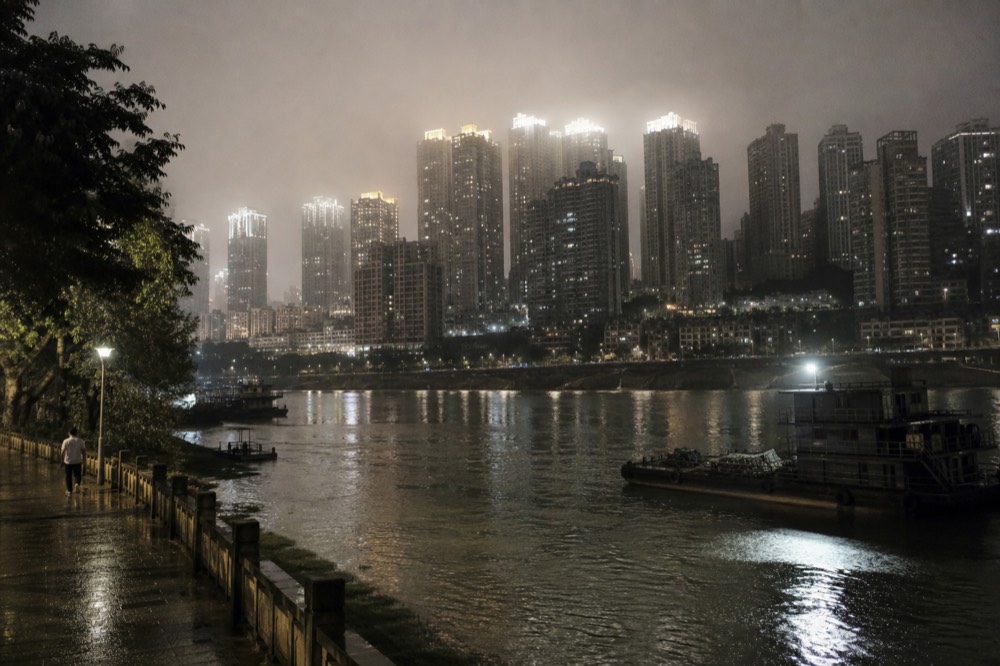
The format is simple enough to be an assembly line, and Chinese coverage literally calls it that, a 流水线, a production line. A rider in full gear meets a visitor on Nanbin Road after dark. The two packages separate the outputs: posed stills use a parked bike, while the video package includes a pillion ride with a following photographer. Stills are not promised with the video package. The edit lands on social media within days. That is the product, and it is the engine of everything else on this page.
That engine is also purchasable, in two clearly different forms, which matters if the timeline has you thinking about trying it yourself.
When Did The Chongqing Motorcycle Trend Actually Start?
The paid service grew out of informal motorcycle-taxi rides around the Hongyadong area from roughly 2020, when riders began filming passengers on request, and it professionalised into a standardised photoshoot product centred on Nanbin Road during 2024. The "Landing Visa" nickname gained traction from around October 2025 and broke out nationally through the first half of 2026.
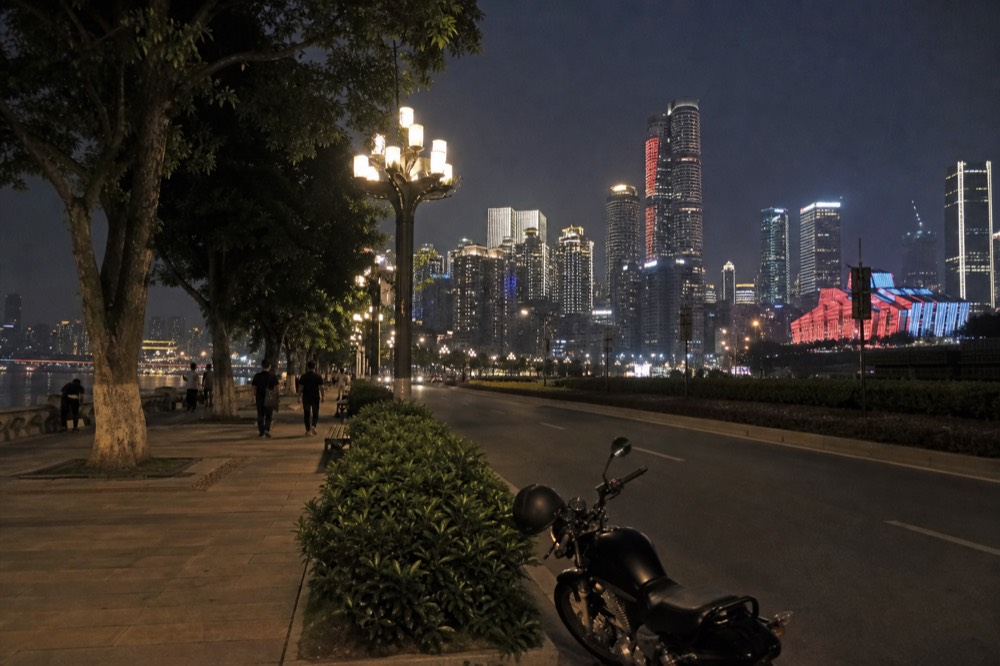
The origin story is a single-source account, reported by 36Kr in June 2026, but it is consistent with everything else on the record: congestion around the Hongyadong tourist area created a market for informal motorcycle taxis, drivers started filming their passengers on request, and the filming became the product. The centre of gravity then shifted to Nanbin Road on the south bank, where the skyline across the Yangtze makes a better backdrop and the corridor is long.
Here is the timeline as reported, date by date, with who reported it. Play counts are a moving target, reported differently by different outlets, so the table gives each figure with its outlet rather than pretending they reconcile.
| Date | What was reported | By whom |
|---|---|---|
| ~2020 | Informal motorcycle-taxi riders around Hongyadong begin filming passengers on request | 36Kr |
| 2024 | A standardised paid photoshoot service is established on Nanbin Road | 36Kr |
| ~October 2025 | The "Chongqing Landing Visa" framing gains traction | 36Kr; Huxiu / NewRank |
| 18 Feb 2026 | A rider reports foreign customers recently outnumbering Chinese ones | Sohu / Jiupai News |
| 21 May 2026 | The Douyin topic #重庆落地签 passes 380 million plays; base packages reported at 198 to 598 RMB | Huxiu / NewRank |
| 14 Jun 2026 | The same Douyin topic reported at 550 million plays | Sina News |
| 11 Jul 2026 | Reported at 1.16 billion plays; roughly 43,000 related notes on Xiaohongshu | CTee |
| 5-6 Aug 2026 | Reported past 1.4 billion plays; AFP reporting on foreign tourists arriving to film | Sina / AFP; Upstream News |
| 19 Aug 2026 | More than 1.52 billion views across related videos; French World Supersport rider Valentin Debise's ride covered | Global Times |
Two cautions belong next to that table. First, the mid-summer play counts, the 550 million, the 1.16 billion, the 1.4 billion, are single-source figures from different outlets counting differently, and one independent read could not confirm the 1.4 billion at all. The safest virality figure to quote is the Global Times total of more than 1.52 billion views, because it is a named international outlet. Second, the play counts describe a hashtag, not the whole phenomenon; the Xiaohongshu note count and the AFP reporting on arriving foreigners are separate signals that point the same way.
The word "now" in this article's question really begins in that February-to-August 2026 stretch. Before it, a domestic novelty. After it, an international one.
How Big Did The Video Numbers Actually Get?
More than 1.52 billion views across related videos is the headline figure, reported by Global Times, a named international outlet, and it is the most defensible number on file. The underlying Douyin hashtag passed a verified 380 million plays by 21 May 2026 and was reported climbing past a billion by mid-summer. Around 43,000 related notes circulated on Xiaohongshu.
What matters more than any single number is the shape of the curve. Reports of rising play counts show the format spreading online; they do not measure bookings or operator capacity. This is also the period when the people who run the city went on the record, which is the point a local novelty becomes a civic fact. Yang Gen of the Chongqing Municipal Development and Reform Commission told the Global Times that the city's landscape "created a naturally three-dimensional cityscape" and that many places "are themselves scenes that people can experience and capture on camera." His key line, for anyone asking why now: the Landing Visa "was not a tourism project designed by the city in advance. Instead, visitors discovered a location and created a new way to experience it themselves."
The trend was not designed, but it was tolerated and managed. Chongqing traffic police handled it through enforcement and education rather than a ban: designated safe filming zones on Nanbin Road, time controls, and zero tolerance for riding hands-off or on illegally modified bikes. One hard boundary shapes the whole product: two-wheeled motorcycles are banned on Nanbin Road from 22:00 to 06:00 daily, in force since 29 January 2024, under a notice published by the Chongqing Municipal People's Government. The 22:00 boundary limits the operating window; an individual booking can finish earlier.
The footage itself is what drove all of it, and that is worth understanding before you book anything. The viral clip is not a photo. It is a short, edited video, typically 25 to 35 seconds, of a pillion passenger riding with a professional rider while a photographer on another bike films the pose. Chinese coverage names the standard moves: arms outstretched, a heart gesture, and the "hug-lift" pose before the ride. The passenger in the viral clips is doing the thing, not standing next to the thing, and that distinction is the difference between the two purchasable packages, which we come to below.
The video package, the one that produces the clip the trend is actually made of, is a single-person pillion ride with a professional rider and a following photographer, delivering one edited video of 25 to 35 seconds. It is priced at HK$482, about 16 percent more than the photo package, and it is restricted to riders 18 and over. Still photographs are not promised in the inclusion list, although some guests report being sent photos anyway.
Did Foreign Visitors Actually Start Arriving?
Yes, and the numbers are striking. Chongqing Jiangbei International Airport's immigration checkpoint handled more than 1.48 million inbound and outbound passengers in the first half of 2026, up 39.5 percent, the fastest growth among China's ten largest airports, and nearly 70,000 foreign travellers entered Chongqing in July 2026 alone, up 84.7 percent. Both figures are attributed to the municipal government by the Global Times.
Set those against the year-long baseline and the "now" comes into focus. Chongqing recorded 2,147,800 inbound overseas visitors across the whole of 2025, spending US$2.398 billion, per the municipal statistics communique. Those annual overseas-visitor figures and monthly foreign-entry figures cover different measures and periods, so they should not be treated as directly comparable totals. Not all of that is motorcycle videos, and no one claims it is, but the timing lines up with the play-count curve above, and AFP was filing dispatches in August 2026 specifically about foreigners travelling to Chongqing to film motorcycle videos.
| Measure | Figure | Period |
|---|---|---|
| Inbound overseas visitors, Chongqing | 2,147,800, spending US$2.398 billion | Full year 2025 |
| CKG immigration checkpoint passengers | More than 1.48 million, up 39.5 percent | First half of 2026 |
| Foreign entrants to Chongqing | Nearly 70,000, up 84.7 percent | July 2026 alone |
| All Chongqing airports combined | 51,126,900 passengers, up 2.4 percent | Full year 2025 |
A quiet enabler sits behind the arrival figures. China's 240-hour visa-free transit policy now covers nationals of 57 countries through 65 designated ports, including Chongqing Jiangbei International Airport, and a separate unilateral 30-day visa-free entry scheme covers roughly 50 countries with no onward ticket required. The trend did not create those policies, but a viral video is far more likely to convert into a booked trip when the visa friction is already gone.
If the timeline has convinced you to be part of it rather than a spectator, the entry point is the session that runs nightly, from 18:30 to 22:00, on the Nanbin Road corridor where the whole thing started. It meets at the crew-confirmed point near Nanbin Road, the crew confirms the exact spot after booking, and the from price of about $52.85 per person belongs to the photo package, the one without the ride.
Why Did It Land In Chongqing And Not Somewhere Else?
The trend needed a city with vertical, layered streets, a dense neon skyline across a river, a motorcycle industry and a permissive motorcycle culture, and Chongqing combines all four. It built 6,473,100 motorcycles in 2025, up 9.1 percent, counts 105 large bridges over its two rivers, and supports a visible motorcycle culture, subject to local road and time restrictions.
The motorcycle industry is the part outsiders miss. Chongqing is one of the historic centres of Chinese motorcycle manufacturing, with the industry's value added growing 18.4 percent in 2025, which means the riders, the machines and the riding culture were all locally abundant before anyone thought to film them. A trend like this cannot be assembled from rental scooters; it needs a pool of experienced riders with their own bikes, and Chongqing has had that pool for forty years.
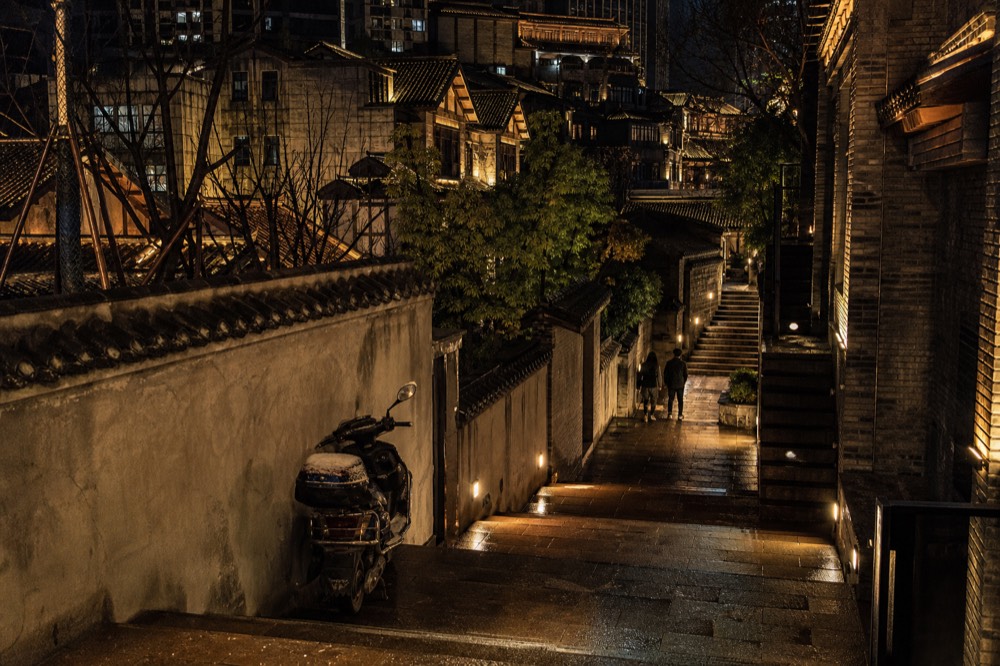
Then there is the backdrop. The city's layered, multi-level street network earned it the "8D magic city" nickname, which is a popular-media term rather than an official designation; the fuller explanation lives on the page about why Chongqing is called an 8D city. What the camera needs from that geography is specific: a long, flat, riverside road on one bank with an unbroken wall of lit towers on the other, and Nanbin Road, roughly 24.9 km of riverside landscape avenue, is exactly that. The lighting even cooperates on a published schedule, with the core-area skyline switching on at 20:00 in summer and 19:30 in winter under the municipal urban administration bureau's rules.
One more dated detail explains the format's timing. Chongqing's sunsets run late for its longitude because all of China keeps one clock; the late-June sunset lands at 19:58 with civil twilight ending 20:24, nearly coinciding with the 20:00 summer switch-on. That is a coincidence of clock arithmetic, not design, but it does not guarantee sky color at a booked slot. Late-June civil twilight and switch-on overlap for about 24 minutes on the reference date.
Finally, the law shapes the product. A passenger on a two-wheeled motorcycle must sit astride, facing forward, and both rider and passenger must wear helmets; the operator supplies one. The bans that do exist, on Nanbin Road at night and on expressways, are targeted rather than blanket, which is why the shoot exists at all.
What The Trend Is, And What It Is Not
The trend is a paid motorcycle photo-and-video service sold on the Nanbin Road corridor, in two distinct forms: a posed photo shoot with a parked bike and no ride, and a pillion ride that produces a short edited video. It is not free, it is not a self-drive rental, and it is not a city tour. Confusing the two packages is a documented booking mistake, and the listing's one-star review is exactly that mistake.
The distinction matters enough to set out side by side, because the from-price belongs to the package without the ride. The operator's own listing words for the photo package state that it "only provides static photo shooting services and does not include a motorcycle riding experience."
| Photo package | Video package | |
|---|---|---|
| What it is | 15 minutes of posed shooting with a parked bike as a prop | A pillion ride with a professional rider and a following photographer |
| Riding | None at all | Yes, the ride is the product |
| What you get | All negatives plus 9 retouched photos | One edited video, 25 to 35 seconds |
| Age | No age limit stated | 18 or over |
| Price | From about $52.85 per person (HK$415) | HK$482, about 16 percent more |
| Footage style | Static, skyline behind you | Moving, the format the trend is made of |
The general Chongqing street market, for context, prices base packages at 198 to 598 RMB and scripted, story-driven packages at 2,000 to 4,000 RMB, per reporting by Huxiu and NewRank corroborated by 36Kr and Lanjing News via Eastmoney. Operators reportedly average about 500 RMB a day, though reporting is inconsistent about whether the earner is the rider or the photographer. Compare each quote in the same currency and against its stated inclusions; the street-market range covers different services.
So, back to the question in the title. Chongqing is popular now because a copyable video format met a city built for the camera, on a platform built to spread it, at the exact moment visa policy made arriving easy. Every element was already in place, sometimes for decades. What 2026 added was the script, and related videos accumulated more than a billion reported views; views are not a count of unique people.
People ask the same six things about Chongqing's sudden popularity: when the motorcycle trend started, how many views the videos actually got, whether the city planned it, why it happened here, and whether an ordinary visitor can book the experience behind the clips. The short answers: informal rides from about 2020, more than 1.52 billion views, no city plan, a rare combination of terrain and motorcycle culture, and yes, the listing offers bookable photo and video packages. The from-price of about $52.85 buys posed photos with no ride; the riding video is a separate package.
Common Questions About Why Chongqing Is Popular Now
Why Is Chongqing So Popular Now?
A short-video trend nicknamed the Chongqing Landing Visa went viral in stages from late 2025 through 2026, gathering more than 1.52 billion views across related videos, and international coverage in August 2026 carried it to a global audience. Foreign arrivals climbed with it, including nearly 70,000 foreign entrants in July 2026 alone, up 84.7 percent.
When did the Chongqing motorcycle trend start?
Informal motorcycle-taxi riders around the Hongyadong area began filming passengers on request from roughly 2020, and a professionalised paid service was established on Nanbin Road by 2024. The "Landing Visa" nickname gained traction from around October 2025 and broke out nationally through the first half of 2026.
How many views did the Chongqing motorcycle videos get?
The most defensible figure is more than 1.52 billion views across related videos, reported by the Global Times. The underlying Douyin hashtag passed a verified 380 million plays by 21 May 2026 and was reported climbing past a billion over the summer, though those higher counts are single-source.
Is the Chongqing motorcycle trend a government tourism project?
No. Yang Gen of the Chongqing Municipal Development and Reform Commission said on the record that the Landing Visa "was not a tourism project designed by the city in advance" and that visitors discovered the location and created the experience themselves. The city's role has been managing it, with designated filming zones and enforcement against dangerous riding.
Why did the trend happen in Chongqing and not another Chinese city?
Chongqing combined a vertical, photogenic street network with a lit riverside skyline, a deep local motorcycle industry that built 6,473,100 motorcycles in 2025, and no city-wide motorcycle ban. Local road and time restrictions still apply, including the Nanbin Road nighttime restriction discussed above.
Can I book the experience that made Chongqing popular?
Yes. The Chongqing Internet-famous Motorcycle Photo & Video Experience runs nightly from 18:30 to 22:00 on the Nanbin Road corridor, from about $52.85 per person for the photo package. Note that the from-price package has no ride; the ride belongs to the video package, priced at HK$482.
Choose Your Nanbin Road Session
Before arranging your Nanbin Road evening, check a slot for the result you want: posed stills with no ride, or the separate adult riding-video package.
Photo: parked bike and 9 retouched images. Video: pillion ride and one edited clip, ages 18+. Both are single-person packages with Chinese service.
Compare Packages And Refine Your Choice
These packages buy different results. The photo package keeps the bike parked; the video package includes a ride. Clothing and makeup are excluded. The crew confirms the meeting point near Nanbin Road. Service is Chinese; an English-speaking rider is not guaranteed.
Compare Your Quoted Totals
Enter totals for the same number of people in the same currency. The difference buys a different deliverable, not an upgraded version of the same shoot.
Choose your package and date on the booking page; final price and availability are confirmed there.
Check Your Photo or Video DateBefore arranging your Nanbin Road evening, check a slot for the result you want: posed stills with no ride, or the separate adult riding-video package.
Check Your Nanbin Road Date