What To Wear For A Chongqing Motorcycle Shoot: Clothing, Colour And Comfort
Both packages on the Chongqing motorcycle shoot exclude clothing and makeup, which makes your suitcase the styling budget. Here is what reads well against a lit skyline, what the pillion ride rules out, and what the weather is actually doing at shoot hour.
Short answer
Clothing and makeup are excluded from both packages, so bring your own outfit. The photo package is static and includes no ride. The video package includes a pillion ride for participants aged 18 or over. Confirm your own appointment within the 18:30 to 22:00 operating window.
The Chongqing motorcycle shoot provides the bike and camera work, with a rider for the video package, but no clothing or makeup. Both purchasable packages state it plainly in their exclusion lists: no clothing, no makeup. That is unusual for a photoshoot product, and it is also the honest reason this page exists. Everything the camera sees beyond the machine itself is your decision, made in your own wardrobe before you fly.
The session itself is fixed and knowable. It runs 18:30 to 22:00, evening and night only, with no daytime slot, meeting at the crew-confirmed point near Nanbin Road on the south bank. The photo package lists 15 minutes of posed shooting; the video activity is about 30 minutes. Confirm your booked appointment with the crew. One person per booking. Files arrive by email or WeChat within 1 to 3 days. The from-price is about $52.85 per person, and it belongs to the photo package, the one with no ride. If you are still deciding between the two, the photo session against the video session has its own comparison; this page is about the clothes.
What Does The Operator Provide, And What Is Left To You?
The operator provides the motorcycle, a helmet, the rider or photographer, and the delivery of files within 1 to 3 days. Clothing and makeup appear on the exclusion list of both packages, so the outfit, the shoes, the hair and every styling choice are yours to bring. That makes wardrobe the single biggest variable in how the finished shots look.
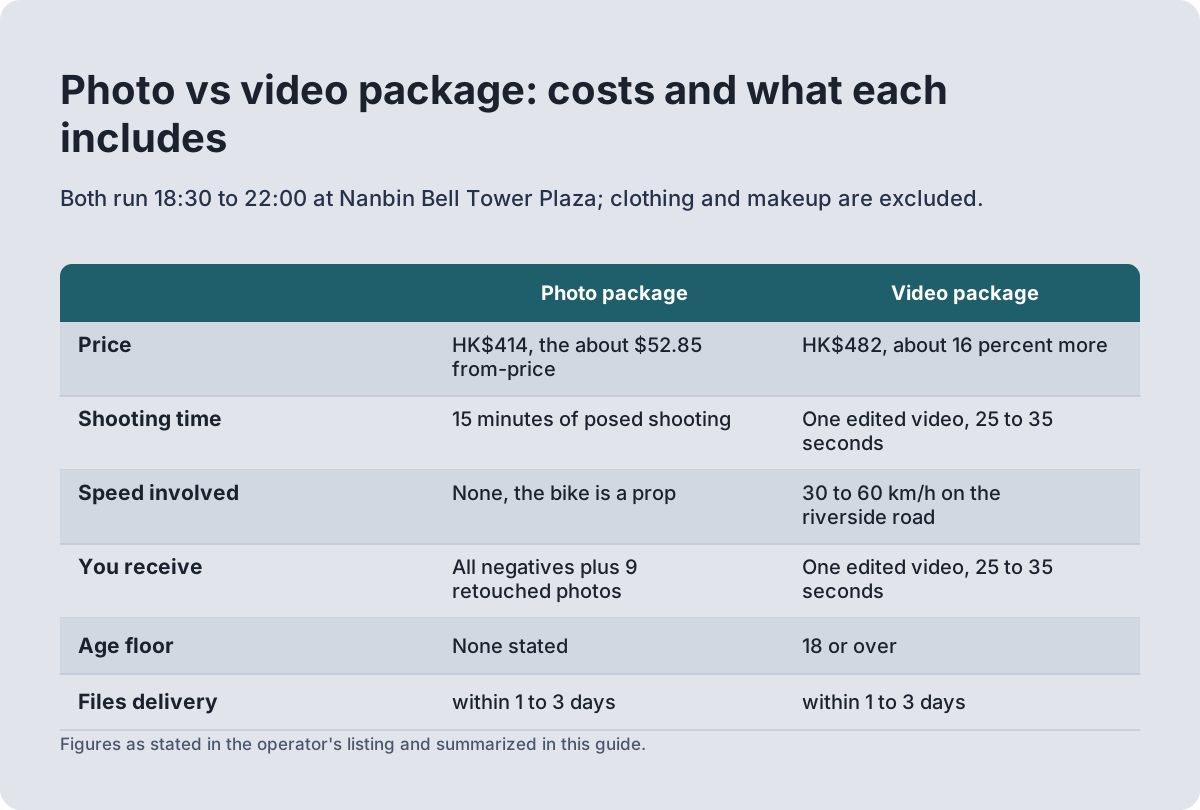
The photo package, sold as Motorcycle Photo Shoot Package (Single Person), gives you 15 minutes of posed shooting beside a parked bike, all the negatives plus 9 retouched photos, and no ride at all. The operator's own words are blunt: this package only provides static photo shooting services and does not include a motorcycle riding experience. The video package, Motorcycle Video Shoot Package (Single Person), gives you the pillion ride with a professional rider and a photographer following, plus one edited video of 25 to 35 seconds. It is restricted to riders' passengers aged 18 or over.
Clothing and makeup are excluded; a helmet is provided. Compare that with the wider Chongqing photoshoot market, where base packages run 198 to 598 RMB and often fold in styling, and you can see the shape of the decision. Here, the styling line item is zero, and the gap is yours to fill. Prepare your outfit before leaving for your confirmed appointment; the operating window ends at 22:00.
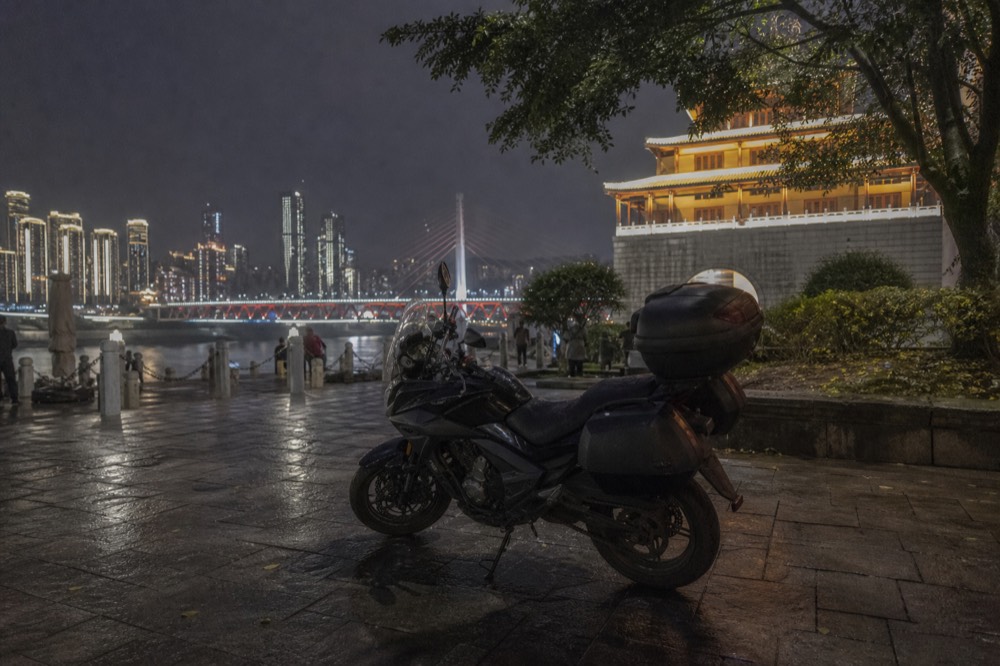
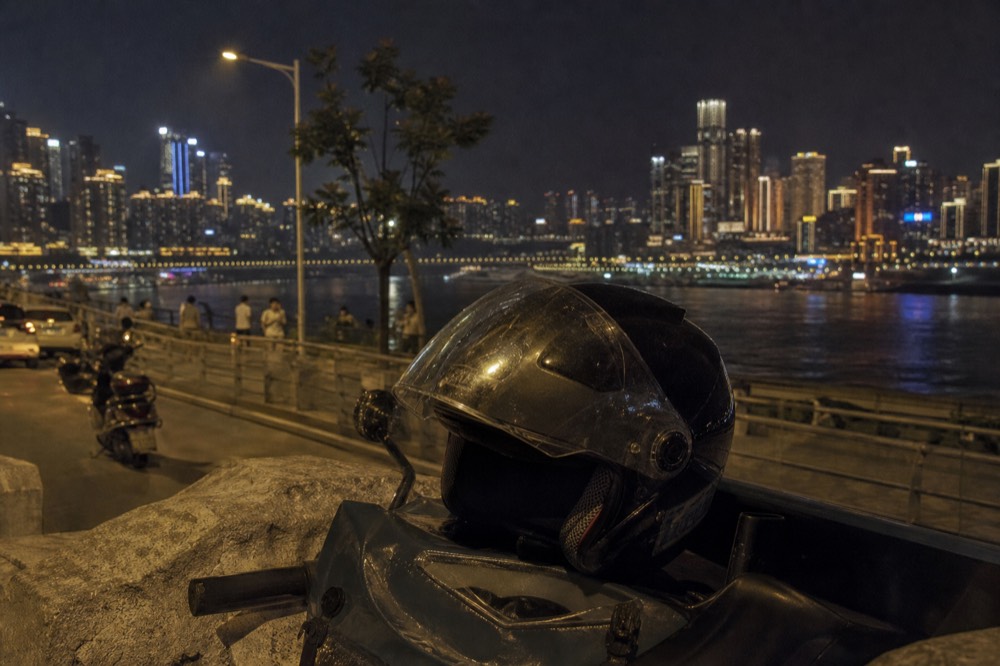
There is one more thing the operator does provide that changes your wardrobe maths: the helmet. China's Road Traffic Safety Law requires both rider and passenger to wear a safety helmet, and the session includes one. Anything you planned for your head, a styled hat, a careful blow-dry, exists only in the minutes before the helmet goes on and the seconds after it comes off.
Why Is Clothing The One Variable The Operator Hands To You?
Because the exclusion is explicit on both packages, and because the shoot happens at night against a dark river, your outfit is the only element of the frame neither the rider nor the photographer controls. The backdrop is fixed, the machine is fixed, the light follows a published schedule. Clothing is the one input with no operator substitute.
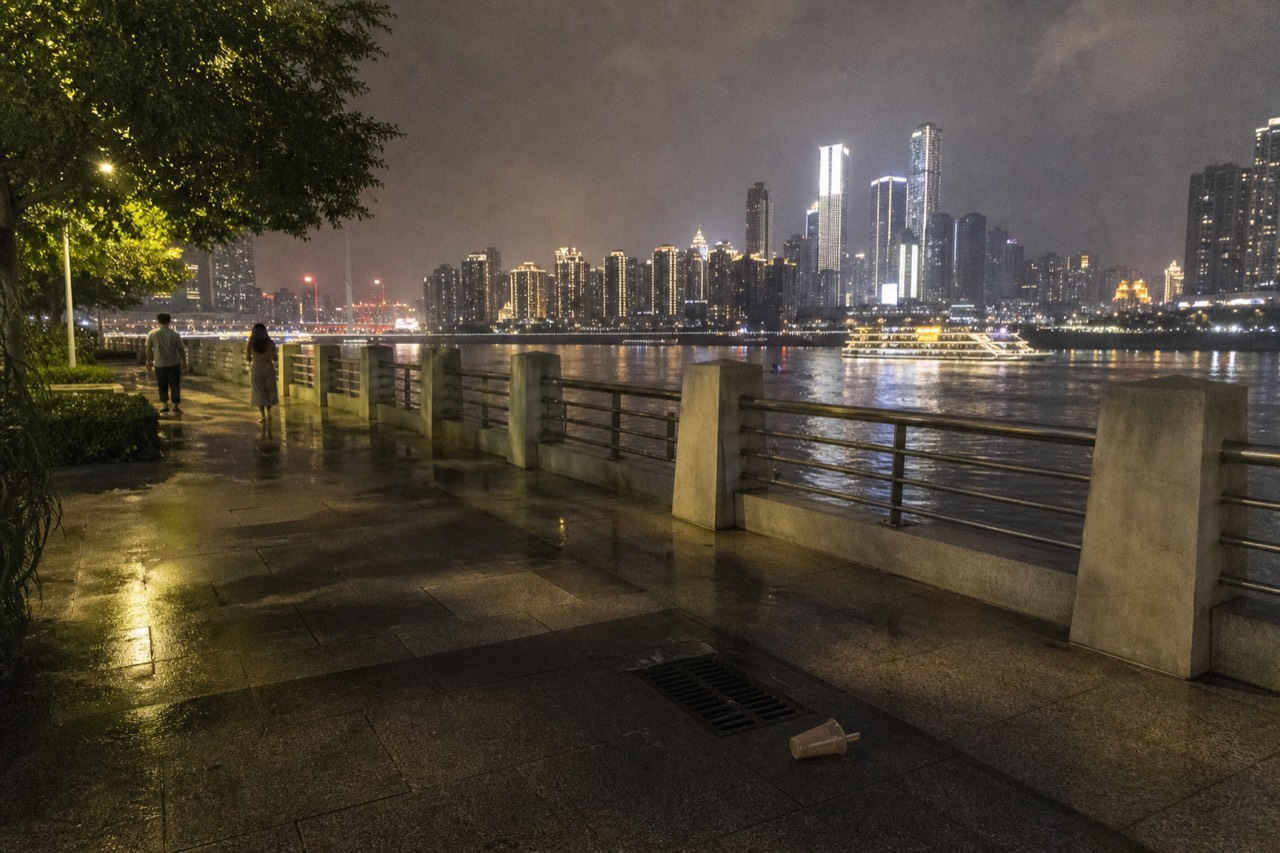
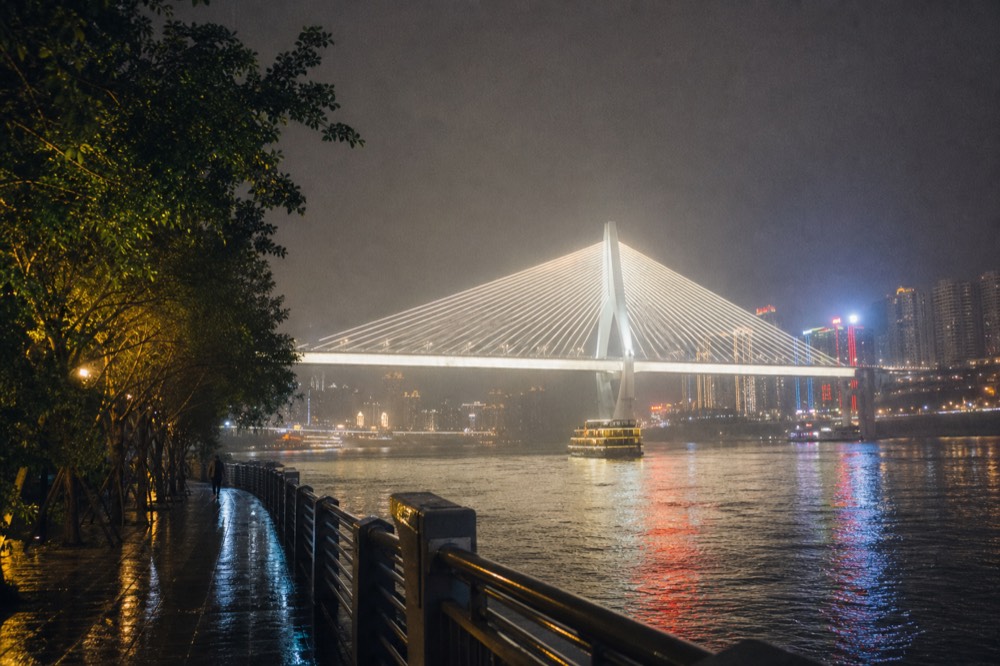
The backdrop deserves a sentence, because it is what your clothes are competing with. The shoot corridor looks north across the Yangtze at the Yuzhong peninsula skyline, with Dongshuimen Bridge and Raffles City named by the listing as backdrops. The city's landscape lighting switches on at 20:00 from 1 May to 30 September and 19:30 from 1 October to 30 April, under the municipal night-lighting rules, and stays on no earlier than 22:30 in summer and 21:30 in winter, with two-hour extensions over Spring Festival and National Day. The municipal urban administration bureau publishes the schedule on its policy Q&A page: the official lighting times for the Two Rivers, Four Banks core area.
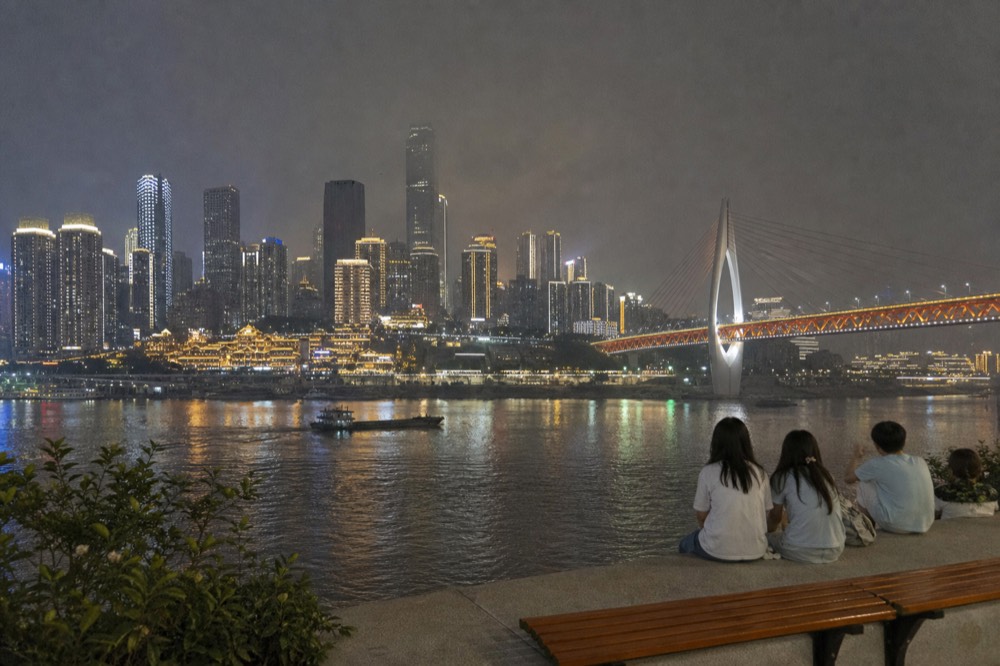
So the frame you are stepping into is mostly black water, black sky and a wall of point lights. That is why this page exists as a wardrobe guide rather than a general styling one: the background is not neutral. An outfit that reads beautifully in a daylight park can sink without trace against a night river, and an outfit that would look loud at lunch can be exactly right at 20:30. If you want the full run of what the evening actually involves, from meeting the crew to receiving files, the walkthrough of a shoot night covers it; the timing of which slot to ask for is covered too, in the guide to choosing your evening slot.
The trend itself is worth one paragraph of context, because it explains why nobody sells you a costume. The Chongqing Landing Visa, as the netizens call it, grew out of informal motorcycle-taxi rides and became a professionalised product on Nanbin Road, with related videos passing 1.52 billion views. The classic look in those clips leans toward racing suits, dresses and rental gear, but the operators here sell the ride and the camera, not the wardrobe. Chongqing Motorcycle Photoshoot treats that as the honest structure of the product: you bring the look, they bring the night.
What Does Each Package Physically Ask Of Your Clothing?
The photo package asks your clothes to hold a pose beside a parked machine for 15 minutes, so silhouette and drape matter most. The video package asks them to survive a pillion ride with a photographer chasing, and the law requires you to sit astride facing forward, which rules out any skirt you cannot do that in.
| What the session asks | Photo package (parked bike) | Video package (pillion ride) |
|---|---|---|
| Your body does what | Poses beside the machine, 15 minutes of shooting | Sits pillion through the ride, action guidance given |
| Motion involved | None, the bike is a prop | Pillion ride on the riverside road |
| Legal seating rule | Not applicable | Astride, facing forward, by law |
| Wind and motion | Still air, full control of drape | Fabric will move, hemlines will lift |
| Helmet | Provided; confirm your preferred static poses | Provided, worn for the whole ride |
| Age floor | None stated | 18 or over |
| You receive | All negatives plus 9 retouched photos | One edited video, 25 to 35 seconds |
| Price | HK$415, the about $52.85 from-price | HK$482, about 16 percent more |
For the photo package, think of the bike as a sculpture you are leaning against. Nothing moves unless you move it. That favours structured pieces: a jacket with a shoulder, a dress that holds a shape, anything with a silhouette the camera can read in a static frame. Drape is your friend because you can arrange it once per pose. The machine is a prop, so avoid anything that fights it, fine straps and floaty chiffon can tangle visually against the metal, while a leather jacket or a crisp shirt echoes it.
For the video package, the physics change completely. You will be a passenger on a moving motorcycle, with a professional rider in front and a photographer following, and the implementing rules of China's road traffic law are explicit that a passenger on a two-wheeled motorcycle must sit astride, facing forward. A tight pencil skirt fails at the first attempt to swing a leg over. Choose clothing that lets you mount and sit astride comfortably; ask the crew about anything that could interfere with the ride. Whatever you wear will be pressed by wind, so pick fabrics that move with some weight rather than ones that whip.
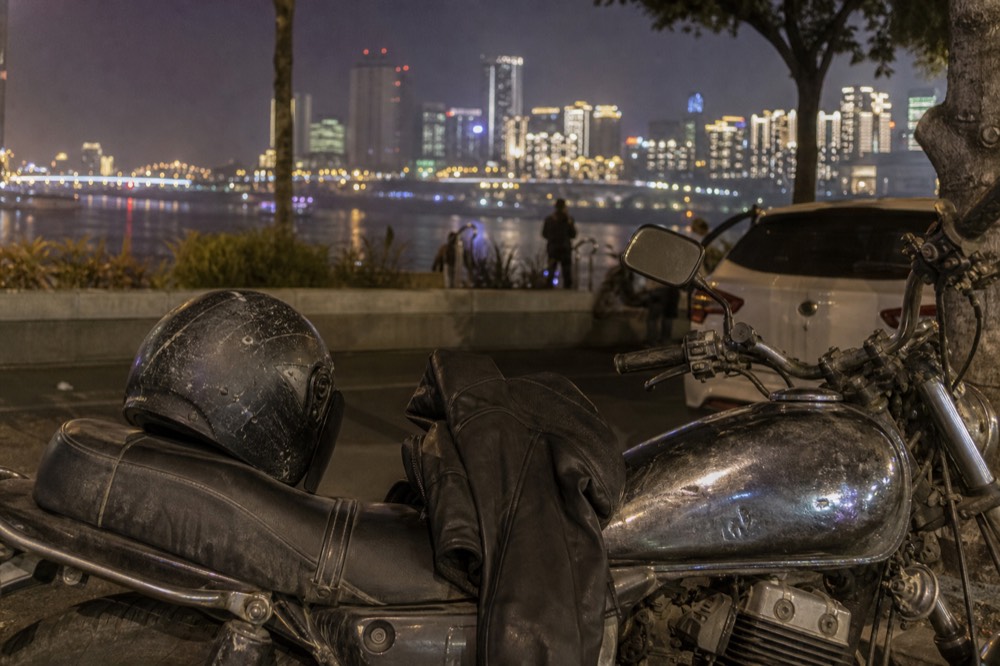
One more legal note worth packing: the rules also bar carrying anyone under 12 on a motorcycle's rear seat, which is consistent with the video package's own 18-or-over floor, and the rider may not take their hands off the handlebars. Chongqing traffic police have handled the whole photoshoot trend through enforcement and education rather than a ban, with designated filming zones and zero tolerance for hands-off riding. Your outfit does not change any of that, but it is the part you control.
Which Colours And Fabrics Read Against A Night Skyline?
Light tones, saturated reds and clean whites read strongest against a black river and a wall of point lights. Mid-greys, navy and black tend to merge with the water unless separated by reflective trim. Matte fabrics soak up light; anything with sheen, leather, satin, metallic thread, catches the skyline and gives the camera something to work with.
The background is a light-emitting city seen across dark water, so the logic is closer to stage dressing than to daytime dressing. White gives the highest separation and needs the least help from the photographer's flash. Red and other saturated jewel tones hold their hue under mixed street lighting, which is why they dominate the viral clips. Pastels can work but they lean on the crew's lighting; if the sky is wet or hazy they flatten. Black is not banned, it just needs a counter, a bright scarf, a white shirt underneath, or a jacket with visible hardware.
| Colour or fabric | How it reads at night | Best for |
|---|---|---|
| White or cream | Maximum separation from water and sky | Both packages, the safest choice |
| Saturated red, cobalt, emerald | Holds hue under mixed street light | Poses and video stills |
| Pastels | Soft, needs the crew's lighting to hold | Photo package especially |
| Black or charcoal | Merges with the river, needs a bright counter | Only with a scarf or white layer |
| Leather | Catches highlights, echoes the machine | Both packages |
| Satin or metallic thread | Picks up skyline reflections | Poses beside the bike |
| Matte cotton jersey | Absorbs light, low contrast | Avoid as the main block |
| Reflective trim or piping | Glimmers in motion | Video package, moving shots |
What Is The Weather Actually Like At Shoot Hour, Month By Month?
Chongqing is subtropical with an annual mean of 18.8 C, but the evening you stand on Nanbin Road can range from around 8 C in January to around 25 C in July and August, with June the wettest month at 212 mm of rain. Summer evenings are humid and warm, winter evenings are damp and genuinely cold, so the outfit needs to match the month, not the latitude.
The numbers below are the China Meteorological Administration's 1991 to 2020 normals for the Shapingba station, reproduced in the CMA-cited climate table for Chongqing. They are monthly averages, so treat them as the planning band rather than a forecast, and check the live forecast before you pack. Remember that part of the session is spent waiting: the photo package lists 15 minutes of posed shooting and the video activity is about 30 minutes, and you may also spend time waiting outdoors, in whatever you chose to wear.
| Month | Evening feel at shoot hour | Mean daily min (C) | Rain (mm) | Wardrobe note |
|---|---|---|---|---|
| Jan | Cold and damp, full dark by 18:25 | 6.4 | 20.7 | Coat over the outfit, layers you can shed for the pose |
| Feb | Cold, lights on 19:30 | 8.3 | 22.4 | Warm jacket, closed shoes |
| Mar | Cool, spring jacket weather | 11.7 | 55.6 | Light layers, umbrella as backup |
| Apr | Mild and pleasant | 16.0 | 103.4 | Comfortable, rain risk rising |
| May | Warm, lights switch to 20:00 | 19.4 | 142.5 | Light fabrics fine, rain likely |
| Jun | Warm and humid, wettest month | 22.4 | 212.1 | Breathable fabrics, plan for showers |
| Jul | Hot and humid, 25 C at night | 25.4 | 174.2 | Lightest clothing, expect to sweat |
| Aug | Hot, the record high month | 25.3 | 125.7 | As July, watch air quality haze |
| Sep | Warm, comfortable | 21.5 | 124.7 | Ideal balance of warmth and light |
| Oct | Cooling, lights back to 19:30 | 16.8 | 95.3 | Jacket or blazer, reliable evenings |
| Nov | Cool, fog season begins | 12.5 | 50.4 | Layers, fog can soften the skyline |
| Dec | Cold, foggiest month at 6.8 foggy days | 8.0 | 24.7 | Proper coat, gloves for between takes |
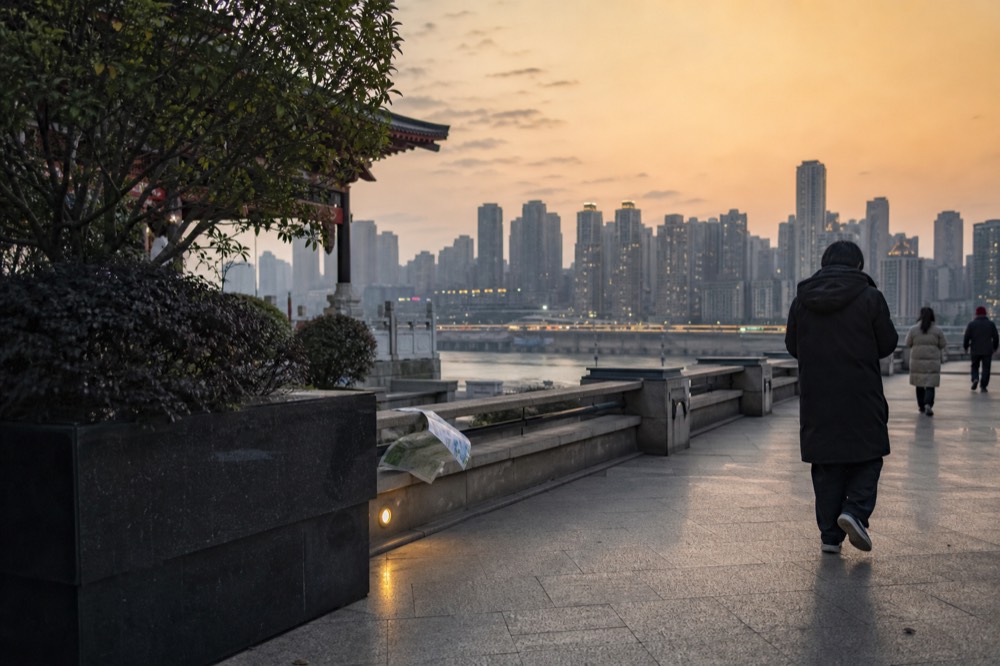
Fog is a real styling input, not a footnote. Chongqing averages 37.2 foggy days a year, concentrated in autumn and winter, with December the foggiest month. Fog diffuses the skyline into a glow, which flatters light colours even more and makes saturated tones look cinematic, but it also kills long sightlines, so a busy outfit can lose definition. The broader seasonal picture, including which months balance crowds, light and comfort best, is covered in the guide to the best time to visit Chongqing.
Do Hair And Hats Matter When A Helmet Is Provided?
A helmet is provided. The video package involves a real pillion ride, so plan hair and headwear around wearing it. The photo package is static, and the listing does not set out a helmet-on requirement for every posed photograph.
Helmet padding can affect a hairstyle. For the video package, plan around wearing the helmet during the ride. If a particular hairstyle or helmet-off static portrait matters to you, ask the crew about the pose before the session.
Makeup deserves the same realistic treatment, since it is excluded from both packages and there is no styling chair. The session is at night against strong backlight, which is forgiving of skin but unforgiving of shine, so a matte finish photographs better than a dewy one. Bring powder. If you want a full glam look, do it before you arrive, because the meeting point is an open plaza, not a studio, and the clock starts at your slot.
What Shoes And Accessories Work On Nanbin Road?
Flat, closed shoes with grip are the right call for both packages: the promenade is a riverside walkway, the photo package has you climbing on and around a parked machine, and the video package requires you to mount a motorcycle astride. Skip heels, skip loose scarves on the ride, and keep accessories compact enough to survive motion.
Nanbin Road is a roughly 24.9 km riverside landscape avenue, and the shoot happens at designated spots along it, meeting at the crew-confirmed point near Nanbin Road. You will walk, stand and, on the video package, swing a leg over a motorcycle in front of a rider who does this professionally. Heels fail on three counts: they catch in pavement joints, they make mounting awkward, and they vanish under the machine in most frames anyway. Ankle boots, clean sneakers or flat leather shoes all photograph well and function better.
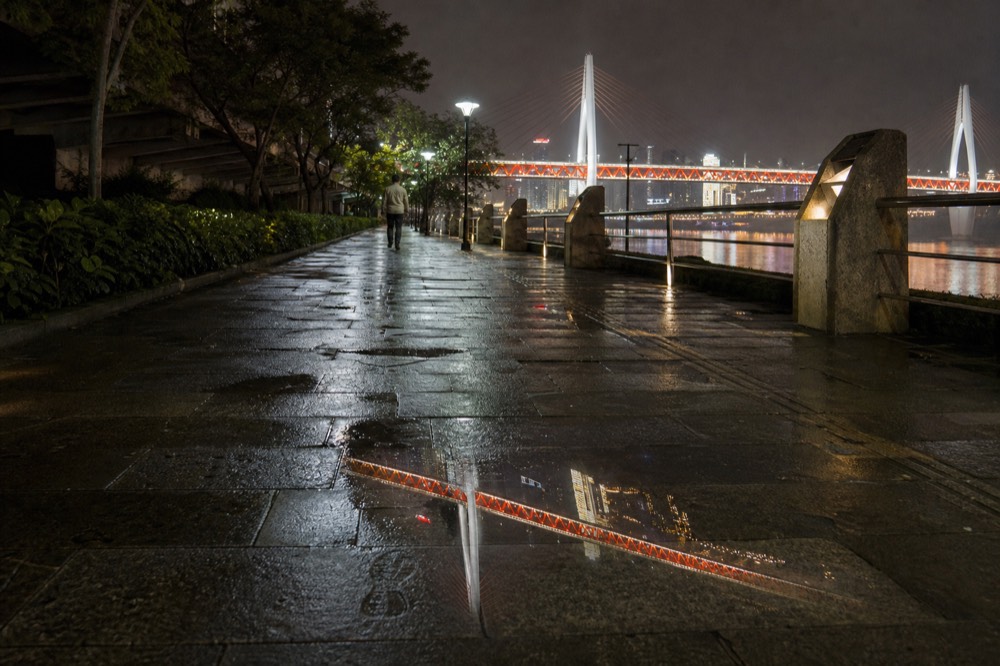
Accessories need one filter: could this snag or become loose during the ride? Long loose scarves, flowing shawls and anything that can wrap around a moving part stay in the bag for the ride. Compact accessories, a belt with hardware, a watch, small earrings, a small decorative detail, can add interest to a static portrait. Ask the crew how to secure belongings before riding. One hard fact to plan the end of your evening around: two-wheeled motorcycles are banned on Nanbin Road from 22:00 to 06:00 daily, in force since January 2024, which is exactly why the session window ends at 22:00. The city government's notice on the Nanbin Road motorcycle restriction publishes the full rule.
What Should You Actually Pack For The Shoot?
Pack one outfit that works at night, one warm layer for the wait, flat closed shoes, matte makeup, and a compact zipped bag. Nothing needs to be bought specially: the wardrobe rule is light or saturated on top, a fabric with some sheen, and a silhouette the camera can read against a dark river.
The whole decision compresses into a short checklist. Choose light or saturated colour over dark neutrals, unless you bring a bright counter. Choose a fabric with sheen or structure over matte jersey. For the video package, choose something you can sit astride in, facing forward, without rearranging yourself. Bring a layer for the standing-around minutes, because even July evenings feel cooler on a riverbank, and January evenings are genuinely cold at 6 to 8 C. Wear flat shoes you would trust on wet pavement. Do your hair and makeup before you leave the hotel, and plan around helmet use if you choose the ride.
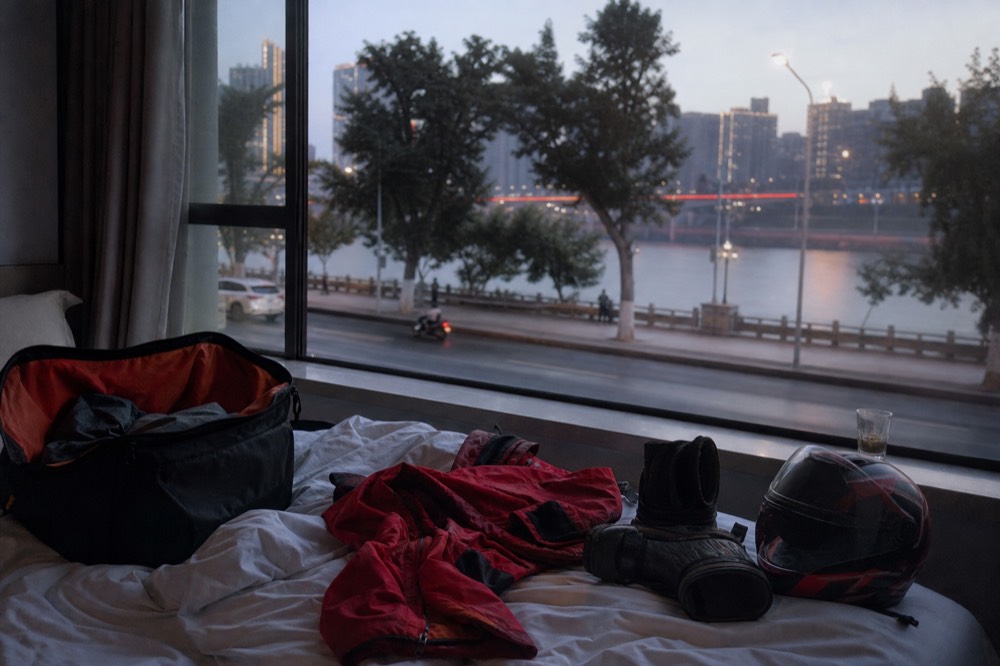
If you are still weighing which package your outfit should serve, the comparison of the photo session against the video session works through the differences in full: one is 15 minutes of posed shooting with all negatives plus 9 retouched photos and no ride, from about $52.85 per person; the other is the pillion ride with one edited 25 to 35 second video, about 16 percent more, for ages 18 and over. The outfit you pack should follow that choice, not precede it.
Whichever package that choice lands on, the wardrobe logic in this page holds for both: light or saturated colour, a fabric with some sheen, flat closed shoes, and a layer for the wait. The static photo package starts from about $52.85 per person and includes no ride. Confirm your appointment within the 18:30 to 22:00 operating window; free cancellation is offered.
These are the wardrobe questions travellers ask most before a Nanbin Road session: what the operator provides, what the pillion ride rules out, which colours read at night, and what the weather is doing at shoot hour. Each answer below uses the same figures as the guide above.
Common Questions About What To Wear To A Chongqing Motorcycle Shoot
Does the Chongqing motorcycle shoot provide clothing or makeup?
No. Clothing and makeup are on the exclusion list of both the photo package and the video package, so you bring your own outfit and do your own styling. The operator provides the motorcycle, the helmet, the rider or photographer, and delivery of your files by email or WeChat within 1 to 3 days.
Can I wear a dress on the motorcycle video shoot?
Only if you can sit astride a motorcycle in it, facing forward, which is what the law requires of a pillion passenger. Choose clothing that allows comfortable mounting and an astride seated position, and ask the crew about anything that could interfere with the ride. The photo package has no such constraint, since the bike is a parked prop.
What colours photograph best at night in Chongqing?
White, cream and saturated tones such as red, cobalt and emerald read strongest against the dark river and the lit skyline, which switches on at 20:00 in summer and 19:30 in winter. Black and mid-grey tend to merge with the water unless you add a bright counter such as a scarf or white layer. Fabrics with sheen, like leather and satin, catch the skyline lights.
Will a helmet ruin my hairstyle?
A helmet can flatten a hairstyle. Plan around helmet use for the video package’s pillion ride, and ask the crew about any specific static pose or hairstyle you want photographed.
What should I wear in winter for the shoot?
Plan for evening temperatures around 6 to 8 C in January and December, damp rather than dry. Bring a proper coat you can shed for the pose, closed flat shoes, and gloves for the standing-around minutes. December is also the foggiest month at about 6.8 foggy days, which softens the skyline and flatters light colours further.
Can I bring a bag to the session?
Keep any bag compact and zipped, and ask the crew how belongings should be handled during your session. Storage, lockers and crew custody are not listed inclusions.
Choose Your Nanbin Road Session
Check your date before finishing the outfit plan. Choose the parked-bike photo session or, for adults wanting motion, the pillion video package.
Photo: parked bike and 9 retouched images. Video: pillion ride and one edited clip, ages 18+. Both are single-person packages with Chinese service.
Compare Packages And Refine Your Choice
These packages buy different results. The photo package keeps the bike parked; the video package includes a ride. Clothing and makeup are excluded. The crew confirms the meeting point near Nanbin Road. Service is Chinese; an English-speaking rider is not guaranteed.
Compare Your Quoted Totals
Enter totals for the same number of people in the same currency. The difference buys a different deliverable, not an upgraded version of the same shoot.
Choose your package and date on the booking page; final price and availability are confirmed there.
Check Your Chongqing Shoot DateCheck your date before finishing the outfit plan. Choose the parked-bike photo session or, for adults wanting motion, the pillion video package.
Check Your Nanbin Road Date